The Best Gaming Laptops of 2025: A New Era of Performance and Innovation Unfolds with NVIDIA’s RTX 50 Series

The year 2025 marks a transformative period for gaming laptops, spearheaded by the highly anticipated arrival of NVIDIA’s GeForce RTX 50 series GPUs. This new generation of graphics processing units is poised to redefine performance benchmarks, bringing unprecedented levels of realism, speed, and AI-driven enhancements to portable gaming. While comprehensive testing of every new model is ongoing, several early contenders featuring these potent new GPUs are already establishing themselves as industry leaders, standing alongside formidable RTX 40 series machines that continue to offer exceptional gaming experiences.
This evolving landscape presents both exciting opportunities and complex choices for consumers. Every laptop highlighted in this analysis is engineered to deliver seamless performance across the most demanding AAA titles. The ultimate visual fidelity achievable will largely depend on individual budget allocations, but this report aims to guide enthusiasts toward a machine that ensures smooth and reliable gameplay for their preferred titles.
The Evolution of Gaming Portability: NVIDIA’s Next-Gen Impact
The introduction of NVIDIA’s GeForce RTX 50 series represents more than just an incremental upgrade; it signals a significant leap forward in graphics technology. Building on the foundations laid by the RTX 40 series’ Ada Lovelace architecture, the RTX 50 series is expected to leverage advanced architectures, enhanced ray tracing capabilities, and the next iteration of NVIDIA’s Deep Learning Super Sampling (DLSS 4). These innovations are critical for rendering hyper-realistic graphics and achieving higher frame rates in increasingly demanding game environments. The market is witnessing a fascinating dynamic as the latest 50-series models begin to permeate, simultaneously driving down the prices and increasing the value proposition of the still-powerful 40-series predecessors. This creates a diverse marketplace where gamers at various budget points can find compelling options.
Manufacturers are integrating these new GPUs with advanced cooling solutions, high-refresh-rate displays, and increasingly sophisticated AI-enabled processors from both Intel (e.g., Core Ultra, Lunar Lake, Arrow Lake) and AMD (Ryzen AI series). These processors are not only boosting general system performance but also intelligently optimizing power consumption and leveraging dedicated neural processing units (NPUs) for AI workloads, which include game optimizations and system efficiency.
Rigorous Evaluation: Ensuring Peak Performance
The selection of leading gaming laptops is a result of extensive, meticulous evaluation. Each device undergoes a gauntlet of performance, graphics, display, and battery life benchmarks in controlled lab environments. Beyond synthetic tests, a critical component of the review process involves extensive hands-on usage by seasoned reviewers. For instance, Laptop Mag’s lead reviewer, with over seven years and 90 gaming laptop reviews under their belt, ensures that lab scores translate into a superior real-world user experience. This holistic approach assesses everything from thermal management and keyboard tactility to software stability and webcam quality. The goal is to identify machines that not only excel on paper but also feel robust and responsive during hours of gaming, work, and general productivity.
Demanding titles such as Cyberpunk 2077 (known for its brutal graphics requirements) and even poorly optimized releases like Monster Hunter Wilds are used to stress-test these machines, ensuring that only the most capable systems make the final cut. This rigorous methodology guarantees that consumers can trust the recommendations, whether they are seeking a budget-friendly powerhouse, a premium flagship, or something in between.
Top Contenders in the 2025 Gaming Laptop Arena
The current landscape of gaming laptops in 2025 is rich with innovation, offering a spectrum of choices tailored to different needs and budgets. Here’s a closer look at the standout models:
MSI Raider 18 HX AI (Best Overall)
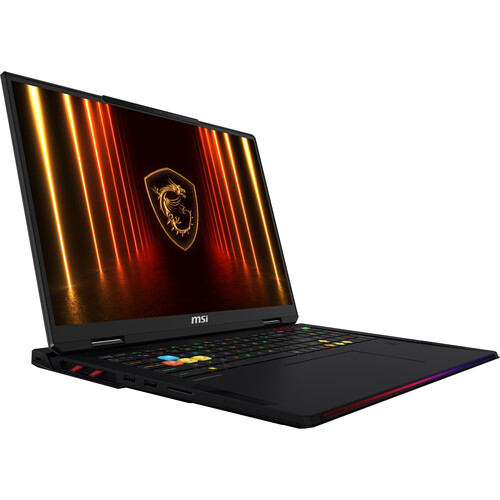
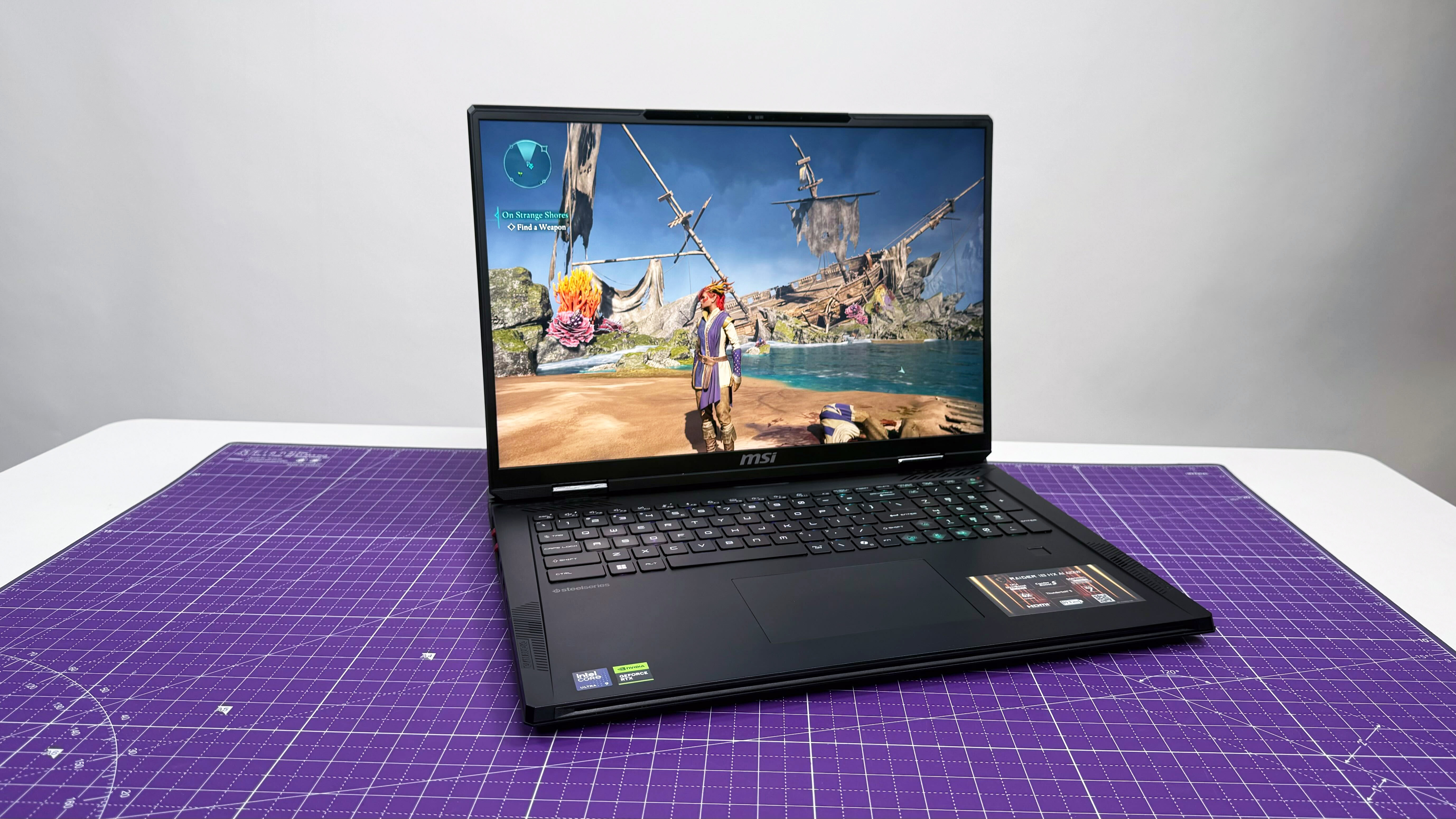
The MSI Raider 18 HX AI emerges as the undisputed champion, a veritable force of nature in the gaming laptop segment. Equipped with an Intel Core Ultra 9 285HX CPU and NVIDIA GeForce RTX 5080 with 16GB of VRAM, this machine delivers overwhelming power that tears through any game thrown its way. Its 18-inch, 4K, 120Hz MiniLED display is a key selling point, offering stunning brightness (averaging 668 nits) and vibrant color reproduction (83.1% DCI-P3), which translates to an immersive visual experience, especially in games with challenging lighting conditions.
The Raider 18 HX AI excelled in benchmarks, achieving 153 frames per second (fps) in Assassin’s Creed: Mirage (Ultra, 1080p) and a solid 64 fps in Cyberpunk 2077 (Ultra, 1080p). The comfortable, bouncy full-size keyboard and powerful, high-fidelity audio system further enhance the user experience, providing a premium "desktop replacement" feel. However, this top-tier performance comes at a premium price, potentially raiding bank accounts, and its battery life is a modest 2 hours and 33 minutes for general use, dropping to 1 hour and 46 minutes for gaming, necessitating proximity to a power outlet. Despite loud fans and noticeable heat under load, its raw power and stunning display solidify its position as the best overall choice for those unconstrained by budget.
Dell G16 (7630) (Best Budget)
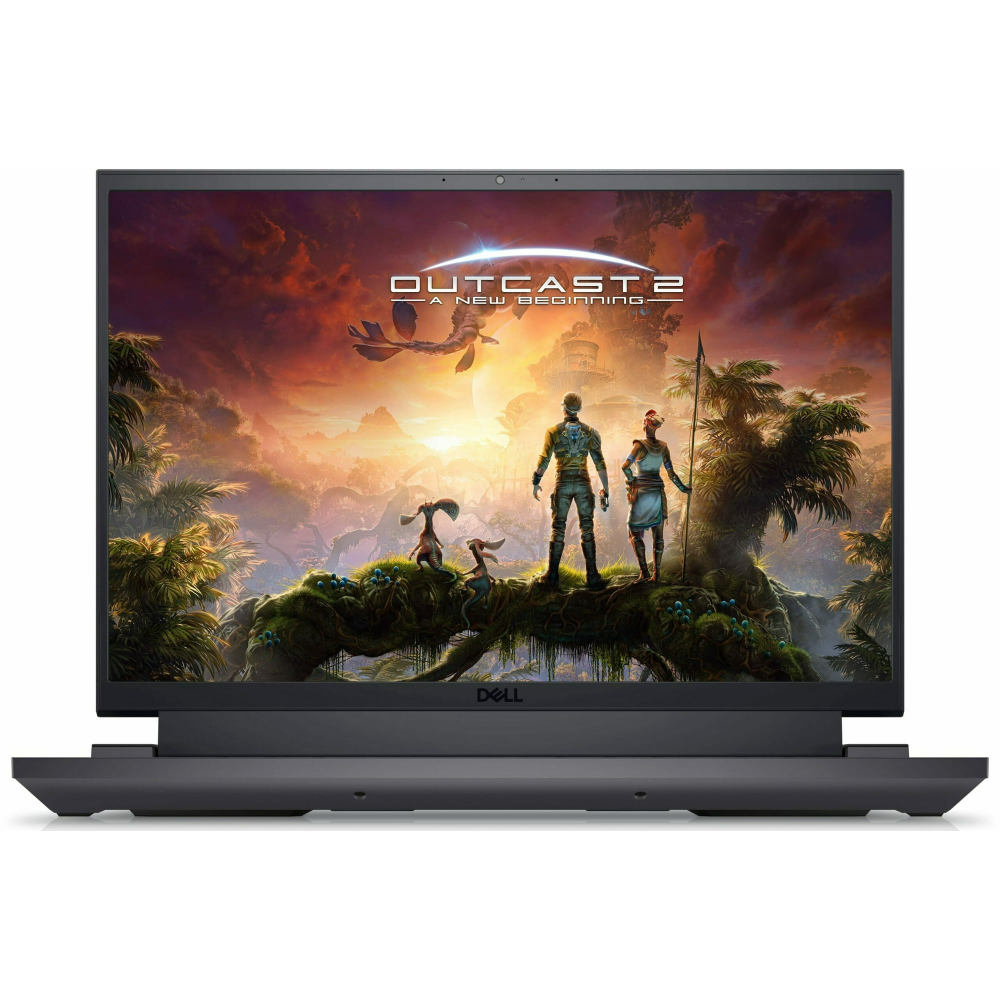
The Dell G16 (7630) stands out as an exceptional value proposition, offering premium features typically found in much more expensive machines, all for under $1,000. It defies conventional budget expectations with an Intel Core i7-1365HX CPU and an NVIDIA GeForce RTX 4060 8GB GPU, providing competitive performance that can achieve over 60 fps in select AAA games on Ultra settings at 1080p.
The highlight of the G16 is its 16-inch, 2560 x 1600, 240Hz display, which boasts a stunning 114% DCI-P3 color gamut, delivering vibrant visuals. Paired with a tactile Cherry MX mechanical keyboard—a rarity at this price point—the G16 offers an unparalleled typing and gaming experience for budget-conscious users. While its 310 nits of brightness are decent, its battery life of 5 hours and 4 minutes surpasses the average for budget gaming laptops, making it suitable for extended unplugged use. The main drawbacks include hollow speakers, which often necessitate a gaming headset, and a remarkably small touchpad, making general navigation somewhat frustrating. Nevertheless, for gamers seeking high-end features and strong performance without breaking the bank, the Dell G16 (7630) is an undeniable winner.
Lenovo Legion Pro 7i (Gen 9) (Best 40-Series)
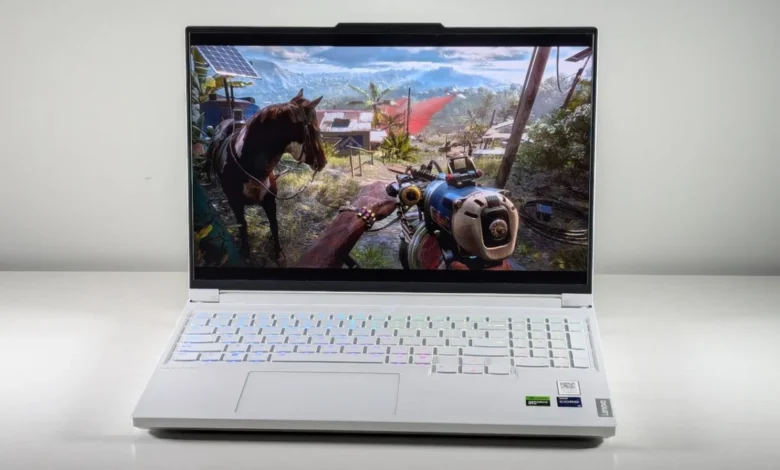
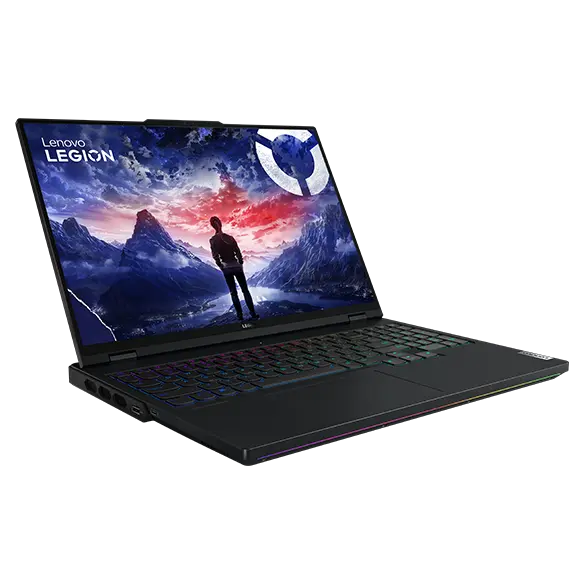
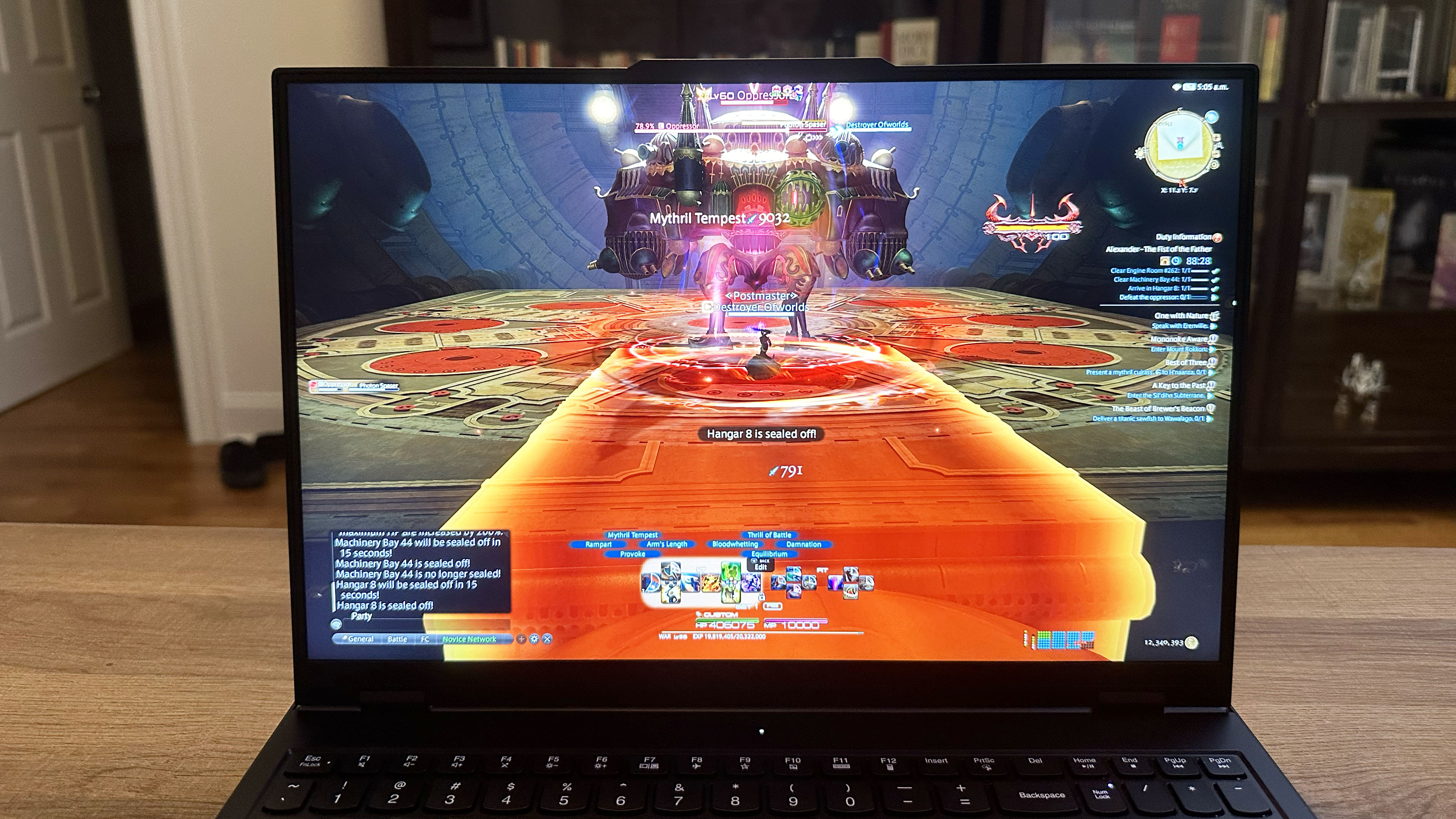
Representing the pinnacle of the previous generation, the Lenovo Legion Pro 7i (Gen 9) remains an outstanding choice for those seeking powerful performance and excellent value within the RTX 40-series ecosystem. Powered by an Intel Core i9-14900HX processor and NVIDIA GeForce RTX 4080 with 12GB of VRAM, it strikes an impressive balance between intense graphics performance and relative affordability.
The Legion Pro 7i’s 16-inch, 2560 x 1600, 240Hz panel is strikingly vivid, covering 108.7% of the DCI-P3 color gamut and reaching 456 nits of brightness, ensuring immersive visuals. Its performance benchmarks were robust, hitting 105 fps in Far Cry 6 (Ultra, 1080p) and 96 fps in Red Dead Redemption 2 (Medium, 1080p). The keyboard offers a satisfying, crisp, and springy actuation, proving that excellent gaming feedback isn’t exclusive to mechanical switches. Furthermore, its Harman Super Linear Speaker System, featuring dual woofers and tweeters, delivers loud and immersive audio. Despite its heavier chassis (5.76 pounds) and a battery life of 4 hours and 29 minutes, which falls below the modern average, the Legion Pro 7i (Gen 9) stands as a testament to the enduring capability and value of the RTX 40-series generation.
Razer Blade 16 (2025) (Best Lightweight)
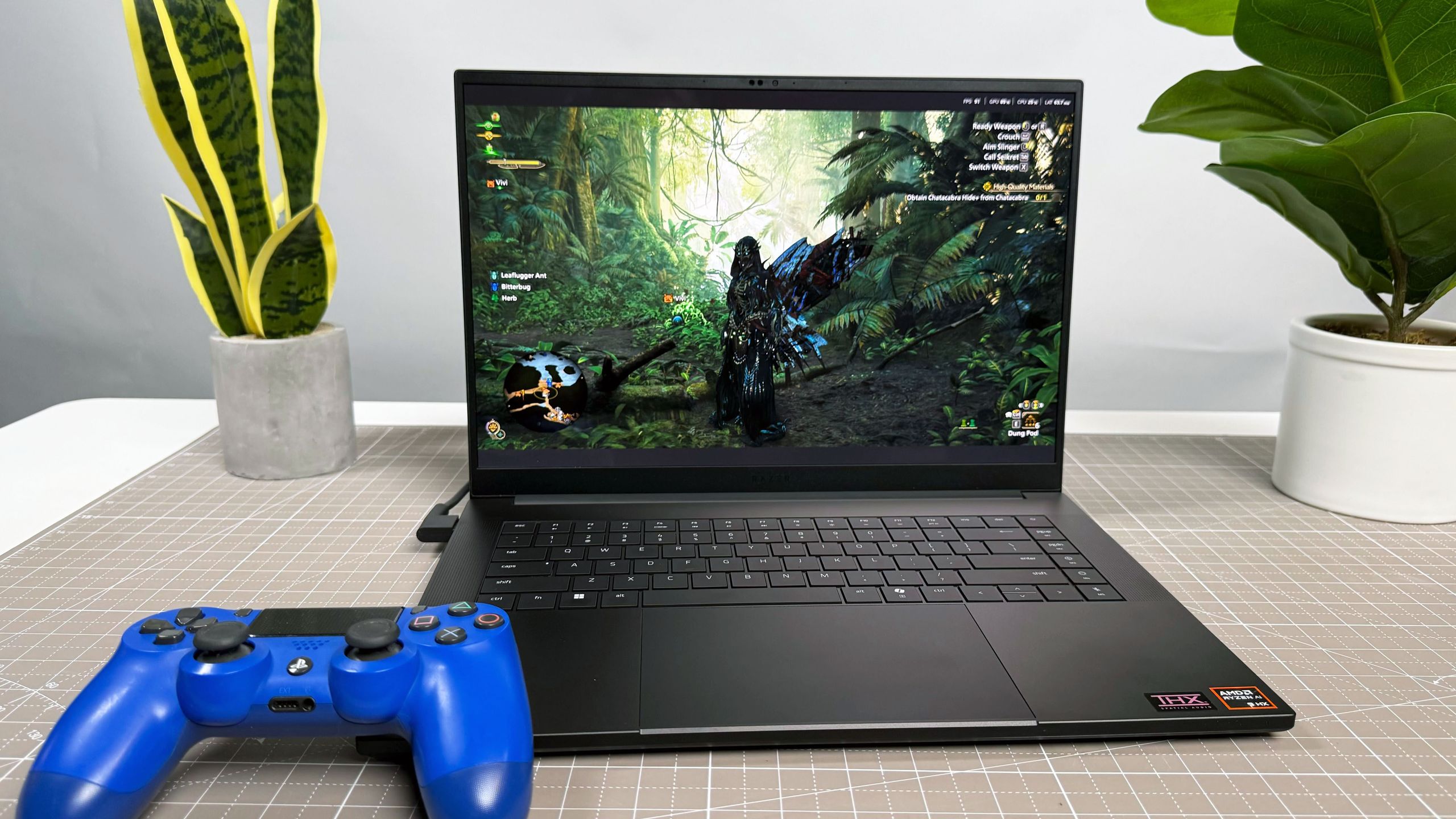
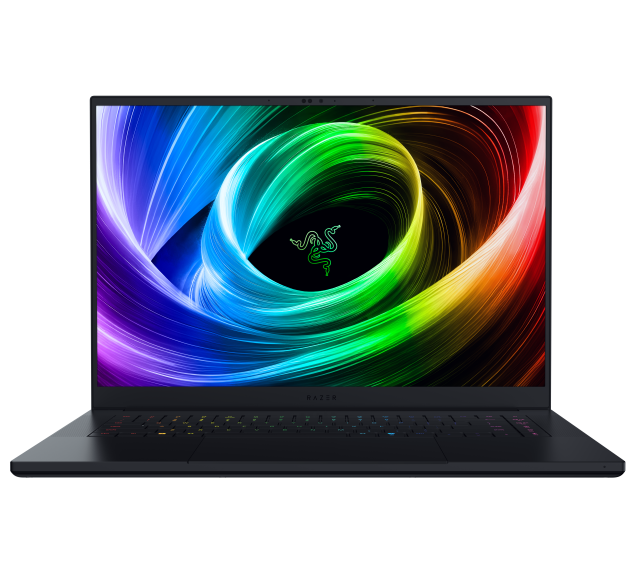
Razer continues its tradition of crafting premium, thin-and-light gaming machines with the Razer Blade 16 (2025), a true marvel of engineering. Featuring an AMD Ryzen AI 9 HX 370 CPU and an NVIDIA GeForce RTX 5090 with a staggering 24GB of VRAM, this laptop packs immense power into a surprisingly sleek 4.6-pound chassis. It represents a significant investment, but for over $4,000, users receive an absolute powerhouse designed for both portability and uncompromising performance.
The Blade 16’s 16-inch, 2560 x 1600, 240Hz OLED display is a visual feast, boasting an intense 144.6% DCI-P3 color gamut and 372 nits of brightness, delivering unparalleled immersion. Performance-wise, the RTX 5090 effortlessly handles demanding titles, achieving 87 fps in Red Dead Redemption II at 1080p. What truly sets it apart is its remarkable battery life for a high-tier gaming laptop: 7 hours and 22 minutes for web surfing and 2 hours and 28 minutes for gaming, challenging the notion that powerful gaming laptops must be tethered to an outlet. While its pricing and high operating temperatures are considerations, the Razer Blade 16 (2025) offers an exceptional blend of power, stunning visuals, and surprising endurance, making it the top choice for gamers on the go.
Alienware 16 Area-51 (Best Looking)
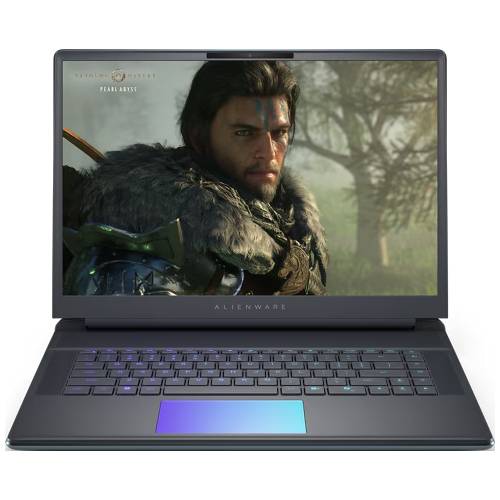
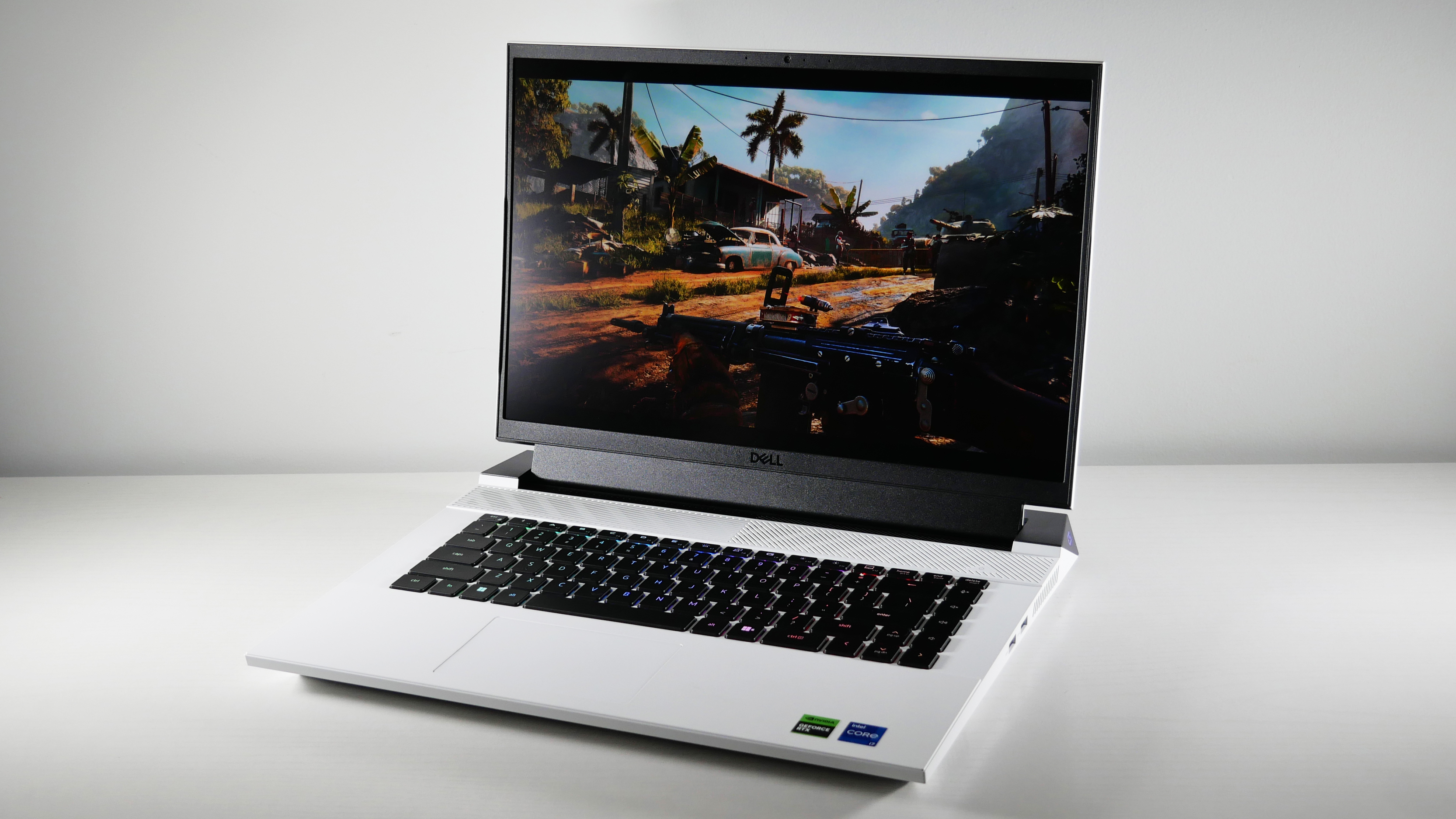
The Alienware 16 Area-51 elevates gaming aesthetics to new heights with its striking, sci-fi-inspired design, making it the most stylish gaming laptop available. Beyond its captivating exterior, it houses an Intel Core Ultra 9 275HX processor and an NVIDIA GeForce RTX 5080 16GB GPU, delivering powerful performance that often rivals even RTX 5090 systems. Critically, it does so at a more accessible price point, often found around $3,000.
Its design is a spectacle, featuring a mesmerizing light bar on the hinge that mimics an aurora borealis, RGB lighting across the keyboard, touchpad, and fans, and a glass window on the underside to showcase its internals. Despite its 7.13-pound heft, which impacts portability, its visual appeal is unmatched. Performance benchmarks are impressive, with 149 fps in Assassin’s Creed Mirage and 121 fps in Far Cry 6. The 16-inch, 2560 x 1600, 240Hz LED display is incredibly bright at 516 nits, though its color reproduction (81.6% DCI-P3) is less vibrant than OLED panels. Battery life is average for a gaming laptop at 4 hours and 10 minutes for general use and 1 hour and 50 minutes for gaming. For gamers prioritizing a visually stunning machine with robust performance at a competitive price, the Alienware 16 Area-51 is an irresistible choice.
Asus TUF Gaming A14 (Best Battery Life)
The Asus TUF Gaming A14 redefines expectations for gaming laptop endurance, achieving an industry-leading battery life that sets it apart. Powered by an AMD Ryzen 7 8845HS CPU and an NVIDIA GeForce RTX 4060 GPU, it remarkably lasted 10 hours and 4 minutes on a web surfing battery test – an extraordinary feat for a gaming laptop. This allows users to navigate a full workday or school day before needing to plug in for gaming sessions.
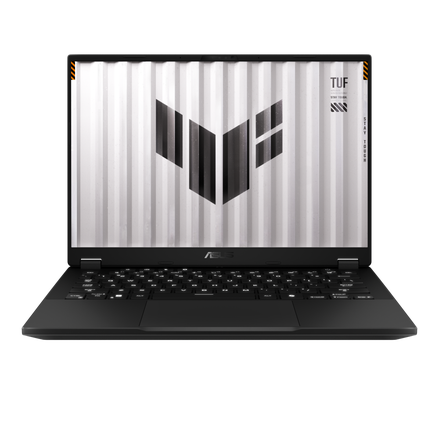
Despite its exceptional longevity, the TUF Gaming A14 does not compromise on gaming performance. It consistently delivered solid frame rates, clocking 87 fps in Assassin’s Creed Mirage, 77 fps in Far Cry 6, and 61 fps in Red Dead Redemption 2, even managing 30 fps in the demanding Cyberpunk 2077 at 1080p Ultra settings. Its 14-inch, 2560 x 1600, IPS, 165Hz display is bright (411 nits) and offers good color coverage (82% DCI-P3), enhancing immersion. Weighing a mere 3.2 pounds, its exceptionally light and durable chassis makes it an ideal companion for on-the-go productivity and gaming. The only significant drawback is a sluggish touchpad, suggesting the use of an external gaming mouse for optimal control. For students, professionals, or anyone prioritizing unplugged use without sacrificing gaming capability, the Asus TUF Gaming A14 is an unparalleled choice, proving that long battery life and gaming prowess can coexist.
Benchmark Comparisons at a Glance
| Model | Geekbench 6 (Higher) | Handbrake Time (Lower, MM.SS) | Far Cry 6 (Higher) | Assassin’s Creed Mirage (Higher) | Red Dead Redemption 2 (Higher) | SSD Transfer Rate (Higher, MBps) | Battery Life – Web (HH.MM) | Battery Life – Gaming (HH.MM) | DCI-P3 Color Gamut (Higher) | Display Brightness (Nits) | Hottest Temperature (Lower, °F) |
|---|---|---|---|---|---|---|---|---|---|---|---|
| MSI Raider 18 HX AI | 21,851 | 2:07 | 118 | 153 | 117 | 2,252 | 2:33 | 1:46 | 83.1 | 668 | 115 |
| Dell G16 (7630) | 11,209 | 4:19 | 85 | 88 | 64 | 1,719 | 5:04 | 1:06 | 114 | 310 | 107 |
| Lenovo Legion Pro 7i | 17,329 | 3:11 | 105 | 123 | 96 | 2,025 | 4:29 | 0:51 | 108.7 | 456 | 106.7 |
| Razer Blade 16 (2025) | 16,025 | 3:12 | 97 | 120 | 87 | 1,730 | 7:22 | 2:28 | 144.6 | 372 | 125.8 |
| Alienware 16 Area-51 | 20,498 | 1:58 | 121 | 149 | 117 | 1,149 | 4:10 | 1:50 | 81.6 | 516 | 118.7 |
| Asus TUF Gaming A14 | 11,330 | 4:21 | 77 | 87 | 61 | 1,339 | 10:04 | 1:06 | 82 | 411 | 104 |
Navigating the Market: Key Factors for Choosing a Gaming Laptop in 2025
The gaming laptop market in 2025 is more sophisticated than ever, requiring buyers to consider several critical factors beyond just raw processing power.

Budget Segmentation and Value: The notion of a "budget" gaming laptop has evolved. While sub-$1,000 options exist, truly capable systems typically start around $1,300. Mainstream performance rigs often fall between $1,500 and $2,000, delivering a strong balance of features and power. Premium systems, exceeding $2,000, incorporate top-tier components like the latest RTX 50 series GPUs, advanced cooling, and high-end displays. The price gaps between higher-tier GPUs are substantial, making it crucial for buyers to align their budget with the performance requirements of their preferred games and desired graphical settings.
The Shifting Landscape of Screen Sizes: The market has seen a notable shift from traditional 15.6-inch and larger 17-inch models toward more compact 14-inch and 16-inch form factors. The re-emergence of 18-inch gaming laptops caters to the "desktop replacement" segment, offering maximum screen real estate and cooling potential. For portability, 14-inch laptops are ideal, often boasting better battery life. 16-inch models strike a sweet spot, balancing screen size with manageability. Larger laptops, while powerful, typically demand constant connection to a power source.
Display Resolution and Refresh Rate Synergy: Achieving an optimal gaming experience involves balancing resolution, refresh rate, and battery life. While 1080p is the minimum resolution, it pairs well with ultra-high refresh rates (e.g., 360Hz) for competitive gaming where every frame counts. 4K displays offer unparalleled detail but are best utilized with powerful GPUs (RTX 5080/5090) and often come with a 120Hz refresh rate. The sweet spot for many in 2025 is the 1440p (QHD) display, offering a significant visual upgrade over 1080p without the extreme performance demands of 4K, often with high refresh rates (165Hz-240Hz). It’s crucial to ensure the GPU is powerful enough to fully utilize the display’s capabilities; a high refresh rate is meaningless if the GPU cannot consistently push high frame rates.
The CPU Landscape: Intel, AMD, and the Rise of AI: The competition between Intel and AMD in the CPU market remains fierce. AMD’s Ryzen processors, particularly the 8000 series, have made significant strides in performance and power efficiency, offering excellent battery life alongside robust multi-core capabilities. Intel’s latest Lunar Lake and Arrow Lake chips are aggressively catching up in efficiency while maintaining their strong single-core performance. The emergence of dedicated AI accelerators (NPUs) in both Intel Core Ultra and AMD Ryzen AI processors is a key trend, promising intelligent performance boosts, improved battery management, and new AI-driven features in applications and potentially games.
Battery Life: A Growing Priority: Historically, gaming laptops were notorious for short battery life. However, 2025 models are defying this expectation, with several systems now offering significantly extended unplugged usage. While intensive gaming will always drain batteries quickly, general productivity battery life has improved dramatically, with some models exceeding 10 hours. A baseline expectation of at least 5.5 hours for non-gaming tasks is now reasonable, transforming gaming laptops into more versatile machines for work and school.
Core Specifications for Modern Gaming: For a capable mainstream gaming experience in 2025, a minimum configuration should include an Intel Core i5 or AMD Ryzen 5 CPU, 16GB of RAM, a 512GB SSD, and a 1080p display. Higher-tier configurations will naturally upgrade these components, offering more cores, increased RAM, larger and faster SSDs (e.g., 1TB or 2TB NVMe PCIe Gen 4/5), and more powerful GPUs.
FAQs and Industry Insights
The RTX 40-Series vs. RTX 50-Series Dilemma: The choice between an RTX 40-series and a new RTX 50-series gaming laptop depends on individual priorities. For budget-conscious gamers who simply want to play, an RTX 4060 can handle all AAA games, often at 60+ fps on Ultra 1080p settings, and will become even more affordable as 50-series models launch. An RTX 4070 offers a significant step up for higher resolutions and refresh rates. For enthusiasts demanding 4K gaming at ultra settings with high frame rates, the RTX 4080 and 4090 remain formidable, though the RTX 5080 and 5090 will ultimately offer superior performance, especially with DLSS 4. The strategic move for many might be to eye discounted 40-series laptops as the 50-series saturates the market, securing excellent performance for less.
Gaming Laptop vs. Gaming Desktop: This enduring debate largely hinges on portability needs. Gaming desktops offer superior raw power for the price, easier upgradability, and better thermal management. Gaming laptops, conversely, provide an all-in-one portable solution, ideal for those who need to game on the go or prefer a compact setup. With advancements in laptop cooling and performance, the gap is narrowing, but desktops still hold the edge in raw power-per-dollar.
Gaming Laptops for School or Work: Modern gaming laptops are increasingly viable for academic and professional use. Models like the Asus TUF Gaming A14, with its exceptional battery life and relatively discreet design (once RGB is customized), exemplify this versatility. Their powerful CPUs and ample RAM easily handle demanding applications, making them suitable for engineering, video editing, or complex data analysis. However, in highly professional client-facing environments, a dedicated business laptop might still offer a more appropriate aesthetic. The critical factor is battery life and portability for daily tasks when not gaming.
Methodology: Our Unwavering Commitment to Thorough Testing
At Laptop Mag, our testing protocol is designed to mirror real-world usage scenarios. Beyond industry-standard benchmarks like Geekbench and 3DMark, we employ in-house tests to assess endurance, processing power, and graphics capabilities. Our battery test involves continuous web surfing at 150 nits of brightness. For processing, we use a complex spreadsheet macro and 4K video transcoding.
Graphics testing is particularly stringent, incorporating 3DMark’s Fire Strike Ultra, Time Spy Extreme, and Port Royal (for ray-tracing enabled GPUs). For the most advanced systems, Speed Way is utilized to push DX12 Ultimate features. All gaming benchmarks are conducted in full-screen, with vertical sync disabled, at both 1080p and the laptop’s native resolution. A diverse suite of games, including Red Dead Redemption 2, Assassin’s Creed Mirage, Shadow of the Tomb Raider, Borderlands 3, and Far Cry 6, ensures comprehensive performance evaluation.
This blend of rigorous lab data and extensive hands-on review provides a clear, comprehensive, and trustworthy assessment of every gaming laptop that passes through our labs, empowering consumers to make informed purchasing decisions in a rapidly evolving market.