The Bizarre Heist of High-Tech Sand Trailers Reveals Growing Vulnerabilities in Silicon Valley Supply Chains

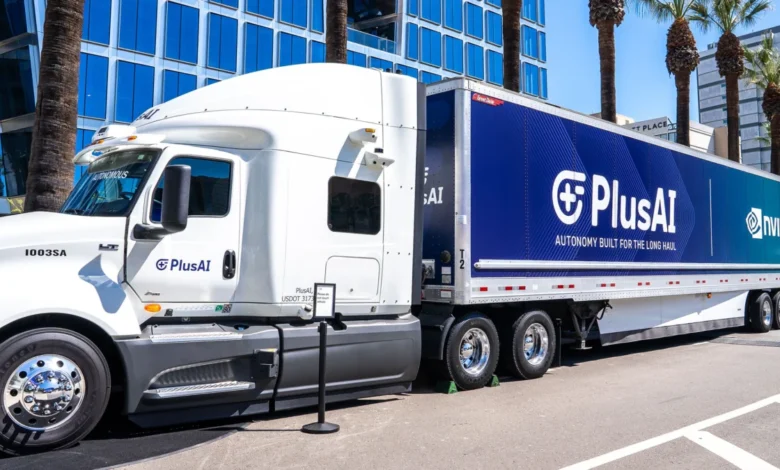
On Thursday morning, an executive at PlusAI, a leading developer of autonomous trucking technology, received an unexpected congratulatory text message from an acquaintance. “I have been proud of you for your adventure and success at Plus,” the message read. “Just saw two of your trucks near my workplace!” While the gesture was intended to celebrate the company’s apparent progress in deploying its self-driving fleet, it triggered an immediate security alert within the organization. The trucks were not supposed to be in Newark, California; they were meant to be safely docked at the company’s warehouse facility in Fremont, less than a mile away.
The ensuing investigation revealed a strange criminal episode that highlights both the sophistication of modern cargo theft and the unexpected pitfalls facing companies involved in the artificial intelligence gold rush. While the trailers were emblazoned with the logos of both PlusAI and Nvidia—the latter being the world’s most valuable company—the thieves discovered, perhaps to their dismay, that the cargo was worth significantly less than the hardware they likely expected to find.
A Chronology of the Theft
The sequence of events began under the cover of darkness. According to information provided by the Fremont Police Department and company representatives, the two trailers had been left secured at a PlusAI warehouse facility. The autonomous-ready cabs, which contain the proprietary, high-value AI computing stacks and sensor suites, were parked inside the building and remained untouched.
The trailers, however, were left in an external lot. Under the cover of night, unidentified perpetrators bypassed the hand locks securing the trailers. By attaching their own, non-autonomous tractor units to the trailers, the thieves were able to haul the assets away from the secure perimeter. The disappearance went unnoticed until the following morning, when the external acquaintance alerted the PlusAI executive after spotting the branded trailers parked in an industrial area in Newark.
By the time local law enforcement arrived at the scene in Newark, the thieves had already abandoned the trailers. It appears the suspects had broken into the units expecting to find high-end graphics processing units (GPUs), servers, or other critical AI infrastructure components essential for training large language models. Instead, they were met with a combined 40,000 pounds of sand.
The Utility of Simulated Loads
The presence of the sand was not a random occurrence but a standard procedure for companies developing autonomous vehicle software. Lauren Kwan, a spokesperson for PlusAI, confirmed that the company utilizes simulated loads in its trailers to facilitate rigorous research and development testing. “PlusAI uses simulated loads in its trailers to assist with research and development testing,” Kwan stated. “The trailers were recovered with 40,000 pounds of sand intact.”
For autonomous trucking developers, testing with actual cargo is often impractical or unsafe in the early stages of development. Using sand allows engineers to simulate the weight distribution, braking distances, and handling characteristics of a fully loaded commercial vehicle without the risk of damaging expensive, high-value consumer goods. While this saved the company from a significant financial loss regarding cargo, it also underscored a critical security failure: the brand association with Nvidia likely made the trailers high-value targets for organized theft rings, regardless of their actual contents.
The Escalating Crisis of Cargo Theft
This incident occurs against a backdrop of increasing hostility toward the technology sector’s supply chain. In the last eighteen months, the theft of high-value computer equipment has evolved from opportunistic crime to organized, and occasionally violent, professional operations.
Data from Verisk CargoNet, a leading firm in supply chain risk assessment, indicates that cargo theft in the United States is currently at a multi-year high. While common targets have traditionally included consumer electronics, copper, and pharmaceutical goods, there has been a marked pivot toward data center equipment. In August, reports surfaced regarding a string of sophisticated heists in California where thieves targeted vehicles equipped with security escorts. These incidents involved the ramming of escort vehicles to force trucks to stop, followed by the hijacking of the cargo units.
In several documented cases, the stolen hardware—consisting of specialized AI chips—has vanished into black markets before authorities could trace the serial numbers. The economic incentive is clear: with the demand for AI compute power outstripping supply, the resale value of stolen hardware on the secondary market can reach millions of dollars per shipment.
A Pattern of Targeted Technology Theft
Beyond the specialized AI hardware, other high-tech commodities have become prime targets for criminal syndicates. Tesla, for instance, has struggled with the repeated theft of high-capacity battery packs, which are stolen directly from logistics centers before they can be integrated into vehicles. Similarly, large-scale bitcoin mining operations have reported frequent break-ins, where specialized ASIC (Application-Specific Integrated Circuit) miners are stripped from racks in industrial-scale facilities.
The Newark incident, while ultimately ending in the recovery of the property, illustrates the "brand premium" problem. Even when a company is transporting something as mundane as sand, the presence of recognizable logos on the side of a trailer can inadvertently paint a target on the vehicle. For firms like PlusAI and Nvidia, which are at the bleeding edge of autonomous logistics, the physical security of their assets is becoming as complex as the software they develop.
Official Responses and Security Implications
The Fremont Police Department is currently leading the investigation into the breach. Amy Gee, a spokesperson for the department, confirmed that no arrests have been made as of the latest briefing. The investigation is currently focused on surveillance footage from the surrounding area and the tracking of the unidentified cab units used to move the trailers.
Nvidia, which provides the critical processing power that enables PlusAI’s autonomous navigation, has not commented on the specific security protocols of their partners. However, industry analysts suggest that this event will force a re-evaluation of how AI hardware is transported and stored.
“When you have companies that are effectively the backbone of the global AI infrastructure, every single link in their supply chain becomes a liability,” says an independent logistics security consultant familiar with high-value tech transit. “We are seeing a shift where security is no longer just about locks and gates. It is about obscuring the nature of the cargo and minimizing the time high-value assets spend in transit.”
Lessons Learned and Future Outlook
For PlusAI, the outcome was fortunate. By Thursday afternoon, the trailers were successfully recovered and returned to the Fremont warehouse. The loss was limited to the cost of the broken locks and the operational downtime associated with the recovery. However, the psychological and operational impact is significant.
The incident serves as a stark reminder that in the race to automate the trucking industry, human factors—specifically the risk of theft and the necessity of physical asset protection—remain a primary challenge. As autonomous trucks begin to move from controlled testing environments to public highways, the security requirements for these vehicles will increase exponentially.
Moving forward, the industry is expected to adopt more rigorous tracking measures, including real-time GPS monitoring of trailers, geofencing, and potentially even remote-disabling features for any tractor unit that does not match the authorized fleet profile.
The "sand heist" of Newark may be a bizarre footnote in the history of AI development, but it highlights a very real and growing danger. In a world where the physical hardware powering the digital future is increasingly scarce and expensive, the vulnerability of the supply chain remains one of the most critical, yet often overlooked, components of the tech industry’s success. The perpetrators, having likely discovered the weight of their stolen prize, may have abandoned the trailers, but the broader threat to high-tech logistics remains fully operational.