Apple Patches Longstanding Security Flaw in Hide My Email Service After Privacy Leak Exposure

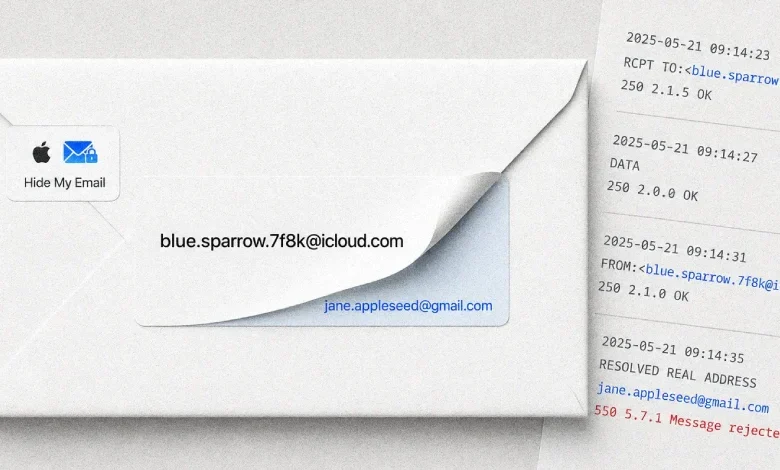
Apple has officially deployed a critical security update to resolve a persistent vulnerability within its Hide My Email service, a flaw that allowed the unmasking of users’ genuine email addresses and effectively bypassed the core privacy protections of the iCloud+ feature. The remediation, which was finalized on July 3, 2026, concludes a year-long period of exposure that has sparked significant concerns regarding Apple’s handling of privacy-related bug reports and its commitment to the security guarantees marketed to its premium subscribers.
The vulnerability was first brought to public attention following reports by 404 Media, which highlighted that the flaw had been disclosed to Apple more than a year prior by Tyler Murphy, the co-founder of EasyOptOuts. Despite multiple attempts by the tech giant to address the issue in early 2026, the leak persisted until the most recent patch. The discovery and subsequent delay in a functional fix have now become the focal point of a class-action lawsuit, alleging that Apple misled consumers about the efficacy of its privacy tools while continuing to collect subscription fees for the service.
Technical Overview of the Unmasking Flaw
Hide My Email is a cornerstone of Apple’s iCloud+ subscription, designed to allow users to generate unique, random email addresses that forward messages to their personal inboxes. This architectural layer is intended to prevent third-party services, marketers, and potential bad actors from obtaining a user’s primary email identity, thereby reducing the risk of cross-site tracking and targeted spam.
However, the technical failure discovered by Murphy and his colleague Ben Weiner centered on the behavior of mail transfer logs when an email was rejected. The crux of the problem was remarkably simple: if a message sent to a "Hide My Email" alias was rejected as spam by the receiving mail server, the subsequent error logs or bounce-back mechanisms would, in many instances, reveal the recipient’s actual, underlying email address.
According to the researchers, this leak was not dependent on sophisticated hacking techniques but was a byproduct of how major email hosts handled automated rejections. When an email was flagged as spam—even if it was a legitimate communication—the process of rejection triggered a data leak in the mail transfer agent (MTA) logs. For a malicious actor, this meant that unmasking a target was as simple as sending a specially crafted message designed to trigger a spam filter, then monitoring the resulting server responses or logs.
Chronology of Discovery and Remediation
The timeline of the Hide My Email vulnerability reveals a protracted struggle between independent researchers and Apple’s security engineering teams. The delay in achieving a permanent fix has raised questions about the internal prioritization of privacy bugs at the company.

- June 13, 2025: Tyler Murphy of EasyOptOuts formally reports the unmasking vulnerability to Apple’s security team, providing evidence that real email addresses were being leaked via mail logs.
- March 2026: Apple makes its first attempt to patch the vulnerability. However, subsequent testing by researchers indicates that the fix is incomplete and the leak remains exploitable under certain conditions.
- June 30, 2026: A second attempt at a patch is deployed by Apple. Researchers again find that the core issue—the exposure of the real address during spam rejection—has not been fully mitigated.
- July 3, 2026: Apple deploys a comprehensive server-side fix that successfully prevents the unmasking of the primary email address in mail logs during rejection events.
- July 7, 2026: The fix is confirmed to be stable, though experts warn that any logs generated prior to this date may still contain leaked information.
- July 21, 2026: Detailed reports on the flaw are published following the confirmation that the vulnerability has been plugged.
In a statement provided to 404 Media, Murphy and Weiner noted the difficulty in assessing the historical impact of the bug. Because the leak was often triggered by emails that were automatically rejected and never reached the user’s inbox, most affected individuals would have no way of knowing their privacy had been compromised. "You can’t review your spam folder to learn whether you were affected," the researchers explained, noting that the leak occurred at the server level before the user ever interacted with the mail.
Market Context and the Privacy Promise
Apple’s "Hide My Email" was originally announced in June 2021 during the Worldwide Developers Conference (WWDC) as part of a broader suite of privacy enhancements including iCloud Private Relay and App Tracking Transparency. By positioning privacy as a "fundamental human right," Apple leveraged these features to differentiate its ecosystem from competitors like Google and Meta, who rely more heavily on data-driven advertising models.
The service requires a paid iCloud+ subscription, which starts at $0.99 per month. For many users, particularly those in the security and journalism sectors, the ability to compartmentalize digital identities is a critical safety requirement. The revelation that this "black box" privacy tool was failing to hide the very data it promised to protect strikes at the heart of Apple’s brand identity.
Industry analysts point out that while Apple has been a leader in on-device encryption and hardware security, cloud-based relay services present a different set of challenges. Managing the metadata of millions of forwarded emails requires perfect synchronization between Apple’s infrastructure and the global standards of the Simple Mail Transfer Protocol (SMTP). The failure to account for how third-party mail servers log rejected messages represents a significant oversight in the service’s original threat model.
Legal Ramifications: Alvarez v. Apple Inc.
The resolution of the bug has not shielded Apple from legal scrutiny. A class-action lawsuit, Alvarez v. Apple Inc., has been filed in federal court, accusing the company of breach of contract and deceptive trade practices. The plaintiffs argue that Apple continued to market and charge for a privacy feature it knew was fundamentally broken.
The complaint alleges that Apple was fully aware of the unmasking flaw for over a year—following Murphy’s initial report in June 2025—yet failed to warn consumers or disable the feature while a fix was being developed. "At no point during this period did Apple disable or pause Hide My Email, warn its customers of the flaw, or correct its privacy representations," the legal filing states.
The lawsuit seeks damages for iCloud+ subscribers, claiming they paid for a service that did not deliver the promised level of anonymity. Legal experts suggest that this case could set a precedent for how tech companies are held accountable for "privacy-as-a-service" products. Unlike free services where "user data is the product," iCloud+ is a direct financial transaction for security, which may heighten the legal standard for performance and transparency.

Broader Implications for Cloud Security
The Hide My Email flaw highlights a growing concern in the cybersecurity industry regarding "leaky abstractions." As tech companies build more layers of "privacy shields" and "relays," the points of failure often migrate to the seams where different systems interact. In this case, the seam was the interaction between Apple’s forwarding servers and the spam-filtering logic of destination mailboxes.
For users, the incident serves as a reminder that no single tool provides absolute anonymity. Security researchers suggest that while the patch is now in place, users who utilized Hide My Email for high-stakes privacy—such as whistleblowing or avoiding domestic surveillance—should assume their primary email address may have been logged by intermediate mail servers between 2021 and July 2026.
Moving forward, the cybersecurity community is calling for greater transparency in how Apple handles its "Security Research Device" program and its bug bounty payouts. Critics argue that if a vulnerability of this nature took over a year to fix, there may be systemic bottlenecks in Apple’s response to cloud-side vulnerabilities compared to its rapid response to iOS or macOS kernel exploits.
Conclusion and User Recommendations
While Apple has finally addressed the technical deficiency, the reputational damage may linger. The company has not officially commented on why the remediation process spanned three separate attempts and thirteen months. As of late July 2026, the service is considered secure against this specific unmasking vector.
Users are advised to:
- Continue using Hide My Email: The current patch addresses the reported vulnerability, and the service remains a viable tool for reducing spam and general tracking.
- Monitor for Phishing: Because real email addresses may have been captured in historical mail logs, users should be extra vigilant regarding phishing attempts directed at their primary Apple ID email address.
- Audit Aliases: Users should review their active Hide My Email aliases and consider rotating or deleting those used with services that may have been targets of high-volume spam or data breaches.
The intersection of privacy marketing and technical reality remains a complex battlefield. As Apple continues to expand its services into finance, health, and advanced cloud computing, the "Hide My Email" incident serves as a cautionary tale about the necessity of rigorous, transparent, and timely responses to security disclosures.
Related posts: