AI Revolutionizes Biologics Drug Discovery: From Accelerating Timelines to De Novo Design

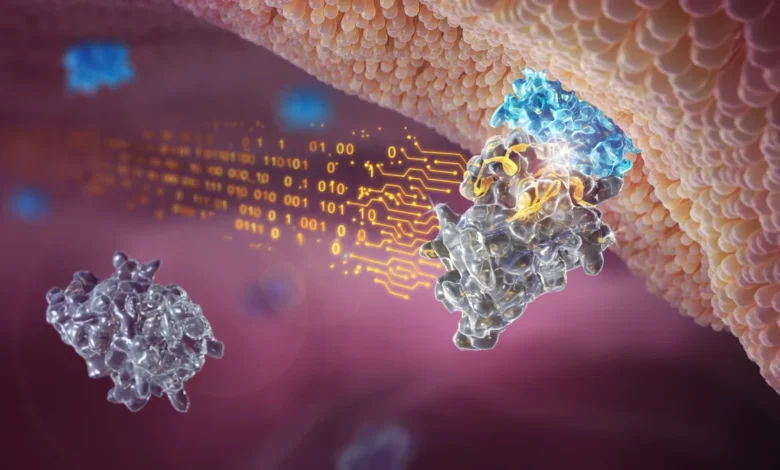
The arduous journey of designing and developing a new medicine has historically been a costly, complex, and failure-prone scientific endeavor. For biologic medicines—therapies derived from engineered proteins crucial for treating a wide spectrum of acute and chronic diseases—this challenge is amplified. These sophisticated treatments, unlike those synthesized from chemical compounds, require navigating an immense landscape of potential molecular candidates, each needing to meet stringent criteria for target binding, in-body stability, and large-scale manufacturability. This intricate process can span many years and incur substantial investment, with the vast majority of promising candidates ultimately failing to reach patients. However, the advent of Artificial Intelligence (AI) is rapidly transforming this landscape, embedding itself as a cornerstone of pharmaceutical research and development (R&D) and significantly accelerating these complex processes.
The integration of AI into the drug discovery pipeline is no longer a distant vision but a present reality, particularly within the realm of biologics. Companies at the forefront of pharmaceutical innovation are actively investing in and expanding their AI engineering capabilities to harness its full potential. Puja Sapra, Senior Vice President and Head of R&D Biologics Engineering and Oncology Targeted Discovery at AstraZeneca, articulates this paradigm shift, stating, "Everything we do, whether it’s design, make, test, or analyze, is now computationally enhanced. The cycle times are getting shorter while productivity and innovation increase." This sentiment underscores a fundamental transformation in how new therapeutic agents are conceived and brought to fruition.
Accelerating the Discovery Cycle: The Build-Measure-Learn Loop
AstraZeneca’s approach exemplifies a sophisticated "build-measure-learn" loop powered by AI. The process begins with AI algorithms generating or prioritizing a vast array of candidate molecules computationally. These predictive models are designed to identify designs with the highest probability of success, thereby drastically narrowing the focus for subsequent laboratory experimentation. By concentrating valuable laboratory resources on only the most promising candidates, scientists can engage in a more efficient feedback cycle, minimizing the exploration of dead ends and accelerating the iteration process. This refined approach not only speeds up development but also opens doors to pursuing disease targets that were previously considered intractable with existing medicinal capabilities. The sheer scale of possible molecular combinations, far exceeding the capacity of human teams to systematically explore, makes AI’s role in narrowing and refining these options indispensable in modern biologics drug design.
Expanding Therapeutic Horizons: Towards Multi-Target and Precision Therapies
Beyond merely accelerating existing discovery timelines, AI is instrumental in the pursuit of entirely novel classes of medicines. Traditional biologics typically target a single disease pathway. The next generation of therapeutics, however, aims for greater sophistication, capable of engaging multiple targets simultaneously or delivering therapeutic payloads with pinpoint accuracy to specific cells. Achieving such complex therapeutic profiles necessitates simultaneous optimization across a multitude of variables. Looking ahead, AI-driven models are poised to play a pivotal role in designing these increasingly intricate, multi-specific biologics.
As Sapra elaborates, "For example, such models could help identify which two or three targets to prioritize based on the underlying biology, then optimize across multiple parameters to balance a molecule’s potency, stability, manufacturability, and safety." This capability is heralding a new era where "drugging the undruggable is becoming a reality." The potential for these advanced AI-designed medicines to address previously unreachable disease targets and offer remarkable benefits to patients is immense. This advancement signifies a departure from incremental improvements to a truly transformative approach in medicine development.
The Power of Data: Building a "Data Moat" for AI Dominance
The efficacy of any AI model is intrinsically linked to the quality and quantity of its training data. In the highly specialized field of drug discovery, this translates to an imperative for vast repositories of high-quality biological data. Experimental outcomes, whether successful or not, provide invaluable signals about what works and what doesn’t, forming a rich source for AI training. McKinsey estimates that generative AI, in conjunction with other computational tools, could potentially slash drug discovery timelines by as much as 50%.
"Data is our differentiator," asserts Sapra, highlighting AstraZeneca’s strategic approach to data accumulation and utilization. The company’s datasets are proprietary, multimodal, and encompass a comprehensive range of information, including molecular structures, binding measurements, safety profiles, and manufacturing outcomes. "We’ve built an intentionally diverse portfolio across multiple disease areas and drug types. All of that data empowers us to fine-tune frontier AI models with richer, more representative training sets." Furthermore, significant investments have been made in deep screening technologies to generate the high-volume datasets essential for the continuous refinement and validation of these sophisticated AI models. This strategic emphasis on data forms a critical "data moat," providing a competitive advantage in the AI-driven drug discovery landscape.
The "Lab of the Future": Towards Autonomous Discovery Engines
To consolidate and leverage this extensive data, AstraZeneca is pioneering the development of a "lab of the future" facility in Kendall Square, Cambridge, Massachusetts. This cutting-edge facility is designed to integrate AI and robotic automation into a seamless, closed-loop discovery system. Sapra likens this system to a self-driving car, where "a self-driving car uses sensors and models to navigate its environment, this system uses AI to make predictions, robotic systems to execute experiments, and instruments to generate data." The data generated by these robotic experiments is then fed directly back into the AI models, creating an accelerated cycle of continuous improvement and discovery.

Crucially, human expertise remains central to this automated process. Sapra emphasizes, "Scientists will remain central to the process, providing the oversight, judgment, and strategic direction that ensure outputs are explainable, tolerable, and directed toward potential patient benefit." This human-AI synergy is designed to maximize the benefits of automation while retaining the critical human element of scientific insight and ethical consideration.
As these automated high-throughput systems mature, they will be capable of conducting and evaluating thousands of molecular interactions weekly. This will generate "AI-ready data at a scale that traditional workflows cannot match," according to Sapra. The integration of robotic sample handling, automated quality checks, and unified data pipelines further promises to significantly accelerate early drug development timelines.
The Next Frontier: De Novo Design – Generating Medicines from Scratch
The ultimate aspiration for AI in biologics drug discovery, as articulated by Sapra, is "de novo" design. This represents the ability of AI to generate entirely novel protein sequences, meticulously engineered to possess specific drug properties. This encompasses not only the molecular structure but also the prediction of safety, in-body behavior, and manufacturability.
"The field is making great progress toward a completely AI-generated biologic, designed from scratch all the way to a clinical candidate," Sapra observes. "As we continue to leverage frontier models and fine-tune them with the right datasets, we bring ourselves closer to this reality. I believe it will come. It’s a matter of time."
Achieving this ambitious goal requires several key advancements. Firstly, the industry needs richer and more standardized training data. Secondly, robust evaluation benchmarks for AI-generated candidates are essential. Thirdly, fostering teams proficient at the intersection of machine learning and biology is critical. However, Sapra identifies safety prediction as perhaps the most consequential, and often the least discussed, prerequisite.
"One of the hardest problems in de novo design is predicting whether a computationally generated molecule will be safe in the human body," Sapra explains. AstraZeneca is addressing this challenge through advanced "virtual clinical trials." These involve sophisticated cell systems and micro-scale organ models that serve as physical testbeds, coupled with AI that learns from their outputs. "These systems have the potential to generate enhanced biological signals without traditional testing bottlenecks, and they’re a critical missing piece in closing the loop between AI-generated designs and clinical-ready candidates," Sapra adds.
The ongoing evolution towards agentic AI systems, capable of simultaneously generating molecule candidates and predicting their efficacy and safety, represents a significant leap. These autonomous workflows can directly link disease-level insights to molecule design, effectively bridging previously siloed data domains. "The complexity of the biology goes hand-in-hand with the design of the molecule," Sapra summarizes, underscoring the intricate relationship between biological understanding and molecular engineering.
Human Ingenuity Amplifies AI’s Potential
While technology is a driving force, the transformation in biologics drug discovery is fundamentally a human-centric endeavor. "With more autonomous systems, human oversight remains at the heart of this approach—ensuring explainable and ethical AI for the benefit of patients," states Sapra. The collaboration between scientists and AI is envisioned as a partnership, where "scientists will work hand-in-hand with these model systems." This symbiotic relationship involves AI designing molecules, and scientists then working with these systems to test them, integrating the resulting data to further refine the AI’s capabilities. This iterative process, guided by human judgment and ethical considerations, will drive the continuous evolution and improvement of AI models, ultimately benefiting patients.
For engineers, the task of designing and building effective AI systems for human-AI collaboration necessitates a strong emphasis on model transparency and explainability. Sapra notes that AstraZeneca’s engineering teams comprise data scientists, automation specialists, and AI engineers who are developing systems that function as "thinking partners" rather than inscrutable "black boxes." The challenges they address are profound, including "multimodal data fusion, closed-loop optimization, uncertainty quantification, and interpretability at the point of clinical decision-making."
By tackling these technically demanding challenges, engineers and scientists are contributing to the research and development of potentially life-changing treatments for a multitude of diseases. "The biologic medicines we can develop today, and those we’ll design tomorrow, depend on combining world-class AI and engineering talent with deep scientific expertise," concludes Sapra. This fusion of cutting-edge technology and human scientific acumen represents the vanguard of pharmaceutical innovation, promising a future where previously insurmountable diseases may become treatable.
This article was initiated and funded by AstraZeneca. Z4-85058, July 2026.
This content was produced by Insights, the custom content arm of MIT Technology Review. It was not written by MIT Technology Review’s editorial staff. It was researched, designed, and written by human writers, editors, analysts, and illustrators. This includes the writing of surveys and collection of data for surveys. AI tools that may have been used were limited to secondary production processes that passed thorough human review.