Diablo 5 Will Shift Toward Strategy and Character Investment Rather Than Pure Reflexes, Says Game Director Joe Shely

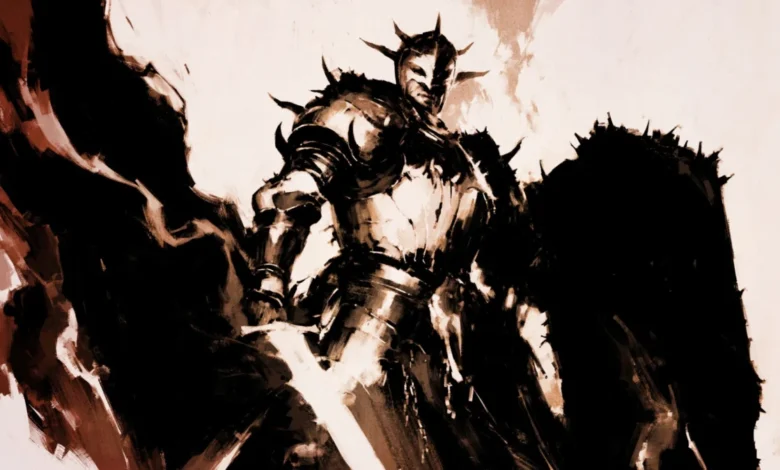
Blizzard Entertainment’s upcoming installment in its flagship action role-playing game (ARPG) franchise, Diablo 5, is set to pivot away from the fast-paced, reflex-heavy mechanics of its predecessor. According to recent public statements by Game Director Joe Shely, the development team is intentionally redesigning the core loop to emphasize planning, character stats, and strategic investment over moment-to-moment execution.
This design shift signals a potential philosophical bridge between modern ARPG sensibilities and the methodical, spreadsheet-heavy progression systems that defined earlier entries in the genre, most notably Diablo 2. As the ARPG market continues to diversify between twitch-based, soulslike action and deep, stats-driven character building, Blizzard’s latest design disclosures offer a revealing look into the strategic evolution of the Sanctuary universe.
The Core Philosophy: DEX Versus INT/STR Mechanics
The conversation surrounding Diablo 5’s combat taxonomy gained momentum following a detailed analytical video published by former Path of Exile game director Chris Wilson. In his breakdown of the genre’s trajectory, Wilson introduced a conceptual framework categorizing ARPG combat mechanics into distinct statistical pillars: DEX (dexterity, representing real-time execution, spatial awareness, and reflex-driven dodging) and INT/STR (intelligence and strength, representing math-based character preparation, passive mitigation, and pre-fight build optimization).
By these metrics, modern action RPGs—including Diablo 3, Diablo 4, and various soulslike titles—have leaned heavily into DEX-heavy paradigms. In Diablo 4, success is frequently dictated by a player’s ability to time evasive maneuvers, dodge-roll out of ground-targeted telegraphs, and execute precise button rotations regardless of minor numerical deficits in their gear.
However, Joe Shely directly addressed this dichotomy in a statement posted to social media platform X. Clarifying the design pillars of Diablo 5, Shely noted: "While Diablo 5 will continue to feature some DEX (moment-to-moment execution) mechanics, on balance the game will be an INT/STR game (planning and investment). We are designing to the core tenet of ARPGs that any challenge can be overcome with the right build."
This design philosophy marks a notable course correction. Following the launch of Diablo 4, Blizzard faced criticism from purists who felt the game abandoned the deliberate, weighty pacing of Diablo 2 in favor of the hyper-accelerated, arcade-like momentum popularized by Diablo 3. By formally realigning Diablo 5 toward strategic investment, Blizzard is signaling to its veteran player base that analytical build-crafting will once again take precedence over pure thumb-skill.
Historical Context: The Evolution of the Diablo Franchise
To understand the weight of Shely’s comments, it is necessary to examine the historical trajectory of the Diablo series over the past two decades:
- Diablo II (2000): Established the modern ARPG blueprint. Combat was slower, positioning was critical, and stat allocation (Strength, Dexterity, Vitality, Energy) upon leveling up was permanent. Mistakes in character building could permanently cripple a character, forcing deep planning and extensive research into item synergies and skill trees.
- Diablo III (2012): Streamlined the experience significantly. Permanent stat allocation was removed in favor of automatic scaling, skill swapping was made frictionless, and endgame loops focused heavily on high-speed Rift clearing, positioning, and crowd-control management.
- Diablo IV (2023): Attempted a middle ground by grounding the visual tone and atmosphere in the gritty realism of the second game, while retaining the fluid, mobility-heavy combat loops (such as the universal dodge mechanic) of the third. Over successive seasons, patches accelerated gameplay speed to satisfy contemporary audience demands for high-octane engagement.
- Diablo 5 (In Development): Announced with early design disclosures at Blizzcon, the upcoming title aims to reintroduce classic structural weight—such as inventory items occupying multiple grid slots—while fully committing to an INT/STR progression model.
The Industry-Wide Pendulum Swing Toward Deliberate Mechanics
Blizzard’s pivot toward a slower, more deliberate style of gameplay is not happening in a vacuum. Across the broader PC and console gaming landscapes, a measurable segment of the gaming populace has demonstrated a growing appetite for friction, weight, and consequence in video game design.
This trend is evidenced by the massive and sustained popularity of titles like Diablo 2: Resurrected, which proved that modern players still tolerate—and actively enjoy—rigid inventory constraints, severe death penalties, and punishing pathfinding. Similarly, recent telemetry data from World of Warcraft initiatives, such as expansions and classic re-releases, highlights that players willingly engage with inconveniences like long travel times and methodical questing when those elements contribute to a stronger sense of immersion and earned accomplishment.
In contrast, modern ARPG design has frequently been criticized for falling into a predictable cycle: players rocket from level one to max level in a matter of hours, spend the remainder of the season inflating single-digit damage numbers into astronomical figures, and repeat the loop until the next seasonal reset. By shifting Diablo 5 back toward deep planning and investment, Blizzard risks alienating casual players who prefer instantaneous feedback, but it stands to capture a dedicated demographic that hungers for meaningful character customization.
Implications and Future Outlook
As Blizzard continues to support Diablo 4 with ongoing storytelling and seasonal updates—having previously confirmed that no further full-scale expansions are planned for the fourth installment while keeping active servers running—the studio is clearly adopting a dual-track strategy. Diablo 4 will remain the home for players who prefer fast, accessible, action-oriented gameplay, while Diablo 5 is being engineered to satisfy the calculated, tactical sensibilities of traditional ARPG veterans.

Whether this hybridization of old-school mechanics and modern graphical fidelity will satisfy both factions remains to be seen. However, by explicitly declaring Diablo 5 an "INT/STR game," Joe Shely and the development team have drawn a definitive line in the sand, promising an experience where intellectual preparation triumphs over brute-force reflex.
Related posts: