Aotos Flux X26 Pro Review: The Blurred Line Between High-Power E-Bikes and Electric Motorcycles

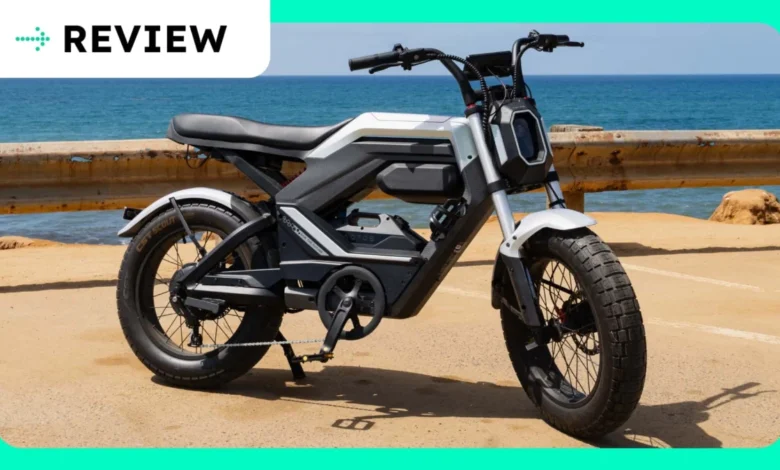
The rapid evolution of personal electric mobility devices has created a complex grey area within urban and suburban transportation infrastructure. For years, the market was neatly partitioned between traditional bicycles, low-powered commuter electric bicycles, and registered motor vehicles. However, the introduction of high-performance micro-mobility machines—such as the Aotos Flux X26 Pro—has challenged regulatory frameworks, municipal definitions, and consumer expectations. Blending the aesthetic cues and raw power output of a lightweight motorcycle with the foundational architecture of a bicycle, these hybrid vehicles force riders and regulators alike to reconsider where an e-bike ends and an electric motorcycle begins.
Evaluating the Aotos Flux X26 Pro over a rigorous multi-week testing period reveals the core tension defining the modern micro-mobility landscape: the friction between unbridled off-road capability and everyday urban practicality. Priced at $2,299 for the Pro variant and $1,699 for the base model, the Aotos line represents a significant financial investment. Yet, navigating the complexities of its design, technical specifications, and legal limitations offers crucial insight into the current trajectory of the e-mobility industry.
Defining the Classification: E-Bike vs. E-Moto
To understand the polarizing nature of vehicles like the Aotos Flux X26 Pro, one must first examine the legal parameters governing electric bicycles. In the United States, e-bikes are systematically categorized into three distinct tiers to ensure safety and compatibility with existing non-motorized infrastructure. According to widely accepted standards, such as those outlined by the California Bicycle Coalition:
- Class 1 e-bikes provide motor assistance exclusively when the rider is actively pedaling, cutting off power entirely once the bicycle reaches 20 mph.
- Class 2 e-bikes operate via either pedal-assist or a dedicated throttle, maintaining a maximum assisted speed limit of 20 mph.
- Class 3 e-bikes provide pedal-assist functionality up to a maximum speed of 28 mph, typically restricting or eliminating throttle use at higher speeds.
Furthermore, federal and state regulations generally cap nominal electric motor output at 750 watts for a vehicle to retain legal status as an e-bike. However, 750W is frequently viewed by performance enthusiasts as insufficient for dynamic off-road maneuvers, steep hill climbs, or rapid acceleration. To satisfy consumer demand for greater thrills, many manufacturers incorporate "off-road" or "unlimited" modes into their firmware. When activated, these modes bypass traditional street-legal caps, elevating power output significantly.
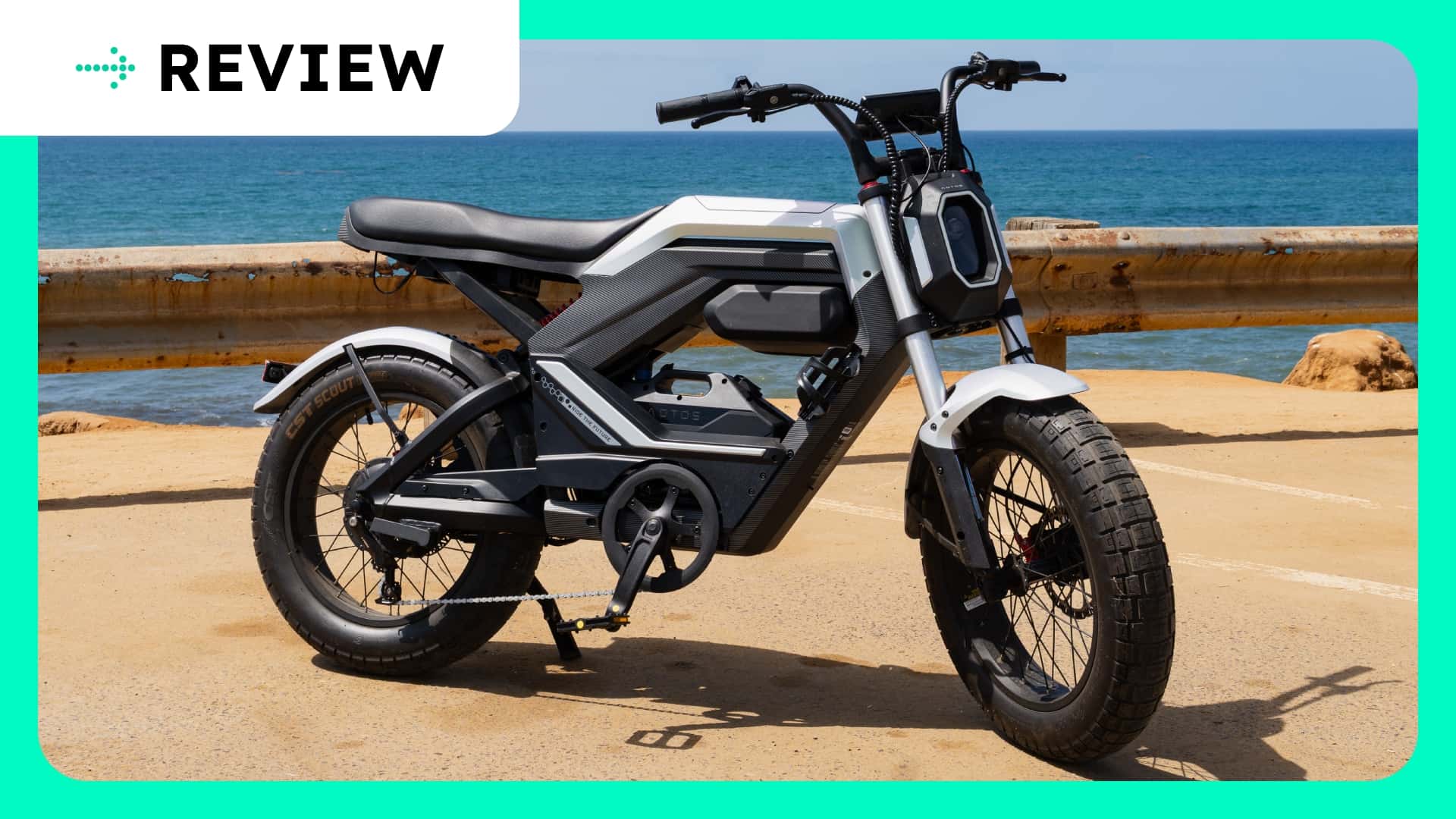
Out of the box, the Aotos Flux X26 and Flux X26 Pro adhere to Class 2 specifications with a 750W nominal limit. Yet, unlocking the Pro model’s designated off-road mode unleashes a staggering 2,000 watts of peak power, while the standard model yields 1,200 watts. Concurrently, the machine features a fixed, motorcycle-style seat, single-gear drivetrain, aerodynamic fairings, and heavy-duty moped tires. Because these modifications propel the vehicle well beyond statutory e-bike limits—and because the machine lacks the license plates, turn signals, and registration required for street-legal mopeds or motorcycles—activating the off-road mode immediately strips the vehicle of its legal status on public roads and bike paths.
Design Philosophy and Ergonomic Realities
The physical architecture of the Aotos Flux X26 Pro draws heavily from the burgeoning e-moto segment rather than traditional cycling heritage. While this design language successfully captures consumer attention, it introduces distinct compromises in daily usability.
During an extensive testing phase covering approximately 90 miles across diverse environments, the ergonomic divergence between the Aotos and traditional commuter e-bikes became starkly apparent. Conventional e-bikes, such as the Tenways Wayfarer or the Aventon Level series, prioritize multi-speed transmissions, adjustable bicycle saddles, and standard handlebar geometry. These elements encourage an active, engaged riding style where pedaling feels seamless, organic, and mechanically efficient.
Conversely, the Aotos features a fixed, non-adjustable seat height, a single-gear ratio, and wide foot placement that renders traditional pedaling virtually impractical. From a complete stop, the aggressive single-speed gearing requires significant physical effort to initiate momentum. Once cruising at higher speeds—approaching 25 mph—the rider’s legs must rotate at a cartoonishly rapid cadence simply to keep up with the drivetrain, rendering the pedals largely decorative.
Compounding this ergonomic mismatch is the utilization of a cadence sensor rather than a sophisticated torque sensor. While modern torque-sensing e-bikes measure the actual force applied to the pedals by the rider to deliver intuitive, proportional motor assistance, cadence sensors merely detect whether the pedals are in motion. Consequently, a casual, half-turn of the pedals executed simply to reposition one’s feet can inadvertently trigger an abrupt surge of acceleration. This mechanical behavior ultimately drives operators to rely almost exclusively on the handlebar-mounted throttle, transforming the bicycle into a low-speed throttle-controlled motorcycle.
Energy Consumption, Range, and Practicality
The pursuit of an aggressive, motorcycle-inspired aesthetic and high power output carries profound implications for efficiency and utility. The bulky frame, heavy chassis, and wide moped-style tires demand substantial electrical energy to maintain momentum. To achieve a competitive range, the Aotos requires a large 48-volt, 21-amp-hour battery, storing just over one kilowatt-hour of energy.
By comparison, traditional commuter e-bikes often achieve superior real-world efficiency with significantly smaller batteries. For instance, models equipped with smaller 720 Wh batteries can yield extended ranges because their lighter frames and functional pedal systems allow the rider to share the physical workload. When the pedals on an e-bike are treated as an afterthought, the entire burden of propulsion falls upon the battery, accelerating depletion and diminishing practical utility.
Furthermore, cargo capability is noticeably compromised on the Aotos. The extensive front fairing consumes valuable real estate, and the absence of an integrated rear cargo rack forces riders to rely on backpacks for carrying groceries, work equipment, or daily essentials. While dedicated cargo bags or aftermarket additions can mitigate this issue, the lack of built-in utility stands in stark contrast to the utilitarian focus of standard commuter bicycles.
Smart Features and Integration Hurdles
As a flagship product originating from a crowdfunding campaign, the Aotos Flux X26 Pro integrates a suite of advanced technological features designed to appeal to tech-savvy consumers. These include smartphone-based Bluetooth proximity unlocking, remote start functionality, real-time GPS tracking, an unauthorized motion alarm, tire pressure monitoring systems, and an integrated USB-C charging port housed within the battery assembly.
However, implementation across these digital systems reveals teething issues common to first-generation manufacturing efforts. During evaluation, the proximity unlock feature induced noticeable parasitic battery drain while failing to operate with consistent reliability. Similarly, the motion-sensitive security alarm proved overly sensitive to minor environmental disturbances, leading to frequent false alarms. Coupled with a companion mobile application that occasionally suffered from slow response times, these technological inclusions sometimes detracted from the core riding experience rather than enhancing it.
Market Position and Ideal Use Cases
The Aotos Flux X26 Pro occupies a complex, specialized niche within the modern micro-mobility ecosystem. For riders seeking a high-power recreational vehicle exclusively for private land, rural properties, or dedicated off-road tracks, the machine delivers undeniable thrills. The sheer force of a 2,000W motor paired with overboost capabilities offers an undeniably entertaining experience for adrenaline-seeking enthusiasts.
However, for urban commuters and everyday riders, the calculus changes significantly. Operating the vehicle strictly within the legal confines of street-legal e-bike regulations negates its primary performance advantages, leaving the user with a heavy, inefficient, and expensive machine that is cumbersome to maneuver compared to lighter, purpose-built alternatives. Conversely, exploiting its full potential on public infrastructure undermines municipal safety regulations and contributes to the growing public backlash against unregulated high-speed micro-mobility devices.
Ultimately, the Aotos Flux X26 Pro serves as a fascinating bellwether for the electric vehicle industry. It highlights the blurred boundaries between bicycles and motor vehicles while emphasizing that aesthetic aggression and high-wattage outputs must be carefully balanced against regulatory compliance, efficiency, and ergonomic common sense. For consumers with specific access to private land and a desire for motorcycle-style dynamics, the Aotos offers a compelling alternative. For the broader commuting public, traditional, refined e-bikes remain the superior choice for everyday urban mobility.