AMD Arm and Qualcomm Join Wayve Series D Funding Extension to Accelerate Embodied AI Development for Autonomous Vehicles

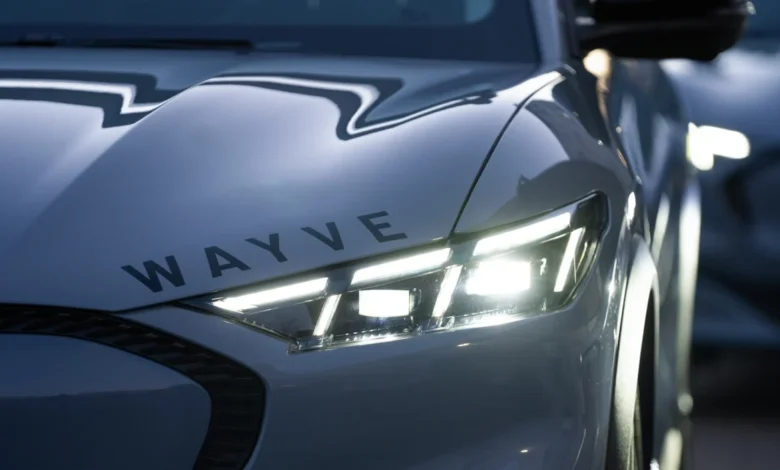
The global landscape of autonomous driving technology underwent a significant shift this week as three of the world’s most influential semiconductor giants—AMD, Arm, and Qualcomm—announced a collective $60 million investment into Wayve, the London-based pioneer of "Embodied AI" for self-driving vehicles. This strategic infusion serves as an extension to Wayve’s massive Series D funding round, which initially closed at $1.05 billion in May 2024, bringing the total capital raised in this cycle to more than $1.1 billion. The move signals a tightening alliance between the software architects of artificial intelligence and the hardware manufacturers who provide the processing power necessary to navigate complex urban environments.
Wayve’s Series D round has become a landmark event in the automotive tech sector, attracting a diverse portfolio of investors that includes traditional automotive titans like Mercedes-Benz, Nissan, and Stellantis, as well as technology behemoths Microsoft and Nvidia. The addition of the venture arms of AMD and Qualcomm, alongside the direct involvement of Arm, underscores a growing industry consensus: the future of autonomous mobility will not be defined by a single hardware platform, but by flexible, hardware-agnostic software capable of operating across a variety of silicon architectures.
The Strategic Importance of Silicon Integration
The involvement of AMD, Arm, and Qualcomm is viewed by industry analysts as a move that transcends mere financial support. For Wayve, the partnership provides direct access to the engineering roadmaps of the companies that design the "brains" of modern vehicles. As self-driving systems evolve from simple lane-keep assistance to fully autonomous operation, the demand for compute power—and the efficiency of that power—has skyrocketed.
Arm’s involvement is particularly noteworthy given its architecture underpins the vast majority of mobile and embedded processors worldwide. For Wayve, optimizing its neural networks for Arm-based processors ensures its software can run on the most energy-efficient hardware available, a critical factor for electric vehicles (EVs) where every watt used for computing reduces the vehicle’s driving range. Qualcomm, meanwhile, brings its expertise in the Snapdragon Digital Chassis, a comprehensive set of cloud-connected platforms for automotive telematics and infotainment. AMD contributes high-performance computing capabilities, often utilized in data centers and high-end edge computing, which are essential for the training and real-time execution of complex AI models.
Alex Kendall, co-founder and CEO of Wayve, emphasized that for "embodied AI" to scale, the industry requires design choice and supply chain flexibility. By ensuring that the Wayve AI Driver can operate seamlessly across different chipsets, the company avoids the "vendor lock-in" that has hampered previous generations of automotive technology.
A Chronology of Wayve’s Ascent and Funding Evolution
Founded in 2017 by Alex Kendall and Amar Shah, Wayve emerged from the University of Cambridge with a radical proposition. While competitors like Waymo and Cruise were spending billions on high-definition (HD) maps and expensive Lidar arrays, Wayve proposed a "mapless" approach driven entirely by end-to-end deep learning.
The company’s funding trajectory reflects the growing confidence in this AI-first approach:
- 2017–2019: Early seed and Series A rounds focused on proving that a neural network could learn to drive in a simulated environment and translate those skills to the real world.
- 2022: A $200 million Series B round, led by Eclipse Ventures, allowed the company to begin testing its technology on the streets of London using a fleet of delivery vans.
- May 2024: Wayve announced a $1.05 billion Series D round led by SoftBank Group, with participation from Nvidia and Microsoft. This was the largest investment in a UK-based AI startup to date.
- Late 2024: Uber committed an additional $300 million in a milestone-based investment. This funding is specifically tied to the successful deployment of Wayve-powered robotaxis on Uber’s network, starting in London.
- Present: The $60 million extension from AMD, Arm, and Qualcomm rounds out the Series D, providing the necessary capital to integrate Wayve’s software with a broader array of automotive hardware.
Technological Differentiation: End-to-End Neural Networks
At the heart of Wayve’s value proposition is its departure from the traditional autonomous vehicle (AV) "stack." Most AV companies use a modular approach: one system handles perception (identifying objects), another handles localization (where the car is on a map), and a third handles path planning. These modules are often hand-coded by engineers, creating a "brittle" system that struggles when it encounters a situation the programmers didn’t anticipate.
Wayve utilizes what it calls "Embodied AI." This is an end-to-end neural network that functions more like a human brain. It takes raw data from sensors—primarily cameras and radar—and outputs driving commands directly. The system does not rely on HD maps, which are expensive to create and go out of date the moment a road is under construction. Instead, Wayve’s AI learns the "rules of the road" through reinforcement learning and vast amounts of data, allowing it to navigate unfamiliar cities as easily as a human driver might.
This architecture is inherently hardware-agnostic. Because the system is built on a unified neural network rather than a series of rigid, hardware-specific modules, it can be ported to different chips with relative ease. This is the primary reason why chipmakers are eager to partner with Wayve; they want to ensure their silicon is the preferred host for this next-generation software.
Market Implications and the Road to 2027
The commercial roadmap for Wayve is already taking shape through its partnerships with major Original Equipment Manufacturers (OEMs). Nissan has been the most vocal proponent, announcing plans to integrate Wayve’s technology into its advanced driver-assistance systems (ADAS) starting in 2027. This represents a "middle-out" strategy for Wayve: rather than focusing solely on the high-risk, high-reward world of Level 4 robotaxis, the company is also targeting the massive consumer vehicle market.
Wayve categorizes its products into two streams:
- "Eyes On" Assisted Driving: A high-end ADAS that enhances safety and reduces driver fatigue but requires the human to remain attentive.
- "Eyes Off" Fully Automated Driving: A system capable of handling all driving tasks in specific domains, such as urban centers or defined highway stretches, applicable to both consumer cars and commercial robotaxis.
The $300 million commitment from Uber further solidifies Wayve’s position in the ride-hailing space. By targeting London as a primary launch site, Wayve is capitalizing on its home-turf advantage and the UK’s relatively progressive regulatory environment for autonomous testing.
Fact-Based Analysis: The Broader Impact on the AI Ecosystem
The investment by AMD, Arm, and Qualcomm is a signal that the "AI hardware wars" are moving into the physical world. For years, the focus of AI investment has been on large language models (LLMs) and generative AI operating in the cloud. "Embodied AI"—AI that can perceive, reason, and act in the physical world—is the next frontier.
This extension also highlights the geopolitical significance of Wayve. As a UK-based company, Wayve is a cornerstone of the British government’s ambition to become a global AI superpower. The massive Series D funding ensures that Wayve remains independent and well-capitalized, resisting the trend of promising European tech startups being acquired early by Silicon Valley giants.
Furthermore, the participation of three competing chipmakers in the same funding round is a rare occurrence. It suggests that the industry views Wayve’s software as a potential "industry standard." Just as Windows became the standard OS for PCs regardless of whether they used Intel or AMD chips, Wayve aims to become the standard AI Driver for the automotive industry, regardless of whether the vehicle uses a Qualcomm Snapdragon or an Arm-based custom SoC.
Challenges and Future Outlook
Despite the influx of capital and the backing of industry leaders, significant hurdles remain. The transition from "Eyes On" to "Eyes Off" technology involves immense regulatory scrutiny and liability concerns. Public perception of autonomous vehicles remains cautious, following high-profile setbacks from other players in the industry.
However, Wayve’s data-centric approach may offer a path forward. By focusing on generalized intelligence rather than specific geofenced maps, Wayve’s system has the potential to scale faster and more cost-effectively than its competitors. The 2027 timeline for Nissan integration will be a critical litmus test for the company. If successful, it will prove that end-to-end neural networks are not just a research project but a viable commercial solution for the millions of vehicles produced annually.
As the Series D extension closes, Wayve is positioned at the intersection of the automotive and semiconductor industries. With the financial backing of the world’s largest tech companies and the strategic partnership of the world’s leading chipmakers, the company is no longer just a startup; it is a central pillar in the global race to define the future of transportation. The next three years will be dedicated to rigorous testing, hardware integration, and the final push to bring embodied AI to the streets of the world’s major cities.