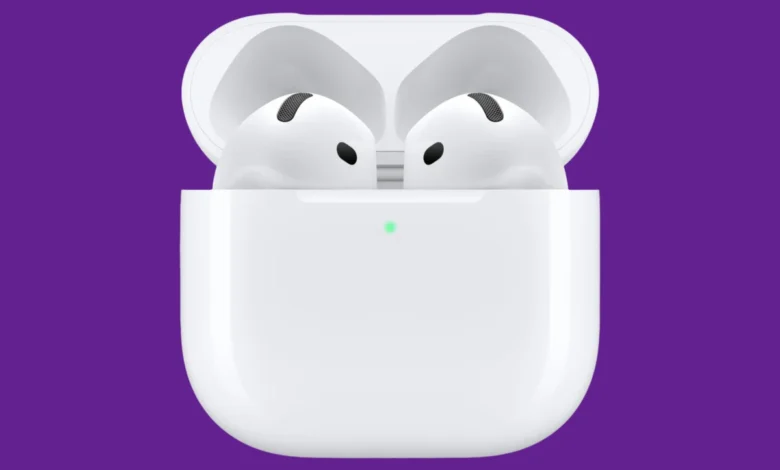
This significant price reduction positions the Apple AirPods 4 as an exceptionally competitive offering in the burgeoning true wireless stereo (TWS) earbud market, making premium Apple audio technology more accessible to a broader consumer base. The markdown, available exclusively through Amazon, represents a substantial 23% discount from its standard retail price, reverting the cost of entry for Apple’s popular earbuds to a level reminiscent of earlier generations during peak sales events. This strategic pricing move by Apple, facilitated by retail partners like Amazon, underscores a broader industry trend towards competitive pricing to capture market share and sustain consumer interest in a crowded segment.
Key Features and Value Proposition
The AirPods 4, while positioned as a standard model without Active Noise Cancellation (ANC), deliver a robust set of features that justify their appeal, particularly at the newly reduced price point. These earbuds are engineered to provide a seamless and high-quality audio experience across various applications, from casual music listening to crucial voice communications.
-
Audio Performance: At the core of the AirPods 4 experience is their ability to deliver crisp audio quality across diverse sound profiles. Whether users are immersed in their favorite musical genres, engaging with podcasts, or following the dialogue in movies and television shows, the earbuds are designed to reproduce sound with clarity and depth. This audio fidelity is a hallmark of Apple’s acoustic engineering, aiming to provide a balanced sound signature that appeals to a wide range of listeners.
-
Enhanced Immersive Listening with Spatial Audio: A standout feature of the AirPods 4 is the inclusion of personalized Spatial Audio with dynamic head tracking. This technology transforms the listening experience by creating a three-dimensional soundstage, making audio appear to come from all around the user. Dynamic head tracking further enhances this immersion by adapting the sound field as the user moves their head, ensuring that audio remains anchored to the device from which it originates. This feature, typically associated with higher-tier audio devices, significantly elevates the enjoyment of music, movies, and even some gaming experiences by providing a more enveloping and realistic sound environment. It leverages advanced algorithms and the built-in accelerometers and gyroscopes in the earbuds to track head movements, constantly recalibrating the audio for a consistent spatial effect.
-
Crystal-Clear Communication with Voice Isolation: Recognizing the increasing importance of clear communication in an era of remote work and frequent digital interaction, the AirPods 4 incorporate voice isolation technology. This advanced feature is specifically designed to improve audio quality during calls by intelligently focusing on the user’s voice while simultaneously minimizing background noise. Utilizing beamforming microphones and computational audio, the earbuds can effectively filter out ambient distractions such such as traffic, chatter, or environmental sounds, ensuring that the speaker’s voice remains clear and discernible to the recipient. This capability is particularly valuable for users who frequently take calls in varied and often noisy environments, offering a professional-grade communication experience.
-
Extended Battery Life and Seamless Integration: The AirPods 4 offer a combined listening time of 30 hours when utilizing the charging case. On a single charge, the earbuds themselves provide approximately five hours of continuous listening, a standard duration for many TWS devices. The compact charging case allows for multiple recharges on the go, ensuring that users can enjoy extended periods of audio playback throughout their day. Furthermore, the AirPods 4 maintain Apple’s renowned ecosystem integration, providing quick and intuitive access to Siri. Users can activate the voice assistant to perform a variety of tasks, including making calls, controlling music playback, sending messages, and querying information, all through simple voice commands. This seamless connectivity and ease of use are cornerstones of the AirPods appeal, simplifying daily interactions for Apple device owners.
A Strategic Price Adjustment
The reduction of the AirPods 4 to $99 is not merely a transient sale but reflects a calculated strategic adjustment within Apple’s broader product portfolio and market approach. This pricing strategy aims to achieve several objectives:
-
Positioning in the AirPods Lineup: The AirPods lineup traditionally offers tiered options: the standard AirPods (currently 2nd Gen at $129 and 3rd Gen at $169), and the premium AirPods Pro (2nd Gen at $249). The introduction of a "4th Gen" at $129, quickly discounted to $99, positions it as a compelling entry-level choice that bridges the gap between older models and the more advanced 3rd Gen. By offering key features like Spatial Audio at this price point, Apple makes a strong case for users seeking modern capabilities without the premium price tag of ANC-equipped models. This strategic placement ensures that Apple can cater to different segments of the market, from budget-conscious consumers to those prioritizing advanced features.
-
Competitive Landscape Analysis: The TWS market is intensely competitive, with numerous manufacturers offering feature-rich earbuds at various price points. Brands like Samsung, Sony, Jabra, Anker, and Google Pixel Buds all vie for consumer attention. The $99 price point for AirPods 4 directly challenges competitors in the mid-range segment, which often offer ANC or other advanced features for similar or slightly higher prices. By leveraging its brand strength and ecosystem integration, Apple can effectively disrupt this segment, potentially drawing users away from alternative brands who might otherwise opt for non-Apple products at this price. This move can also serve to convert users of older, less capable wired headphones or entry-level TWS earbuds from other brands into the Apple ecosystem.
The Evolution of Apple’s Wireless Audio

The journey of Apple’s AirPods began in December 2016, revolutionizing the personal audio landscape by popularizing the concept of true wireless earbuds. Initially met with skepticism regarding their design and price, AirPods quickly became a cultural phenomenon and a commercial success, defining a new category of audio accessories.
- From Niche to Mainstream: The original AirPods, priced at $159, offered unprecedented convenience with their instant pairing, seamless device switching via the W1 chip, and intuitive tap controls. Their distinctive white aesthetic became instantly recognizable. The success of the first generation paved the way for rapid innovation and expansion of the lineup.
- Feature Iterations and Upgrades:
- AirPods (2nd Generation), March 2019: Introduced the H1 chip for faster connections, "Hey Siri" support, and optional wireless charging case. Retained the $159 price for the standard case, $199 for wireless charging.
- AirPods Pro (1st Generation), October 2019: Marked a significant leap with Active Noise Cancellation, Transparency Mode, and a customizable silicone ear tip design for a secure fit, priced at $249.
- AirPods Max, December 2020: Apple’s foray into premium over-ear headphones, featuring ANC, Spatial Audio, and high-fidelity sound, retailing at $549.
- AirPods (3rd Generation), October 2021: A redesign with shorter stems, MagSafe charging, adaptive EQ, and Spatial Audio with dynamic head tracking, priced at $179 (later $169). Lacked ANC, positioning it as a step up from the 2nd Gen but below the Pro line.
- AirPods Pro (2nd Generation), September 2022: Enhanced ANC, improved Transparency Mode, longer battery life, and upgraded audio performance, priced at $249.
The emergence of the "AirPods 4" at a $129 price point, subsequently discounted to $99, particularly with the inclusion of Spatial Audio and Voice Isolation, suggests Apple is continually refining its strategy to offer compelling features at various price tiers. While the specific generation numbering can sometimes be fluid in market perception versus official naming, this model appears to be designed to offer a modern Apple audio experience to a wider segment of the market, potentially replacing or significantly undercutting the AirPods (2nd Generation) in terms of value proposition. The price drop to $99 aligns with historical Black Friday or Prime Day deals for previous standard AirPods models, indicating a strong promotional push.
Deep Dive into Technology
The technological prowess embedded within the AirPods 4 is crucial to understanding their value, especially at a discounted price. The integration of advanced audio processing and connectivity features highlights Apple’s commitment to delivering a sophisticated user experience.
-
Spatial Audio Explained: Spatial Audio is not merely a surround sound effect; it is a computational audio technology that creates an immersive, theater-like experience. It works by taking multichannel audio (like 5.1, 7.1, or Dolby Atmos) and applying directional audio filters, placing sounds virtually anywhere in a 3D space around the listener. With dynamic head tracking, the AirPods 4 utilize accelerometers and gyroscopes in both the earbuds and the connected iPhone/iPad to monitor head movements and device orientation. This allows the sound field to remain fixed relative to the device, so if a user turns their head, the audio source appears to stay in place, mimicking a real-world listening environment. This feature significantly enhances the perception of depth and direction, making movies, TV shows, and supported music tracks much more engaging.
-
Voice Isolation Technology: The voice isolation feature in AirPods 4 is a testament to Apple’s focus on clear communication. This technology leverages multiple microphones (often beamforming arrays) on each earbud. These microphones work in conjunction with advanced algorithms to distinguish the user’s voice from ambient noise. By analyzing the sound waves and identifying the unique characteristics of human speech versus background interference, the system can effectively attenuate environmental sounds while amplifying the speaker’s voice. This results in significantly clearer calls, even in challenging acoustic environments like busy streets, crowded cafes, or open-plan offices, reducing listener fatigue and improving conversational clarity.
-
Seamless Integration with Apple Ecosystem: The core strength of AirPods, including the 4th generation, lies in their unparalleled integration within the Apple ecosystem. Powered by Apple’s custom-designed H1 or H2 chip (depending on the exact internal architecture of this "4th Gen" model, likely H1 given the non-Pro status and price point), the earbuds offer instant pairing with Apple devices simply by opening the case. They automatically switch between an iPhone, iPad, Mac, or Apple Watch, based on which device is actively being used. This seamless connectivity eliminates the need for manual Bluetooth pairing, providing a frictionless user experience that is a significant differentiator from many competitor products. Features like "Find My" integration for locating misplaced earbuds and audio sharing with other AirPods users further enhance this ecosystem advantage.
Market Dynamics and Consumer Trends
The true wireless earbud market has witnessed explosive growth over the past few years, evolving from a niche luxury to a mainstream necessity. The AirPods 4 sale plays directly into these dynamic market forces.
- The Booming TWS Market: The global TWS market was valued at over $30 billion in 2022 and is projected to continue its robust growth. Factors driving this expansion include the increasing adoption of smartphones without headphone jacks, the demand for portable and convenient audio solutions, and the continuous innovation in audio technology. Consumers are increasingly seeking features like enhanced sound quality, longer battery life, better call quality, and smart assistant integration, all of which the AirPods 4 aim to deliver.
- Apple’s Enduring Dominance: Despite fierce competition, Apple has consistently maintained a dominant position in the TWS market. While its market share fluctuates, it often hovers around 25-30%, significantly outpacing its closest rivals. This leadership is attributed to a combination of strong brand loyalty, a vast existing user base within the Apple ecosystem, and a reputation for reliable, user-friendly products. The strategic pricing of the AirPods 4 at $99 allows Apple to reinforce this dominance by capturing new users who might have previously found the AirPods price point prohibitive, and by offering a compelling upgrade path for users of older or less capable earbuds. It allows Apple to compete more aggressively with the wave of affordable TWS earbuds entering the market from Chinese manufacturers and other tech giants.
Analyst Perspectives and Strategic Implications
Industry analysts frequently scrutinize Apple’s pricing and product strategies, and the AirPods 4 sale offers several insights into the company’s immediate and long-term objectives.
- Apple’s Pricing Strategy: Analysts often point to Apple’s tiered pricing model as a key to its success. By offering a range of products from entry-level to premium, Apple ensures it can address various consumer needs and budgets. The $99 price for the AirPods 4 suggests a move to solidify the entry-level segment, possibly to clear inventory, stimulate demand during a non-peak season, or pre-emptively counter upcoming competitor releases. It also demonstrates Apple’s willingness to leverage its strong brand and ecosystem to offer value-driven products when market conditions demand it. This approach helps to expand the funnel of users into the Apple ecosystem, knowing that once users are invested in AirPods, they are more likely to stay within the brand for future upgrades.
- Impact on Competitors: A $99 price point for new AirPods, especially with features like Spatial Audio, puts considerable pressure on competitors. Brands offering earbuds in the $50-$150 range will need to re-evaluate their own pricing and feature sets to remain competitive. This could lead to a ripple effect of price reductions across the market, ultimately benefiting consumers. Smaller brands, in particular, may struggle to match Apple’s economies of scale and marketing power at this price point.
- Consumer Benefits: For consumers, the implications are overwhelmingly positive. The opportunity to acquire a pair of Apple AirPods with modern features like Spatial Audio and Voice Isolation for under $100 represents exceptional value. This deal makes premium audio technology more accessible, allowing a broader demographic to experience the seamless connectivity and high-quality audio that AirPods are known for. It also offers an attractive proposition for those looking to replace older earbuds or dive into the TWS market for the first time without a significant financial outlay.
The limited-time offer on Amazon for the AirPods 4 at $99 represents a significant opportunity for consumers. It is a strategic move by Apple to maintain its market leadership and broaden its user base by making a feature-rich product available at a highly competitive price. As the true wireless audio market continues to evolve, such aggressive pricing strategies will likely become more common, ultimately benefiting consumers with greater choice and value. This deal, matching the lowest price seen this year, underscores the dynamic nature of consumer electronics pricing and the enduring appeal of Apple’s innovative audio products.