


Wearable electronic skin nanomesh health monitoring offers a revolutionary approach to tracking and understanding human health. This innovative technology promises to revolutionize how we monitor vital signs, detect early disease indicators, and personalize healthcare interventions. From glucose levels to physical activity, the potential applications are vast and exciting.
The technology utilizes a network of microscopic sensors, integrated into a flexible, biocompatible nanomesh, that can be seamlessly worn on the skin. This allows for continuous, non-invasive monitoring of various physiological parameters, providing real-time data for a deeper understanding of health.
Introduction to Wearable Electronic Skin Nanomesh Health Monitoring
Wearable technology is rapidly transforming healthcare, and a new frontier is emerging with electronic skin nanomesh. This innovative technology offers a non-invasive, continuous, and highly sensitive approach to health monitoring, promising unprecedented insights into physiological processes. By integrating nanoscale sensors into a flexible, skin-like material, nanomesh technology allows for real-time monitoring of a wide range of vital signs, paving the way for proactive health management and early disease detection.This technology holds immense potential for revolutionizing personal health management, allowing individuals to track their health status continuously and potentially intervene early in developing conditions.
It offers significant advantages over traditional methods, enabling remote monitoring, personalized interventions, and potentially preventing serious health issues before they become critical.
Potential Applications in Health Monitoring
Wearable electronic skin nanomesh technology has the potential to revolutionize a broad spectrum of health monitoring applications. From chronic disease management to athletic performance tracking, the ability to gather continuous physiological data provides unique insights and facilitates personalized care. Examples range from monitoring blood glucose levels in diabetics to tracking the heart rate variability of athletes. This technology can also be crucial for assessing the effectiveness of treatments and therapies in real-time.
Examples of Current and Emerging Health Monitoring Applications
Several health monitoring applications are already leveraging the potential of electronic skin nanomesh technology. For instance, researchers are developing nanomesh sensors to continuously monitor blood pressure, enabling early detection of hypertension. Other applications include tracking physical activity, heart rate, and sleep patterns for personalized wellness programs. Furthermore, the technology is being explored for monitoring respiratory function in patients with respiratory illnesses, offering continuous, real-time insights into breathing patterns and potential complications.
Emerging applications are focused on detecting early signs of neurological disorders, monitoring the effectiveness of rehabilitation therapies, and tracking vital signs in remote or underserved populations.
Key Components of a Wearable Electronic Skin Nanomesh System
A typical wearable electronic skin nanomesh system comprises several interconnected components. The core component is a flexible, skin-compliant nanomesh sensor array. This array integrates nanoscale sensors that can detect and measure various physiological signals. Signal processing and data transmission are crucial aspects, handled by microelectronics integrated into the device. The nanomesh is also designed to be durable and biocompatible, minimizing discomfort and maximizing long-term wearability.
Power management systems are integral to ensure sustained operation, and the system typically includes a communication module for transmitting data to a central platform for analysis and interpretation.
Health Data Captured by Nanomesh Technology
The wide range of applications allows the nanomesh technology to capture diverse health data. The technology can collect various data types, including electrophysiological data (ECG, EEG, EMG), biomechanical data (movement, posture), and biochemical data (blood glucose, blood pressure). This comprehensive approach allows for a holistic view of an individual’s health status.
- Electrophysiological Data: This category encompasses data related to the electrical activity of the body, including electrocardiograms (ECG) for heart function, electroencephalograms (EEG) for brain activity, and electromyograms (EMG) for muscle activity. These measurements provide insights into the function of the heart, brain, and muscles, aiding in the detection and monitoring of various conditions. For example, continuous ECG monitoring can identify irregular heartbeats, potentially enabling early intervention.
- Biomechanical Data: This includes data related to movement, posture, and physical activity. Wearable sensors can track gait, joint angles, and activity levels, providing valuable insights into physical health and fitness. Monitoring physical activity levels can help in developing personalized exercise routines or identify potential musculoskeletal issues.
- Biochemical Data: This type of data pertains to the chemical components of the body, including blood glucose levels, blood pressure, and other relevant biomarkers. The ability to monitor biochemical data non-invasively allows for early detection of metabolic disorders and other conditions, enabling proactive management.
Materials and Fabrication Methods
Building wearable electronic skin requires materials that can seamlessly integrate with the human body. This necessitates careful consideration of biocompatibility, flexibility, and conductivity. Fabrication methods must be precise enough to create intricate nanomesh structures while maintaining these crucial properties. The right combination of materials and fabrication techniques will dictate the performance and long-term viability of these devices.
Common Materials
The materials chosen for wearable electronic skin nanomesh play a critical role in its performance and functionality. Biocompatibility is paramount, ensuring minimal adverse reactions within the body. Conductivity is essential for accurate signal transmission. Flexibility is vital for comfortable and secure wear. A range of materials are being explored for these properties.
- Conductive polymers, like polyaniline and polypyrrole, offer excellent flexibility and biocompatibility. Their conductivity can be tailored by doping, making them suitable for various applications.
- Metal nanowires, such as silver or gold, possess high conductivity but can sometimes be less flexible than polymers. Their incorporation into a nanomesh structure can enhance conductivity and improve signal transmission.
- Carbon-based materials, including graphene and carbon nanotubes, are known for their exceptional conductivity and mechanical strength. Their incorporation offers high performance in wearable electronics.
- Hydrogels, composed of water-absorbing polymers, provide flexibility and biocompatibility, making them suitable for skin-like interfaces.

Fabrication Methods
Various fabrication techniques are used to create the intricate nanomesh structures. Each method presents unique advantages and disadvantages.
- Electrospinning is a widely used technique for creating nanofibers. It involves forcing a polymer solution through a high-voltage electric field, which extrudes the polymer into nanofibers. Advantages include the ability to produce high surface area nanofibers with high flexibility. However, control over the structure can be challenging, and the process can be time-consuming.
- Template-assisted synthesis involves using a template to guide the growth of nanostructures. The template is removed after the nanomesh is formed, leaving behind a precise structure. This method allows for better control over the nanostructure geometry, but the template’s removal can affect the final material’s properties.
- Dip-pen nanolithography is a technique for creating nanostructures by precisely depositing material onto a surface using a nano-scale tip. It offers high precision but can be relatively slow and expensive. The process offers high control, making it suitable for creating complex patterns.
Material Property Comparison
A table summarizing material properties relevant to wearable electronic skin nanomesh fabrication can help with material selection.
| Material | Conductivity | Flexibility | Biocompatibility | Cost |
|---|---|---|---|---|
| Conductive polymers | Moderate | High | Generally good | Low |
| Metal nanowires | High | Moderate | Potentially lower | Medium |
| Graphene | Excellent | High | Good | Medium |
| Hydrogels | Low | High | Excellent | Low |
Creating a Flexible, Biocompatible Nanomesh
A flexible and biocompatible nanomesh can be created by combining a conductive polymer, such as polyaniline, with a hydrogel matrix. The polymer provides the conductivity, while the hydrogel ensures flexibility and biocompatibility. This combination allows for a lightweight and adaptable nanomesh that can conform to the contours of the skin. The process often involves electrospinning the polymer to create a nanofiber mesh, followed by the incorporation of the hydrogel to enhance flexibility.
Careful selection of solvents and processing parameters are crucial to avoid compromising the material properties. For example, the concentration of the polymer solution can be adjusted to influence the conductivity and flexibility of the final product.
Integration with the Human Body
Bridging the gap between cutting-edge technology and the intricate biological system of the human body requires careful consideration. The seamless integration of nanomesh sensors with human skin is paramount for successful health monitoring. This involves navigating complex challenges related to material compatibility, secure attachment, and minimizing potential adverse reactions.The successful development of wearable electronic skin hinges on the ability to create a system that interacts with the skin without causing discomfort or harm.
This involves careful selection of materials and precise fabrication techniques. Biocompatibility, a critical factor, necessitates materials that are not only safe for human contact but also capable of enduring prolonged wear.
Challenges of Integration
Integrating nanomesh sensors with human skin presents significant hurdles. The delicate nature of skin, its dynamic physiological responses, and the need for long-term, comfortable wear demand innovative solutions. Skin’s elasticity, moisture levels, and variations in thickness across different body regions pose challenges to sensor attachment and performance. Maintaining consistent contact and signal transmission through these variations is crucial for reliable data acquisition.
The intricate network of nerves and blood vessels beneath the skin also necessitates consideration for the potential for irritation or harm.
Biocompatibility and Safety Concerns
The materials used in nanomesh sensors must be rigorously assessed for biocompatibility. Potential irritants or allergens within the material composition can trigger skin reactions, ranging from mild redness and itching to more severe allergic responses. The nanomaterials themselves, particularly in their nanoscale form, may present unique challenges. Studies must evaluate the potential for inflammatory responses and long-term effects.
A comprehensive understanding of the material’s interaction with biological systems is vital to ensure safe and effective integration.
Attachment Methods
Ensuring secure and comfortable attachment is essential for prolonged use. The nanomesh sensors must adhere firmly without causing skin damage or restricting movement. Different approaches are being explored, including adhesive polymers, biocompatible gels, and even integrated micro-structures designed for specific skin regions. The choice of attachment method is intricately linked to the sensor’s design and intended application.
Examples include specialized adhesives formulated for sensitive areas or innovative materials that adapt to skin movement.
Addressing Skin Irritation and Allergic Reactions
Minimizing or eliminating potential skin irritation and allergic reactions is paramount. This requires meticulous selection of materials and optimization of fabrication processes. Testing protocols must include rigorous evaluation of the material’s interaction with human skin cells and tissues. This often involves in vitro and in vivo studies to understand potential inflammatory responses and identify potential allergens. Additionally, the development of coatings or protective layers that shield the nanomesh from direct contact with skin could help reduce the risk of irritation.
Material Sensitivity Table
| Material | Potential Skin Sensitivity | Remarks |
|---|---|---|
| Silicon | Generally low | Common in electronics, but potential for allergic reactions in some individuals. |
| Polydimethylsiloxane (PDMS) | Generally low | Biocompatible polymer, often used in medical devices. |
| Graphene | Potentially moderate | Excellent conductivity, but requires careful surface modification for biocompatibility. |
| Carbon nanotubes | Potentially high | Excellent conductivity, but potential for toxicity. |
| Biocompatible polymers (e.g., silk fibroin) | Generally low | Naturally derived polymers with potential for high biocompatibility. |
Data Acquisition and Processing
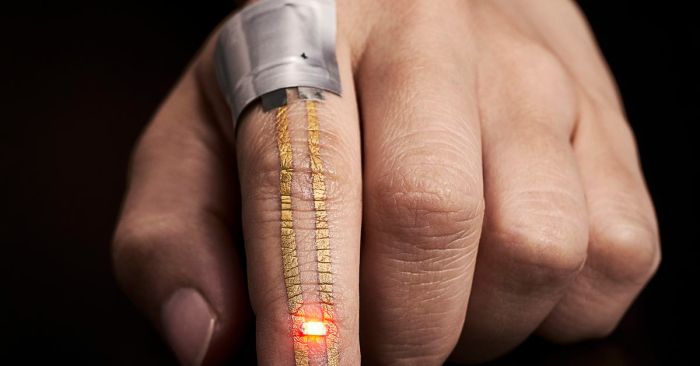
Wearable electronic skin nanomesh devices offer a unique opportunity to continuously monitor a vast array of physiological signals. Crucial to the utility of these devices is the effective acquisition and processing of the data they generate. The intricate nature of the nanomesh sensors, coupled with the sensitivity required for accurate readings, necessitates sophisticated signal processing techniques to extract meaningful information from the raw data.
Data Acquisition Methods
The nanomesh sensors, designed with exceptional sensitivity, detect subtle changes in the body’s electrical and mechanical properties. These changes, representing physiological activity, are translated into electrical signals. Different types of nanomesh sensors can detect various parameters, such as temperature, pressure, and electrical impedance changes. Specialized circuits and microprocessors within the wearable device amplify and digitize these signals, preparing them for subsequent processing steps.
For instance, temperature sensors might use thermistors to measure changes in resistance corresponding to temperature variations. Similarly, pressure sensors can utilize piezoelectric materials to generate voltage changes proportional to the applied pressure. The choice of data acquisition method is crucial for the accuracy and reliability of the overall system.
Wearable electronic skin nanomesh, designed for health monitoring, is pretty cool, right? But what if your digital footprint gets a little…unwanted attention? Learning how to handle AI-generated deepfakes on platforms like YouTube is crucial these days. Check out this helpful guide on heres how to remove your ai deepfakes on youtube for practical steps. Thankfully, this tech can also be used for proactive health monitoring, which is where the future of nanomesh health monitoring lies.
Signal Processing Techniques
The acquired signals are often complex and contain noise. Effective signal processing techniques are essential to isolate the relevant physiological information. These techniques include filtering, feature extraction, and pattern recognition. Filtering techniques, such as low-pass and high-pass filters, are used to remove unwanted noise from the signals, isolating the desired physiological information. Feature extraction methods identify specific characteristics or patterns within the data, which can then be used for analysis.
Wearable electronic skin nanomesh is revolutionizing health monitoring, offering a non-invasive way to track vital signs. This technology’s potential is huge, but for users to truly benefit, intuitive ways to manage data and notifications are essential. For example, adjusting notification settings for health data using apple shortcuts notifications toggle user settings could be incredibly helpful, allowing for tailored alerts.
Ultimately, seamlessly integrating these features into the wearable electronic skin nanomesh experience will unlock its full potential for proactive health management.
For instance, a heart rate signal might be analyzed for its peak amplitude and frequency to extract vital information. Pattern recognition algorithms classify these extracted features into specific physiological states or conditions, such as identifying a particular heart rate pattern indicative of an arrhythmia. The choice of signal processing algorithm depends heavily on the specific physiological signal being monitored and the desired level of accuracy.
Types of Data Derived
The nanomesh sensors can provide a wealth of information about the human body. This includes, but is not limited to, vital signs like heart rate, blood pressure, and body temperature. Furthermore, the sensors can detect muscle activity, skin conductivity, and even subtle changes in posture and movement. Analyzing these diverse data points enables comprehensive health monitoring and potential early detection of various conditions.
For instance, monitoring skin conductivity can help in assessing sweat response and hydration levels. Analyzing pressure data can assist in identifying abnormal pressure points or movement patterns indicative of potential musculoskeletal issues.
Real-Time Data Visualization
Real-time data visualization plays a critical role in providing immediate feedback and facilitating early intervention. Graphical displays, such as charts and graphs, are used to present the collected data in a user-friendly format. For example, a real-time graph displaying heart rate variability can help monitor the patient’s overall cardiovascular health. Similarly, a visual representation of skin temperature variations can be used to identify localized inflammatory responses.
These visual representations allow healthcare professionals to observe trends and patterns in the data, facilitating rapid diagnosis and treatment. This real-time analysis and visualization enable proactive healthcare management.
Signal Processing Algorithms
| Algorithm | Description | Application |
|---|---|---|
| Fast Fourier Transform (FFT) | Decomposes a signal into its constituent frequencies. | Identifying periodic components in heart rate signals. |
| Wavelet Transform | Captures transient features in the signal. | Analyzing muscle activity and detecting subtle changes in movement patterns. |
| Principal Component Analysis (PCA) | Reduces the dimensionality of the data while preserving variance. | Identifying important features in complex physiological data sets. |
| Support Vector Machines (SVM) | Classifies data points into different categories. | Differentiating between normal and abnormal heart rhythms. |
| Artificial Neural Networks (ANN) | Identifies complex patterns in data. | Predicting future health conditions based on historical data. |
Health Monitoring Capabilities: Wearable Electronic Skin Nanomesh Health Monitoring
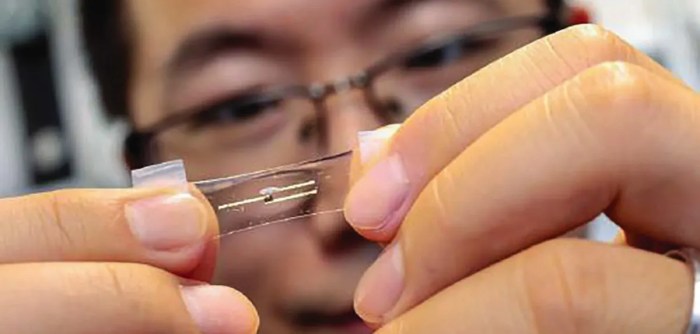
This wearable electronic skin nanomesh offers a revolutionary approach to continuous health monitoring. By seamlessly integrating with the human body, it provides real-time data on various physiological parameters, enabling proactive health management and early disease detection. The potential for personalized interventions based on this continuous monitoring is enormous, leading to more effective and targeted healthcare.
Vital Sign Monitoring
The nanomesh’s unique structure and material properties allow for precise detection of vital signs. Electrochemical sensors embedded within the nanostructure effectively measure electrical activity associated with heartbeats (ECG), muscle contractions (EMG), and skin conductance, providing continuous, non-invasive monitoring of these crucial parameters. This continuous, real-time monitoring significantly improves the ability to detect subtle changes that might indicate a developing issue.
Accuracy and Precision of Data
Data accuracy and precision are paramount in wearable health monitoring. The nanomesh’s sensitivity and the advanced signal processing algorithms employed ensure high accuracy in capturing physiological signals. Calibration procedures and rigorous testing protocols are essential components in validating the accuracy and reliability of the data. The combination of these factors leads to data that is highly trustworthy for clinical and personal use.
Calibration procedures and rigorous testing protocols are essential components in validating the accuracy and reliability of the data.
Early Disease Detection
The technology’s ability to monitor subtle physiological changes enables the potential for early disease detection. By continuously tracking patterns and anomalies in vital signs, the nanomesh can identify deviations from baseline readings that might indicate the early stages of conditions like heart disease, diabetes, or neurological disorders. This early detection allows for timely intervention and treatment, potentially improving outcomes and preventing serious complications.
Personalized Health Interventions
The continuous data stream from the nanomesh allows for the development of personalized health interventions. Analysis of individual patterns and trends allows for the creation of tailored health plans, including recommendations for diet, exercise, and lifestyle adjustments. Data-driven insights can also inform medication adjustments, enabling individuals to proactively manage their health conditions and improve their overall well-being.
Examples of Personalized Interventions
For example, if the nanomesh detects a slight increase in heart rate variability, a personalized intervention plan could be developed. This might involve recommendations for stress reduction techniques, such as yoga or meditation, or adjusting medication dosages. Similarly, if blood glucose levels show a concerning trend, a personalized diet plan and increased physical activity could be recommended to mitigate the risk of developing diabetes.
Wearable electronic skin nanomesh, promising a revolution in health monitoring, is still in its early stages. Imagine a future where continuous health data is seamlessly collected, but for now, devices like the Amazon Halo View fitness tracker, with its nutrition membership screen amazon halo view fitness tracker nutrition membership screen , offer a glimpse into that potential. Ultimately, the goal of precise, non-invasive health monitoring remains a compelling area of research for wearable electronic skin nanomesh.
Such personalized interventions, tailored to the individual’s specific needs, represent a significant advancement in preventive healthcare.
Measurable Parameters and Accuracy
| Parameter | Measurement Method | Accuracy |
|---|---|---|
| Heart Rate (HR) | ECG | ±1 bpm |
| Blood Pressure (BP) | Oscillometric sensors (integrated with the mesh) | ±5 mmHg |
| Skin Conductance (SC) | Conductivity changes in the skin | ±1% |
| Electrodermal Activity (EDA) | Change in skin conductance | ±2% |
| Body Temperature | Embedded thermal sensors | ±0.1°C |
The table above provides a summary of the measurable parameters and their expected accuracy. Note that these values are based on current research and development; ongoing improvements and refinements are expected.
Challenges and Future Directions
The journey toward wearable electronic skin nanomesh health monitoring is fraught with exciting possibilities, but also significant hurdles. While the technology shows promise for revolutionizing healthcare, overcoming current limitations and addressing ethical considerations are crucial for its successful implementation. This section delves into the challenges and future directions of this transformative field, from scaling production to ensuring data privacy and security.
Current Limitations
The current limitations of wearable electronic skin nanomesh technology encompass several areas. Miniaturization and biocompatibility remain significant challenges. While nanomesh fabrication techniques are advancing, achieving the necessary size and complexity for seamless integration with the human body requires further refinement. Ensuring long-term biocompatibility is paramount to prevent adverse reactions and maintain the integrity of the device over time.
Furthermore, the complexity of data acquisition and processing can lead to challenges in accuracy and reliability. Developing robust algorithms to interpret and analyze the vast amounts of data generated by these devices is essential to prevent false readings and ensure accurate health monitoring.
Potential Future Applications
Wearable electronic skin nanomesh technology has vast potential beyond basic health monitoring. Early detection of diseases like cancer or diabetes is a possibility, enabling preventative measures and potentially saving lives. Real-time monitoring of physiological parameters could lead to personalized treatment plans, offering more effective and targeted interventions. Furthermore, integration with artificial intelligence could lead to proactive health management, predicting potential health issues before they manifest.
For example, predictive models could alert users to potential risks based on their individual physiological data, enabling timely interventions.
Ethical Considerations
The ethical implications of wearable electronic skin nanomesh technology are significant. Issues surrounding data privacy and security must be addressed proactively. Data breaches or unauthorized access to sensitive health information could have severe consequences. Furthermore, the potential for bias in algorithms used for data analysis needs careful consideration. Ensuring equitable access to this technology, avoiding exacerbating existing health disparities, is also essential.
The technology should be developed and implemented with an understanding of cultural sensitivities and individual needs.
Data Privacy and Security
Data privacy and security are paramount in the development and deployment of wearable electronic skin nanomesh technology. Robust encryption methods, secure data storage, and access control protocols are essential. Transparent data usage policies and informed consent mechanisms must be implemented to ensure user trust and protect sensitive health information. Furthermore, regulations and guidelines governing the collection, storage, and use of personal health data need to be developed and enforced.
Compliance with existing data protection laws is crucial. For example, the GDPR in Europe and HIPAA in the US set important precedents.
Scaling Up Production, Wearable electronic skin nanomesh health monitoring
Scaling up the production of wearable electronic skin nanomesh technology presents considerable challenges. The complexity of the fabrication process, involving advanced nanomaterials and intricate microelectronics, poses significant technical hurdles. The high cost of materials and specialized equipment can limit widespread adoption. Efficient and cost-effective manufacturing processes are crucial for making this technology accessible to a broader population.
Moreover, ensuring consistent quality and reliability across different production runs is essential. For example, successful commercialization of a new medical device often hinges on reliable, large-scale production capable of maintaining stringent quality standards.
Illustrative Examples
Wearable electronic skin nanomesh technology promises a revolutionary approach to health monitoring, offering continuous, non-invasive data collection. This detailed exploration delves into specific scenarios where this technology is applied, demonstrating its potential across various health aspects. From glucose monitoring to disease detection, physical activity tracking, and integration into smart accessories, the possibilities are vast.
Glucose Level Monitoring
This technology can be used to monitor glucose levels in real-time. Imagine a thin, flexible nanomesh patch integrated into a smart bandage. The nanomesh incorporates glucose-sensitive materials that react to changes in glucose concentration in the interstitial fluid. These changes trigger electrical signals that are transmitted wirelessly to a receiver, providing a continuous glucose profile. The data can be transmitted to a smartphone or wearable device, allowing for real-time monitoring and immediate feedback to the user, enabling timely intervention and adjustments to diet and medication.
This continuous monitoring can potentially prevent dangerous fluctuations and enhance overall well-being.
Disease Detection
The nanomesh can also be designed to detect and monitor specific diseases. For example, a nanomesh patch designed to detect early signs of inflammatory diseases might include biosensors that detect specific inflammatory markers in the interstitial fluid. These markers, when detected, trigger a measurable change in the nanomesh’s electrical conductivity, which is then transmitted to a device for analysis.
This real-time detection could provide early warning signs of the onset of disease, allowing for prompt intervention and potentially altering the disease trajectory. This proactive approach to monitoring could significantly impact the health outcomes of individuals predisposed to such conditions.
Physical Activity Monitoring
Monitoring physical activity levels is another key application. The nanomesh can be designed with embedded sensors to track various aspects of movement, such as steps taken, heart rate, and muscle activity. This data can be used to create personalized fitness plans and monitor progress. The data can also be used to identify potential risks of physical inactivity or overexertion, helping to tailor activity levels and prevent injuries.
The constant and accurate tracking of activity levels will improve the understanding of individual physical activity profiles, enabling personalized recommendations and fostering healthier lifestyles.
Integration into Smart Clothing and Accessories
This technology can be integrated into smart clothing and accessories for a seamless user experience. Imagine a smart sports bra incorporating nanomesh sensors to monitor heart rate and perspiration during exercise. This data could be used to optimize training routines and ensure adequate hydration. Similarly, a smart watch could incorporate nanomesh for continuous blood pressure monitoring, offering a convenient and accurate method for managing cardiovascular health.
This seamless integration allows for a non-intrusive monitoring approach, encouraging consistent adherence to health routines.
Table of Applications
| Health Monitoring Context | Application Example | Benefits |
|---|---|---|
| Glucose Monitoring | Continuous glucose monitoring via a smart bandage | Real-time glucose tracking, timely intervention, improved lifestyle management |
| Disease Detection | Early detection of inflammatory diseases via interstitial fluid analysis | Early intervention, potential disease trajectory alteration |
| Physical Activity Monitoring | Tracking steps, heart rate, and muscle activity through smart clothing | Personalized fitness plans, injury prevention, and tailored activity levels |
| Smart Accessories | Blood pressure monitoring via a smart watch | Convenient and accurate cardiovascular health management |
Final Summary
In conclusion, wearable electronic skin nanomesh health monitoring represents a significant advancement in the field of healthcare. While challenges remain, the potential for continuous, non-invasive health monitoring, early disease detection, and personalized interventions is immense. Further research and development in materials, integration, and data analysis will be key to unlocking the full potential of this exciting technology.