



Santa clarita diet netflix drew barrymore politics zombie timothy olyphant – Santa Clarita Diet, a Netflix series starring Drew Barrymore and Timothy Olyphant, plunges into a darkly comedic world where a seemingly ordinary suburban couple transforms into flesh-hungry zombies. This unique take on the zombie genre, however, isn’t just about the undead; it’s a satirical exploration of modern politics and social issues, all wrapped up in a surprisingly engaging narrative.
The show cleverly uses the zombie theme to dissect the complexities of our world, and the performances by Barrymore and Olyphant are both captivating and humorous.
The series follows Sheila and Steve, a seemingly average couple, as they navigate their newfound undead existence while dealing with the daily challenges of their lives. Their journey is filled with unexpected twists, comedic moments, and profound observations about society. The show’s unique blend of horror, humor, and social commentary makes it a standout in the genre, providing a fresh perspective on the zombie trope.
Overview of “Santa Clarita Diet”
“Santa Clarita Diet” is a darkly comedic Netflix series that blends the familiar tropes of suburban life with the unexpected horror of a zombie apocalypse. The show explores the absurdity of everyday situations as its characters navigate the unsettling transformation of their lives and the moral dilemmas it presents. The series cleverly uses humor to highlight the human condition’s resilience and adaptability in the face of the extraordinary.The premise revolves around a seemingly ordinary couple, Sheila and Joel, living a comfortable life in the seemingly perfect town of Santa Clarita.
However, their idyllic existence takes a horrifying turn when Sheila unexpectedly develops a taste for human flesh. This leads to a hilarious and disturbing struggle as they try to maintain their lives while dealing with the challenges of their newfound undead nature. The central conflict lies in balancing their newfound appetites with their obligations to their families, friends, and the community.
Unique Aspects of the Zombie Theme
The show’s zombie theme is unique in its approach, not relying on the typical fear and gore often associated with the genre. Instead, “Santa Clarita Diet” uses humor to subvert expectations. The zombies are not the mindless, flesh-eating monsters of other shows; they are relatable characters who grapple with the absurdity of their condition. Their transformation is presented through a comedic lens, highlighting the humorous aspects of their predicament.
This unconventional take on the zombie trope makes the show both entertaining and thought-provoking.
Main Characters and Their Roles
The series introduces a cast of characters who navigate the unexpected and often darkly comedic situations of this zombie apocalypse. Their relationships and interactions form the core of the show’s narrative. Sheila’s journey as a zombie and Joel’s reactions to her transformation provide compelling drama.
| Character | Description | Role in the Story |
|---|---|---|
| Sheila | A suburban housewife | The primary zombie character, initially struggling with her newfound appetite and its consequences |
| Joel | Sheila’s husband | The character who initially grapples with the changes, and supports his wife’s transformation. |
| Abbi | Sheila and Joel’s teenage daughter | A secondary character who also encounters the consequences of the zombie apocalypse and plays a crucial role in her family’s struggles. |
| Ethan | Abbi’s boyfriend | A secondary character who faces challenges in the zombie-infested world. |
Drew Barrymore’s Role and Impact
Drew Barrymore’s portrayal of Sheila Hammond in “Santa Clarita Diet” is a standout performance in a series that often leans into dark humor. Her ability to navigate the comedic and unsettling aspects of her character’s transformation into a zombie is impressive, and she imbues Sheila with a surprising depth that extends beyond the typical zombie tropes. This performance, coupled with the show’s unique approach to the genre, significantly elevated the series’ overall impact.Her character arc demonstrates a complex journey of transformation, showcasing both the physical and emotional changes Sheila undergoes.
This evolution is portrayed with nuance and empathy, offering viewers a compelling perspective on a character grappling with a profound and unexpected change in her life. This approach sets it apart from other zombie narratives that often focus primarily on the horror and gore aspects.
Ever wonder what’s going on in the world of zombie politics, especially when it comes to shows like Santa Clarita Diet on Netflix, starring Drew Barrymore and Timothy Olyphant? Figuring out how to manage your language and input settings on your Samsung Galaxy S7 can be a real lifesaver if you’re trying to follow along with the show’s subtitles in another language, or just need to change your keyboard layout.
Learning how to navigate these settings, like changing your language or input method, will help you enjoy the show even more, just like you need to navigate the zany world of the undead in Santa Clarita Diet. how manage language and input settings samsung galaxy s7 It’s all part of the fun, right?
Character Arc and Evolution
Sheila’s initial reaction to her transformation is a blend of denial, fear, and a desperate attempt to maintain normalcy. This initial phase is crucial in establishing her character’s vulnerability and highlighting the relatable anxieties surrounding such a drastic change. As the series progresses, Sheila’s acceptance of her condition leads to a profound shift in her perspective. She learns to adapt to her new reality, and the show explores the humorous and poignant ways she confronts the challenges of her new existence, particularly her relationship with her husband and her interactions with the community around her.
This evolution, which is often portrayed in a lighthearted manner, underscores the series’ exploration of emotional resilience and adaptability.
Comparison to Other Zombie Portrayals
Unlike many zombie portrayals in media that often emphasize the grotesque and terrifying aspects, “Santa Clarita Diet” offers a unique perspective. Drew Barrymore’s Sheila, while undeniably a zombie, is portrayed with a significant focus on her human emotions and relationships. This approach distinguishes it from more straightforward zombie narratives. The series acknowledges the horror inherent in the situation but simultaneously centers on the emotional struggles and adjustments of its characters, making the transformation more nuanced and relatable.
Impact of Drew Barrymore’s Presence
Drew Barrymore’s presence in the series is crucial to its success. Her star power and established appeal draw a wider audience, introducing a fresh perspective to the zombie genre. Her ability to seamlessly transition between comedic and dramatic elements allows the series to explore a broad range of emotions and themes, thus attracting a diverse audience. This is further enhanced by her portrayal of the character’s struggle with her new reality and the ongoing challenges she faces, making it a unique experience within the zombie genre.
Comparison Table
| Character | Species | Primary Focus | Relationship Dynamics |
|---|---|---|---|
| Sheila Hammond (Drew Barrymore) | Zombie | Emotional struggle, adaptation, relationships | Husband, family, community |
| Andrea (AMC’s “The Walking Dead”) | Zombie | Survival, resourcefulness | Group dynamics, conflict |
| Other Zombie Characters (e.g., from films like “Dawn of the Dead”) | Zombie | Violence, destruction, terror | Hostile encounters, chaotic survival |
Exploring the Zombie Theme

“Santa Clarita Diet” isn’t just a darkly comedic zombie apocalypse; it’s a satirical commentary on modern American life, cleverly disguised within the familiar tropes of the genre. The show’s unique approach to the zombie narrative allows it to explore complex social and political issues, often with a biting humor that cuts beneath the surface.The show’s zombie theme is not a simple, straightforward depiction of the undead.
Instead, it’s used as a lens through which to examine the hypocrisy, materialism, and superficiality that permeate contemporary society. The transformation of Sheila and Joel into zombies is a metaphor for the corrosive effects of societal pressures, exposing the characters’ and audiences’ own vulnerabilities.
The Show’s Approach to the Zombie Genre
The zombie theme in “Santa Clarita Diet” deviates significantly from traditional portrayals. Instead of focusing on the visceral horror and relentless pursuit of the living, the show emphasizes the mundane, everyday absurdity of the situation. This allows the show to explore the characters’ reactions and adjustments to their new reality, offering comedic relief amid the increasingly unsettling circumstances.
The show subtly critiques the hyper-focus on appearances and material possessions that characterizes modern life.
How the Zombie Theme Explores Broader Social and Political Themes, Santa clarita diet netflix drew barrymore politics zombie timothy olyphant
The show cleverly uses the zombie plotline to highlight issues of class disparity, consumerism, and the pursuit of happiness in a materialistic society. Sheila’s and Joel’s struggles to navigate their new zombie reality mirror the struggles of individuals in a society that prioritizes superficiality over substance. This commentary is delivered through humor and relatable situations, making the political and social critiques more palatable and thought-provoking.
Satirical Elements of the Zombie Plotline
The show employs biting satire to critique the absurdities of modern life. The zombie transformation, for example, is used to highlight the hypocrisy of societal values, especially regarding the pursuit of happiness and status. The show’s satire isn’t intended to be a direct attack on specific individuals or groups but rather a commentary on the broader trends and tendencies of contemporary society.
The show’s comedic moments often stem from the absurd situations created by the zombie theme, highlighting the inherent contradictions in human behavior.
Social and Political Issues Touched Upon
- Materialism and Consumerism: The show critiques the obsession with acquiring material possessions and the pursuit of a “perfect” life, often at the expense of genuine connection and emotional well-being.
- Class Disparity: The characters’ struggles to adapt to their new zombie reality highlight the challenges faced by different social classes in a society that values appearances over substance.
- The Pursuit of Happiness: The show questions whether the definition of happiness is rooted in societal expectations and material possessions, or in more profound connections and personal growth.
- Hypocrisy in Societal Values: The characters’ actions and reactions to the zombie transformation expose the hypocrisy in contemporary values, such as the pursuit of perfection and the emphasis on appearances.
- The Role of Family and Relationships: The show examines how relationships evolve and change under the pressure of an unusual event, emphasizing the resilience and adaptability of family bonds.
Table: Zombie Theme and Political Subtext
| Zombie Theme Aspect | Political/Social Subtext |
|---|---|
| Transformation of Sheila and Joel | Critique of materialistic values and the pursuit of superficial happiness. |
| Reaction of the Community | Examination of societal judgment and prejudice. |
| Family Dynamics | Exploration of the impact of unconventional circumstances on family relationships. |
| Sheila’s Consumption Patterns | Satirical commentary on consumerism and the influence of advertising. |
Timothy Olyphant’s Role
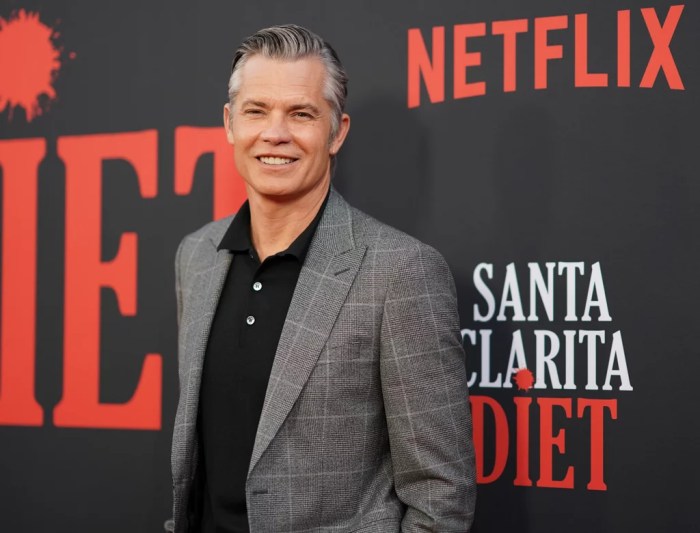
Timothy Olyphant’s portrayal of Lee, Sheila’s husband, is a pivotal element in Santa Clarita Diet’s comedic and dramatic tapestry. His initial characterization as a seemingly ordinary, albeit somewhat detached, husband, quickly evolves into a surprisingly complex figure. He grapples with the emotional and practical challenges of his wife’s transformation while simultaneously navigating the intricacies of his own internal struggles.Lee’s character arc is not merely about reacting to the zombie apocalypse; it’s about his personal journey of adaptation and acceptance in the face of extraordinary circumstances.
He embodies the anxieties and uncertainties that many would experience in such a situation, showcasing the impact of the unexpected on ordinary lives.
Character Development
Lee’s initial portrayal suggests a man struggling with his role as a husband and father. His detachment from Sheila’s emotional needs and his tendency towards cynicism create a stark contrast to her escalating desperation and vulnerability as a zombie. This initial dynamic sets the stage for a more complex interaction as the series progresses. His attempts to maintain a semblance of normalcy amidst the chaos, coupled with his eventual recognition of the profound changes within himself and Sheila, form the core of his development.
This progression underscores the human resilience to adapt and overcome in the face of the absurd.
Relationship with Sheila
The relationship between Lee and Sheila is a central theme. Initially, their connection is marked by a distance, mirroring the subtle anxieties of many couples facing everyday struggles. Their relationship is tested and transformed by the zombie apocalypse, forcing them to confront their deepest fears and vulnerabilities. Their interactions are both comedic and poignant, as they navigate the challenges of a rapidly changing reality, highlighting the unique complexities of their personal connection.
The humor often arises from the absurdity of their situation, while the emotional core of their relationship is consistently evident.
Remember that quirky zombie sitcom, “Santa Clarita Diet,” on Netflix starring Drew Barrymore and Timothy Olyphant? It was surprisingly engaging, even touching on some political undertones. Well, now that Google Keep for web finally has rich text formatting options just like the Android app here , I’m finding it much easier to organize my thoughts on, say, the show’s surprisingly insightful social commentary.
This new formatting makes it way more enjoyable to brainstorm ideas about the characters’ motivations, or even to ponder what a zombie apocalypse would really mean politically.
Comedic and Dramatic Aspects
Lee’s character demonstrates a fascinating interplay of humor and drama. His reactions to Sheila’s evolving behavior, from initial denial to eventual acceptance, are often comedic, reflecting the absurdity of the situation. However, these comedic moments are interwoven with underlying anxieties and emotional turmoil, showcasing the depth of his character. His internal struggles and his attempts to maintain some semblance of normalcy in a world gone mad provide the dramatic core of his character.
Contribution to the Overall Narrative
Lee’s character provides a crucial perspective on the broader narrative of the series. He embodies the ordinary person caught in an extraordinary situation, mirroring the experiences of many viewers. His struggles highlight the human condition’s resilience and adaptability in the face of unforeseen circumstances. He serves as a relatable character whose journey underscores the profound impact of change on personal relationships and the societal structures that hold us together.
Comparison of Characters’ Elements
| Character | Comedic Elements | Dramatic Elements |
|---|---|---|
| Sheila (Drew Barrymore) | Sheila’s transformation into a zombie provides numerous comedic situations, especially her early attempts to navigate her new reality. | Sheila’s descent into zombiehood and her struggle to comprehend her new existence creates profound dramatic moments, revealing the loss of self and her relationship with Lee. |
| Lee (Timothy Olyphant) | Lee’s reactions to Sheila’s zombie transformation, his attempts to maintain a sense of normalcy, and his internal struggles provide comedic relief. | Lee’s internal conflict, his attempts to cope with Sheila’s transformation, and his growing acceptance of the situation highlight the profound impact on his emotional and psychological well-being. |
Political Undertones and Satire
“Santa Clarita Diet” isn’t just a zombie comedy; it’s a darkly comedic exploration of modern life, subtly critiquing societal norms and political landscapes. The show uses the zombie apocalypse as a macabre lens through which to examine the anxieties and hypocrisies of the American middle class and the political climate. The characters’ reactions to the transformation and the subsequent societal shifts offer a commentary on fear, greed, and the often-unseen political undercurrents in seemingly ordinary lives.The series employs satire to expose the absurdity of certain political and social behaviors.
The show’s portrayal of seemingly typical suburban families is contrasted with the increasingly strange and monstrous reality they face. This juxtaposition highlights the disconnect between societal expectations and the often-unpleasant realities people encounter.
Political Commentary in “Santa Clarita Diet”
The show’s political commentary is multifaceted, touching upon themes of class division, media sensationalism, and the corrosive nature of fear-mongering in politics. The characters’ responses to the zombie outbreak reflect a spectrum of political and social viewpoints. Some characters exhibit a callous disregard for the plight of others, while others show unexpected empathy and compassion in the face of adversity.
Examples of Satire and Social Commentary
- The show satirizes the superficiality of the upper-middle class by portraying a family who prioritizes their image and social standing over ethical or humanitarian concerns. Their initial responses to the zombie outbreak focus on maintaining appearances and avoiding public scrutiny, rather than addressing the fundamental issues the situation presents.
- The portrayal of the news media, particularly the way it sensationalizes the zombie outbreak, reflects the show’s critique of media manipulation. The characters’ actions are frequently misconstrued or exaggerated in the news, further highlighting the power of media to shape public perception.
- The show’s portrayal of a political candidate who uses the crisis to gain popularity and political capital offers a satirical look at political opportunism and exploitation. The characters’ interactions with the candidate highlight the dangers of prioritizing personal gain over public welfare during times of crisis.

How the Zombie Theme Serves as a Vehicle for Social Commentary
The zombie theme acts as a metaphor for the anxieties and uncertainties of modern life. The transformation itself is a symbolic representation of the changing social norms, political landscapes, and the changing dynamics in American society. The characters’ reactions to the transformation reveal underlying societal issues and the way people cope with them.
The Show’s Message Regarding the Political Landscape
“Santa Clarita Diet” suggests that political and social divides are often amplified during times of crisis. The show highlights the importance of empathy, compassion, and community in overcoming adversity. It also demonstrates how easily people can be swayed by fear and misinformation, particularly in the current political climate.
Table of Political Satire Examples
| Scene/Event | Political/Social Commentary |
|---|---|
| The family’s initial reaction to the outbreak, prioritizing image and social standing | Satirizes the superficiality of the upper-middle class and their prioritization of appearances over ethical concerns. |
| The news media’s sensationalized coverage of the outbreak | Critiques media manipulation and the use of fear-mongering to shape public perception. |
| A political candidate using the crisis to gain popularity | Satirizes political opportunism and exploitation during times of crisis. |
The Show’s Reception and Impact
“Santa Clarita Diet” carved a niche for itself in the Netflix landscape, though its reception wasn’t entirely straightforward. The show’s unique blend of dark humor, quirky characters, and a zombie twist garnered both praise and criticism, leaving a lasting impression on the streaming platform’s audience and the broader media landscape.The show’s critical reception, while not universally positive, was often noted for its clever writing and engaging performances.
While some reviewers felt the humor was uneven or the zombie premise overplayed, the show’s overall tone and execution were often praised. This mixed bag of opinions is typical of shows that try to combine various genres and themes.
Critical Reception Analysis
The show received a mixed bag of reviews, with some critics praising the show’s clever writing and comedic timing, while others found the humor uneven or the premise too convoluted. A common thread throughout the reviews was the strong performances of the main cast, particularly Drew Barrymore and Timothy Olyphant, who were often cited as highlights of the series.
The show’s unique blend of dark humor and quirky characters was often lauded as a refreshing take on the zombie genre. However, some felt the series’ exploration of the zombie theme could have been more original or the political satire less subtle.
Cultural Impact and Fan Base
“Santa Clarita Diet” did not achieve a level of cultural phenomenon that would make it a mainstream sensation, but it had a noticeable impact. The show’s blend of horror, humor, and dark satire resonated with a specific segment of the audience, creating a devoted fan base. The show’s impact was most evident in its unique approach to the zombie genre and its comedic exploration of social and political themes.
This type of impact is often seen in shows that find a specific niche within a larger genre.
Success or Failure in the Media Landscape
“Santa Clarita Diet” was a successful show in the sense that it maintained a dedicated fanbase and received a significant amount of critical attention, although it didn’t reach mainstream popularity. Its position in the Netflix catalog, coupled with its strong performances and unique premise, allowed it to resonate with a specific demographic. Success in the media landscape is multifaceted and can be measured by various factors, not just mainstream appeal.
Positive and Negative Reception Feedback
- Positive Feedback: Strong performances from the cast, especially Drew Barrymore and Timothy Olyphant, were frequently highlighted. The show’s dark humor and quirky characters were praised, as was its unique take on the zombie genre. Many viewers found the show’s blend of humor and horror refreshing and compelling. The political satire was also noted as a strength by some critics.
- Negative Feedback: Some reviewers found the humor inconsistent or over-the-top. The show’s premise, while unique, was also criticized for being somewhat predictable or cliché. The political satire was seen as too subtle by some critics, and the exploration of the zombie theme wasn’t always deemed original enough.
Visual Representation and Imagery
“Santa Clarita Diet” isn’t just about a zombie apocalypse; it’s a visual feast, cleverly using imagery to reflect the show’s dark humor and unsettling premise. The aesthetic choices aren’t accidental; they contribute significantly to the show’s overall tone and impact. The visual style, from the color palette to the framing of scenes, underscores the unsettling nature of the transformation and the characters’ descent into a bizarre new reality.The visual presentation of “Santa Clarita Diet” is essential to conveying the show’s unique blend of dark humor and social commentary.
The cinematography and set design play a crucial role in creating the atmosphere and enhancing the storytelling. This meticulous attention to visual details amplifies the show’s narrative and elevates the overall viewing experience.
Visual Style
The show’s visual style is characterized by a blend of realism and surrealism. While grounded in the everyday suburban setting of Santa Clarita, the series incorporates surreal elements to reflect the increasingly bizarre situation. This juxtaposition is key to the show’s comedic and unsettling tone. The cinematography often employs close-ups, emphasizing facial expressions and reactions, highlighting the psychological impact of the transformation.
Drew Barrymore’s “Santa Clarita Diet” on Netflix, with its zombie twist and political undertones, starring Timothy Olyphant, got me thinking about location data. The show, while fictional, raises interesting questions about privacy. Understanding location data privacy safety is crucial in today’s world, especially when dealing with the potential for misuse or exploitation. Location data privacy safety measures are important to ensure our digital footprint doesn’t inadvertently reveal too much about our lives, even in the context of a fictional zombie apocalypse.
The show’s intriguing premise, combined with the real-world implications of location data, makes for a fascinating connection.
This approach draws the viewer into the characters’ experiences.
Color Palette
The color palette in “Santa Clarita Diet” is significant, contributing to the overall mood and atmosphere. The show often employs a muted, desaturated color palette in scenes that depict the normalcy of the characters’ lives before their transformation. This creates a sense of normalcy, which is later contrasted with the vibrant, unnatural hues that emerge as the characters’ transformation progresses.
The use of these contrasting palettes effectively underscores the shift in the characters’ emotional states and the growing absurdity of the situation. The color choices aren’t arbitrary; they are carefully curated to reflect the changing circumstances.
Key Visual Imagery
The series uses specific visual imagery to highlight key themes and character development. For example, the recurring imagery of food and consumption underscores the altered appetites and desires of the characters. The show utilizes specific objects and settings to represent the changes that occur. This creates a visual language that transcends the spoken dialogue, enriching the overall storytelling experience.
The use of symbolism through visual cues enhances the narrative, deepening its meaning and impact.
Table of Key Scenes and Visual Elements
| Scene | Visual Element | Significance |
|---|---|---|
| Opening scene of the couple’s morning routine | Muted, desaturated colors; soft lighting | Establishes a sense of normalcy and routine before the transformation. |
| The couple eating a meal | Close-ups of the food; unusual expressions on their faces | Highlights the shift in their appetites and desires. |
| The characters’ reactions to the transformation | Distorted perspectives; exaggerated expressions; unnatural lighting | Emphasizes the surreal and grotesque aspects of the zombie theme. |
| Scenes in the home after the transformation | Intense colors, vibrant lighting, close-ups on faces and body language | Underscores the characters’ altered state and the growing absurdity of their actions. |
Comparisons to Similar Shows: Santa Clarita Diet Netflix Drew Barrymore Politics Zombie Timothy Olyphant
“Santa Clarita Diet” carved its own unique niche within the zombie genre, while drawing inspiration from and contrasting with other popular shows. It’s not simply a rehash of existing zombie narratives; it’s a darkly comedic and surprisingly poignant take on the trope, with its own distinct flavor. The show’s success lies in its ability to blend familiar elements with fresh perspectives.
Distinguishing Elements
“Santa Clarita Diet” stands apart from other zombie shows primarily through its comedic approach and its exploration of interpersonal relationships within a seemingly ordinary suburban setting. While many zombie shows focus on the immediate threat of the undead, “Santa Clarita Diet” delves into the emotional and psychological fallout of the transformation. The show’s humor, often biting and satirical, sets it apart from the more serious or horror-focused portrayals.
This unique blend allows the audience to engage with the zombie theme in a more accessible and relatable way.
Comparison Table
| Feature | Santa Clarita Diet | The Walking Dead | Z Nation | Shaun of the Dead |
|---|---|---|---|---|
| Tone | Darkly comedic, satirical, poignant | Serious, dramatic, often violent | Action-oriented, often humorous, with some seriousness | Witty, comedic, with horror elements |
| Setting | Suburban California | Various locations, often rural or desolate | Various locations, often urban | English suburban town |
| Focus | Relationships, family dynamics, societal commentary | Survival, struggle for resources, political conflicts | Finding a cure, survival, political conflicts | Comedy, social satire, survival |
| Zombie portrayal | Transformation as a catalyst for character development, humorous aspects | Threatening, terrifying, often a force of nature | Diverse, adaptable, various powers | Humorous, relatable, not as overtly frightening |
Similar Shows and Themes
The comedic zombie genre is relatively smaller, but there are parallels in other shows. “Shaun of the Dead” provides a similar blend of horror and humor, while focusing on the social dynamics of a zombie apocalypse. “The Walking Dead,” while a landmark in the zombie genre, adopts a far more serious and dramatic tone. “Z Nation,” while also featuring zombies, emphasizes survival and the quest for a cure.
Originality of Approach
“Santa Clarita Diet” innovates by presenting the zombie apocalypse through the lens of a seemingly ordinary suburban family. This relatability is a crucial component of the show’s originality. The show’s unique approach, characterized by its comedic tone, allows the audience to engage with the zombie theme in a more accessible and relatable manner. This is in contrast to other shows that often focus on the gruesome aspects of the undead.
Conclusion
Ultimately, Santa Clarita Diet is a thought-provoking series that uses the zombie genre as a lens through which to examine societal issues and the complexities of human relationships. The performances are strong, the writing is sharp, and the visual style is distinctive. It’s a show that’s sure to leave a lasting impression on viewers, prompting discussion and reflection long after the credits roll.