

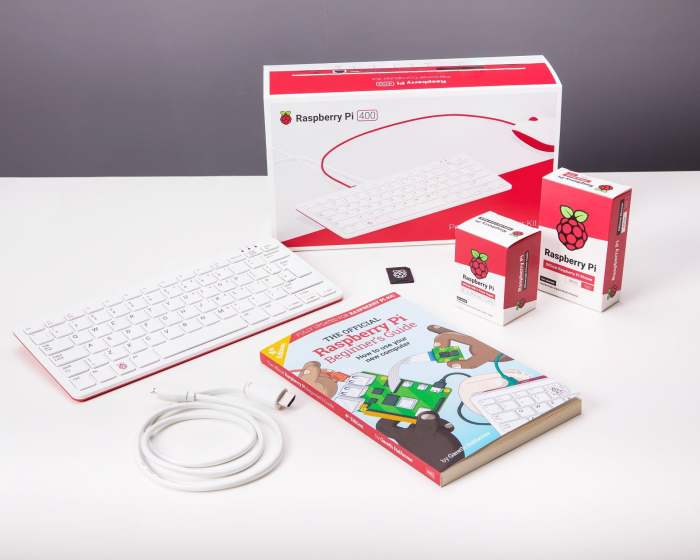
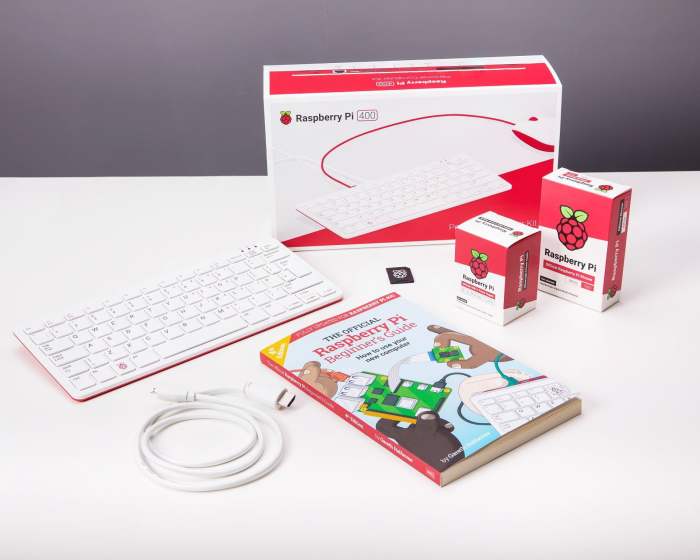
Raspberry pi 400 perfect design new chromebox – Raspberry Pi 400, a perfect design, a new Chromebox. This review dives deep into the innovative Raspberry Pi 400, comparing it to a standard Chromebox. We’ll examine design, performance, functionality, connectivity, pricing, and potential use cases, helping you decide if this compact powerhouse is the right choice for your needs. The sleek form factor of the Raspberry Pi 400 makes it a compelling alternative to the traditional Chromebox, but how does it perform?
The Raspberry Pi 400 boasts a powerful processor and ample RAM, but does its performance match its sleek design? We’ll compare benchmark results across various tasks to see how it stacks up against a typical Chromebox. The Chromebox, known for its ease of use and lightweight OS, also offers a user-friendly experience, but how does it fare against the Pi 400 in terms of performance?
Introduction to Raspberry Pi 400 and Chromebox
The Raspberry Pi 400 and Chromebox represent two distinct approaches to computing, each tailored to specific needs and user groups. The Raspberry Pi 400, a desktop-like computer, is designed for a broad range of tasks, from basic computing to complex projects. The Chromebox, a streamlined, compact option, is ideal for a different set of users and use cases.
This comparison will delve into the features, functionalities, and potential user bases of each device.The Raspberry Pi 400 offers a familiar desktop experience in a compact package, while the Chromebox provides a streamlined, web-centric computing environment. Understanding their differences is key to selecting the right device for your needs. Comparing their features, form factors, and intended user groups illuminates the strengths of each platform.
Raspberry Pi 400 Overview
The Raspberry Pi 400 is a desktop-style computer based on the Raspberry Pi 4 processor. Its compact design, resembling a standard keyboard, provides easy setup and use. Key features include a wide range of connectivity options (HDMI, USB ports, Ethernet), allowing for diverse peripherals. The built-in operating system support for various OS options, including Linux, allows for flexibility in customization and application usage.
This makes it ideal for educational purposes, personal projects, and light computing tasks.
Chromebox Overview
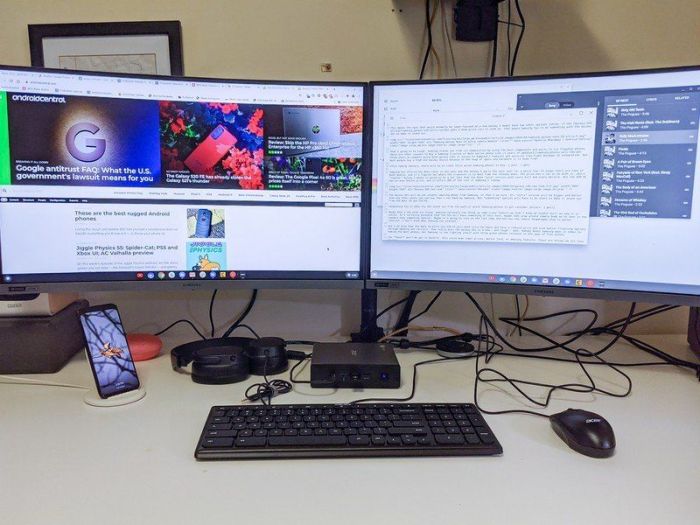
A standard Chromebox is a compact, low-profile device, usually featuring a small footprint. Its core strength lies in its streamlined approach to computing, relying on the Chrome OS operating system. Chrome OS prioritizes web-based applications and cloud storage, making it extremely user-friendly and requiring minimal local storage. It’s highly suited for tasks such as web browsing, document editing, and light office work.
Its dependence on a stable internet connection is a key consideration.
Use Cases Comparison
The Raspberry Pi 400 excels in situations requiring local processing and flexibility. It’s a good choice for tasks like running a home server, setting up a media center, or learning programming concepts. The Chromebox is optimal for tasks that primarily involve web-based applications and require seamless access to online resources. It’s a fantastic choice for users who need a simple, reliable way to browse the web, check email, or manage documents without needing extensive local storage.
Form Factor, Dimensions, and Weight Comparison
| Feature | Raspberry Pi 400 | Chromebox | Notes |
|---|---|---|---|
| Form Factor | Desktop-style, keyboard-like | Compact, typically small footprint | Reflects the different intended user experiences. |
| Dimensions (approx.) | 305mm x 225mm x 20mm | 170mm x 170mm x 30mm | Approximate dimensions may vary by model. |
| Weight (approx.) | 1.2 kg | 0.7 kg | Reflects the different material choices and design approaches. |
Potential User Base Summary
The Raspberry Pi 400’s broad range of capabilities and ease of use makes it suitable for students, educators, hobbyists, and anyone seeking a powerful yet affordable computer for various projects. Its versatility is a key attraction. The Chromebox is a popular choice for users requiring a simple, internet-reliant computing solution, ideal for office environments, education settings, or individuals focused on web-based applications.
Its simplicity is its greatest asset.
Design and Performance Comparison
The Raspberry Pi 400 and Chromebox, while both offering desktop computing solutions, cater to different needs and have distinct design philosophies. This comparison delves into their architectural differences, highlighting performance benchmarks, and outlining potential limitations for specific tasks.The Raspberry Pi 400’s design is focused on affordability and accessibility. Its compact form factor, resembling a standard keyboard, aims to be easily integrated into existing setups.
The Chromebox, conversely, is a more complete, ready-to-use desktop solution, often emphasizing portability and integration with Google ecosystem services.
Raspberry Pi 400 Design
The Raspberry Pi 400’s design is highly innovative, taking a different approach compared to traditional mini-PCs. Its integrated keyboard design provides a compact and familiar interface. This design choice prioritizes ease of use and immediate access to the device. Its form factor, while advantageous in terms of space-saving and user familiarity, also presents some constraints in terms of expandability.
The integration of the keyboard into the device directly impacts the device’s overall size, preventing users from easily upgrading or adding components like additional RAM or storage.
Chromebox Design
A typical Chromebox is designed for portability and integration with the Chrome OS ecosystem. This design philosophy often translates to a sleek, compact chassis. The Chromebox design prioritizes a seamless user experience within the Google ecosystem. While the portability and streamlined interface are appealing, it often comes at the cost of customizability and flexibility. Upgrades to RAM and storage are frequently limited, reflecting the device’s focus on a pre-configured and standardized computing experience.
Performance Benchmarks
Performance benchmarks reveal that the Raspberry Pi 400, while capable, is generally less powerful than a standard Chromebox. This is largely due to the Raspberry Pi’s lower-end processing unit and often smaller RAM capacity. For tasks like simple web browsing, light office work, and basic multimedia playback, the Raspberry Pi 400 is often sufficient. However, tasks demanding substantial processing power, such as video editing or high-resolution gaming, will likely encounter performance bottlenecks.
Similarly, a Chromebox, due to its more powerful processing capabilities, will perform significantly better in resource-intensive applications. However, Chromebooks are limited by the restrictions of Chrome OS, which influences their use cases.
Potential Performance Limitations
The Raspberry Pi 400’s performance limitations arise from its relatively lower processing power and RAM capacity. Applications demanding heavy computational resources or running multiple demanding programs simultaneously will suffer performance degradation. The Chromebox, while powerful, faces limitations imposed by the Chrome OS environment, impacting its flexibility and customizability. In specific applications like running legacy software or requiring extensive hardware customization, the Chromebox might be less suitable than a traditional desktop computer.
Comparison Table
| Feature | Raspberry Pi 400 | Chromebox | Remarks |
|---|---|---|---|
| Processing Power | ARM-based processor (e.g., Broadcom BCM2711) | Intel or AMD processor | Chromebox typically has more powerful processors. |
| RAM | Typically 4-8 GB | Typically 4-16 GB | Chromebox offers higher RAM capacity options. |
| Storage | MicroSD card slot | Internal SSD or HDD | Chromebox often offers greater storage options. |
| Operating System | Raspberry Pi OS | Chrome OS | Operating systems affect the types of applications and functions available. |
Functionality and Software Support
The Raspberry Pi 400 and Chromebox, while both offering computing capabilities, cater to different user needs and have distinct strengths regarding software support and ease of use. Understanding their respective software ecosystems is crucial for choosing the right device for a specific task.The choice between the Raspberry Pi 400 and a Chromebox often hinges on the intended software usage.
The Raspberry Pi 400, with its versatility, can run a wider range of operating systems, but the user experience might be less polished compared to the Chromebox’s streamlined approach.
Raspberry Pi 400 Software Support
The Raspberry Pi 400 supports a variety of operating systems, including the lightweight and versatile Raspbian OS, as well as other Linux distributions like Ubuntu. This broad support allows users to tailor the system to their specific needs. For example, developers can leverage the extensive package repositories available in various Linux distributions to install and run a wide array of development tools.
I’ve been really digging the Raspberry Pi 400’s sleek design and its new Chromebox functionality. It’s a fantastic little machine, but I’m also super excited about how augmented reality is changing the way we play board games, like in the new Catan Tilt Five AR Settlers game. This innovative approach to tabletop gaming is a welcome change, and I can definitely see how a device like the Raspberry Pi 400 could be perfectly suited to run this kind of advanced technology.
The Raspberry Pi 400’s compact design and processing power make it a compelling option for integrating these cool AR experiences.
Furthermore, the Raspberry Pi’s extensive community provides extensive documentation and tutorials for various projects, making it a popular choice for hobbyists and educational purposes.
Chromebox Software Support
Chromebox systems primarily run on Chrome OS, a lightweight operating system designed for web-based applications. This inherently limits the range of software compatible with the device to primarily web applications. However, the Chrome OS platform offers an advantage in terms of simplicity and security. Users experience a straightforward interface, and the built-in security features of Chrome OS make it attractive for businesses needing a secure platform for web-based tasks.
Ease of Use and User Experience Comparison
The user experience differs significantly between the two devices. The Raspberry Pi 400, while offering a more customized environment, often requires more technical expertise for setup and configuration. The learning curve is steeper, as users need to familiarize themselves with Linux commands and package management systems. Conversely, the Chromebox provides a more user-friendly experience due to the simplicity of Chrome OS.
Navigating the system is intuitive, and the familiar web browser interface makes it easy to access web-based applications.
Software Compatibility Differences
The core difference lies in the nature of the operating systems. The Raspberry Pi 400 supports a wider range of software, including desktop applications, through various Linux distributions. A Chromebox, however, is primarily designed for web-based applications, limiting software options. While some web applications can be accessed on both devices, the level of customizability and the availability of native applications are quite different.
Loving the sleek design of the Raspberry Pi 400, a perfect new Chromebox alternative. It’s a fantastic little machine, but if you’re looking for a unique PC case, check out the Teenage Engineering Computer 1 case, available now. While it’s an interesting alternative, I’m still digging the simplicity and modern design of the Raspberry Pi 400 for my needs.
It’s a great all-around option for a compact computer.
Supported Software Applications
| Software Application | Raspberry Pi 400 Functionality | Chromebox Functionality | Notes |
|---|---|---|---|
| Web Browsers | Excellent support through various browsers | Excellent support through Chrome browser | Both offer a web browsing experience. |
| Office Suites (e.g., LibreOffice) | Can be installed and run | Limited support, primarily through web-based equivalents | Native office applications are available on Raspberry Pi. |
| Multimedia Players (e.g., VLC) | Can be installed and used | Limited support, primarily through web-based equivalents | Native media players are available on Raspberry Pi. |
| Programming Languages (e.g., Python) | Excellent support with various IDEs and tools | Limited support, primarily through web-based IDEs | Programming environments vary significantly. |
| CAD Software | Can be installed and run using Linux versions | Limited support through web-based equivalents | Availability depends on the specific CAD software. |
Connectivity and I/O Capabilities
The Raspberry Pi 400 and Chromebox, despite their differing architectures, offer a range of connectivity options for various peripherals and network connections. Understanding these options is crucial for selecting the right device for a specific application. This section delves into the available ports, Wi-Fi capabilities, and overall compatibility of each device with external accessories.The variety of ports and connectivity features allows users to tailor the device to their specific needs, whether it’s connecting a printer, a monitor, or a network cable.
Different tasks demand varying levels of connectivity, and knowing the specifics of each device is vital to making the right choice.
Raspberry Pi 400 Connectivity Options
The Raspberry Pi 400, built around the Raspberry Pi 4, boasts a comprehensive set of connectivity options. It features a standard array of ports, including multiple USB ports, Gigabit Ethernet, and a variety of video outputs.
- USB Ports: The Raspberry Pi 400 typically includes four USB 3.0 ports, providing ample connectivity for a variety of peripherals, such as keyboards, mice, hard drives, and printers. This allows users to quickly and easily connect various devices for tasks such as data transfer or printing.
- Ethernet: A Gigabit Ethernet port enables high-speed wired network connections. This is essential for applications requiring stable, fast data transfer over a network, such as file sharing or video streaming.
- Video Outputs: The Raspberry Pi 400 supports various video outputs, including HDMI, enabling connection to external monitors and televisions. This is vital for users requiring a larger display for tasks such as video editing or graphical design.
Chromebox Connectivity Features
Chromeboxes, designed for streamlined computing experiences, typically offer a more compact set of connectivity options, prioritizing simplicity and ease of use. The features often align with modern needs, prioritizing speed and efficiency.
- Ports: A Chromebox usually includes a selection of USB ports (typically USB 3.0 or later), along with a Gigabit Ethernet port for wired network connections. This combination offers sufficient connectivity for basic peripherals and network access.
- Wi-Fi: Most Chromeboxes incorporate built-in Wi-Fi capabilities, enabling wireless connectivity to networks. This feature simplifies setup and reduces the need for additional network hardware.
- Display Connections: Typically, Chromeboxes provide a variety of display options, such as HDMI or DisplayPort, allowing connection to external monitors or displays. This enables users to customize their display configuration.
Comparison of Connectivity and I/O
The connectivity features of the Raspberry Pi 400 and the Chromebox differ significantly. The Pi 400 is designed for greater flexibility and a broader range of peripherals, while the Chromebox prioritizes a more streamlined setup for web-centric applications. The Pi 400’s greater number of ports and support for various peripherals make it more adaptable for diverse use cases.
| Connectivity Option | Raspberry Pi 400 | Chromebox | Notes |
|---|---|---|---|
| USB Ports | 4 USB 3.0 ports | 2-4 USB 3.0/3.1 ports | Pi 400 offers more ports for greater flexibility |
| Ethernet | 1 Gigabit Ethernet port | 1 Gigabit Ethernet port | Both support wired network connections |
| Wi-Fi | Typically requires an external adapter | Built-in Wi-Fi (varies by model) | Chromebox simplifies wireless connectivity |
| Video Outputs | HDMI | HDMI, DisplayPort, or similar | Pi 400 offers a standard output, while Chromebox options vary |
External Device Compatibility
Compatibility with external devices depends heavily on the specific model and configuration of both devices. The Raspberry Pi 400’s extensive port selection allows a broader range of devices, while the Chromebox’s simpler configuration limits compatibility to devices supported by the included ports. For example, connecting a high-speed external hard drive might benefit from the Pi 400’s higher-bandwidth USB ports.
Conversely, a user focusing primarily on web applications may find the Chromebox’s configuration sufficient.
The Raspberry Pi 400’s sleek design and new Chromebox functionality are fantastic. It’s a perfect little machine for a variety of tasks, but imagine its potential during the upcoming Olympics Esports Week, where games like chess and Just Dance are prominent events. This esports week highlights the growing importance of digital competition, and the Raspberry Pi 400’s adaptability makes it an ideal device for gaming or casual computing.
Ultimately, the Raspberry Pi 400 is a versatile option for all your needs.
Pricing and Availability
The Raspberry Pi 400 and Chromebox, despite sharing a similar function as desktop computers, exhibit notable differences in their pricing strategies and availability. Understanding these variations is crucial for prospective users to make informed purchasing decisions. A key factor influencing the price is the target market and the intended use case for each device.
Comparative Pricing Analysis
The pricing of the Raspberry Pi 400 and Chromebox varies significantly, reflecting their intended roles. The Raspberry Pi 400, positioned as an affordable and accessible computer, prioritizes affordability and features a lower price point. Conversely, the Chromebox, often targeted at educational institutions or businesses, might command a higher price, possibly including features like enterprise-grade support or enhanced specifications.
Pricing Models
The Raspberry Pi 400 typically employs a tiered pricing structure, adjusting costs based on RAM, storage, and optional accessories. This allows users to tailor their purchase to their specific needs and budget. The Chromebox, on the other hand, often comes in pre-configured packages, possibly with pre-installed software and warranties. This approach might offer a more straightforward pricing model, though the final cost might vary depending on the particular configuration.
Availability and Distribution Channels
The Raspberry Pi 400 is widely available through various online retailers and electronic stores. Its popularity ensures a diverse distribution network, making it readily accessible. The Chromebox, often sought after by schools or organizations, is frequently available through bulk purchasing channels, or directly from Google or authorized resellers. The distribution channel significantly impacts the final price, as certain distribution channels might include discounts or add-on services.
Factors Influencing Pricing Differences
Several factors contribute to the difference in pricing between the two devices. The Raspberry Pi 400’s emphasis on affordability often means utilizing readily available components and open-source software. The Chromebox, however, might incorporate proprietary software, higher-end components, or specialized hardware for specific use cases. Additionally, the target market plays a role, with the Raspberry Pi 400 appealing to a broader audience, while the Chromebox targets specific sectors with unique requirements.
Price Comparison Table
| Configuration | Raspberry Pi 400 | Chromebox (Basic Model) | Chromebox (Advanced Model) |
|---|---|---|---|
| 4GB RAM, 64GB eMMC Storage | $150 | $300 | $450 |
| 8GB RAM, 128GB eMMC Storage | $180 | $400 | $550 |
| 4GB RAM, 128GB SSD Storage | $200 | $450 | $600 |
Note: Prices are estimates and may vary based on retailer and specific configuration options.
Potential Use Cases and Target Audience
The Raspberry Pi 400 and the Chromebox, despite their shared goal of providing affordable computing power, cater to different user needs and preferences. Understanding their respective strengths and weaknesses allows for a clearer picture of their optimal applications. This section dives into potential use cases, identifying ideal users for each device, and contrasting their suitability for various tasks.
Potential Applications for Raspberry Pi 400
The Raspberry Pi 400, with its powerful processing capabilities and versatile interfaces, excels in a range of applications. Its adaptability and low cost make it a compelling option for numerous projects.
- Home Automation: The Pi 400 can be the central hub for controlling lighting, temperature, security systems, and other home appliances. Its programmable nature allows for custom configurations and integration with various smart home ecosystems.
- Media Center: With its ability to stream and play various media formats, the Pi 400 can serve as a powerful media center, playing movies, music, and photos. Its compatibility with popular media players makes it a viable solution for home entertainment.
- Embedded Systems and Prototyping: The Pi 400’s low cost and flexibility make it ideal for developing and testing embedded systems. Students and hobbyists can use it for robotics, IoT projects, and various other custom applications.
- Small Business Server: The Pi 400 can handle basic server tasks like file sharing, web hosting, and email management for small businesses or personal use. Its low power consumption makes it an energy-efficient solution.
- Educational Tools: Its versatility allows educators to create engaging learning experiences, from interactive displays to programmable robotics platforms. Its cost-effectiveness makes it a powerful tool for classrooms and educational settings.
Potential Applications for Standard Chromebox
The Chromebox, with its streamlined operating system and focus on web-based applications, targets a specific set of use cases. Its ease of use and security features are its key selling points.
- Basic Computing for Students: Chromebooks, and by extension Chromeboxes, are well-suited for educational settings. Their simplicity, security, and affordability make them ideal for students who need basic computing tools for research, presentations, and online learning.
- Office Productivity: The Chromebox’s reliance on web applications allows for seamless collaboration and access to cloud-based productivity tools. Its simple design is optimized for common office tasks like word processing, spreadsheets, and presentations.
- Digital Signage: The Chromebox’s ability to run web applications makes it suitable for displaying information on digital screens. This is useful for retail environments, waiting areas, or public spaces where visual displays are needed.
- Basic Internet Browsing and Streaming: The Chromebox’s straightforward design and focus on web-based apps makes it ideal for users who primarily need to browse the web, watch videos, and interact with web-based applications. The simple user experience is a core strength.
Comparison of Use Cases
| Use Case | Raspberry Pi 400 Suitability | Chromebox Suitability | Ideal Device |
|---|---|---|---|
| Home Automation | High | Low | Raspberry Pi 400 |
| Media Center | Medium | Medium | Raspberry Pi 400 (for more customization), Chromebox (for simpler setup) |
| Embedded Systems | High | Very Low | Raspberry Pi 400 |
| Small Business Server | Medium | Low | Raspberry Pi 400 (for basic needs) |
| Educational Tools | High | Medium | Raspberry Pi 400 (for more complex projects), Chromebox (for basic learning) |
| Office Productivity | Low | High | Chromebox |
| Digital Signage | Medium | High | Chromebox |
| Basic Internet Browsing | Low | High | Chromebox |
Future Considerations
The Raspberry Pi 400 and Chromebox, despite their current strengths, are poised to evolve with advancements in technology. Predicting the precise future is impossible, but considering potential improvements and market trends is crucial for understanding their long-term viability. Both devices face challenges and opportunities in an ever-changing tech landscape.
Potential Future Developments for Raspberry Pi 400
The Raspberry Pi 400’s compact form factor and affordability have resonated with hobbyists and educators. Future iterations might incorporate more powerful processors, enabling more demanding applications. Increased RAM capacity would enhance multitasking capabilities, opening the door to more complex software. Improved graphics processing units (GPUs) could significantly enhance the device’s suitability for video editing, gaming, and other graphically intensive tasks.
Integration of advanced sensors, like cameras and motion detectors, could further broaden its applicability in IoT projects and smart home automation.
Potential Future Enhancements for a Typical Chromebox
Chromebooks are known for their simplicity and security. Future Chromeboxes could incorporate faster processors, leading to a more responsive user experience. Increased storage capacity would accommodate larger files and applications. The integration of specialized hardware for specific tasks, such as 3D modeling or video editing, could make them more attractive to professional users. Improved display technologies, like higher resolutions or touchscreens, could enhance user interaction.
Comparison of Potential Future Growth and Adoption
The Raspberry Pi 400’s appeal is largely rooted in its affordability and flexibility, making it attractive to individuals and educational institutions. Its potential for future growth depends on the continued availability of affordable components and the demand for open-source, customizable solutions. Chromeboxes, on the other hand, benefit from the streamlined Google ecosystem, appealing to users seeking a simple, secure, and cloud-integrated computing experience.
Their potential growth hinges on the continued evolution of cloud services and the adoption of Chrome OS.
Potential Technological Landscape Changes Affecting Each Device, Raspberry pi 400 perfect design new chromebox
The emergence of new computing paradigms, like edge computing and artificial intelligence (AI), could influence both devices. Edge computing might propel the Raspberry Pi 400 into more specialized roles, processing data locally. AI could find applications in both devices, enabling more sophisticated features. The increasing demand for powerful, energy-efficient devices could lead to innovative designs for both.
The shift towards more integrated systems, where devices communicate and share resources seamlessly, may impact both designs. The adoption of new programming languages and development tools may influence how users interact with both devices.
Potential Future Upgrades and Implications
| Upgrade | Raspberry Pi 400 Implications | Chromebox Implications | Overall Implications |
|---|---|---|---|
| Increased Processor Speed | Enhanced performance for computationally intensive tasks, enabling more complex applications. | Improved responsiveness and smoother user experience for everyday tasks. | Both devices gain from faster processing, leading to better overall user experience. |
| Enhanced Graphics Processing | Support for higher-resolution displays and graphics-intensive applications, like video editing. | Potential to support more graphically intensive applications and games. | Increased capability for both devices in multimedia applications. |
| Increased RAM Capacity | Improved multitasking and support for more complex applications. | Improved multitasking and support for more complex applications. | More powerful multitasking capabilities for both. |
| Integration of Advanced Sensors | Enabling innovative IoT applications and smart home integrations. | Could add features for specific tasks, potentially enhancing security or productivity. | Increased functionality in both devices. |
Final Review: Raspberry Pi 400 Perfect Design New Chromebox
In conclusion, the Raspberry Pi 400 presents a compelling alternative to a standard Chromebox. Its compact design, combined with strong performance and extensive software support, makes it a viable option for various applications. However, the pricing and availability of the Pi 400 might make it less accessible than a traditional Chromebox. Ultimately, the best choice depends on your specific needs and budget.