


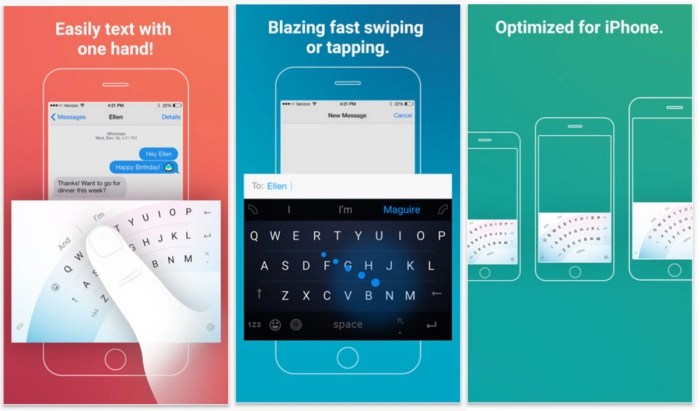
Microsoft Word Flow keyboard iPhone offers a streamlined way to type on your iPhone. This feature aims to improve typing efficiency and workflow, especially for those who frequently use Microsoft Word or other apps. It promises a unique approach to text input, potentially offering a more natural and efficient experience than traditional iPhone keyboard methods.
This detailed exploration will cover everything from the core functionality and benefits to potential limitations, comparisons with other keyboard features, and seamless integration with other Microsoft apps. We’ll also delve into user experience, troubleshooting, and even glimpse at the exciting future possibilities of this innovative typing solution.
Introduction to Microsoft Word Flow on iPhone Keyboard
Microsoft Word Flow, integrated into the iPhone keyboard, streamlines the writing process for users who frequently switch between typing and formatting. This feature leverages the power of the iPhone’s intuitive design to provide a more efficient and natural writing experience. It enhances the user’s ability to create documents and other formatted text without needing to switch applications or tools.
Core Functionality and Benefits
Word Flow simplifies the creation and editing of formatted text directly within the iPhone’s text input field. It offers a streamlined workflow for users needing to quickly insert elements like headings, lists, bullet points, and more. The intuitive design makes these formatting options accessible and easy to implement, enhancing productivity.
Key Advantages of Word Flow
The core advantage of Microsoft Word Flow lies in its ability to significantly reduce the time and steps required to produce formatted text. This is particularly beneficial for users who frequently create documents, notes, or emails requiring formatting. Instead of opening a separate app or manually applying formatting, Word Flow allows users to achieve the same results with a single interface.
| Feature | Description | Benefit |
|---|---|---|
| Heading Styles | Word Flow allows for quick selection of various heading styles (e.g., Heading 1, Heading 2) directly within the keyboard. | Saves time and effort compared to using a separate formatting tool, enabling a seamless and efficient document creation process. |
| List Formatting | Easily create bulleted and numbered lists with customizable options, all without leaving the keyboard. | Improves productivity by providing an intuitive and integrated method for list creation. |
| Quote Formatting | Insert and format block quotes with proper indentation and styling directly within the keyboard. | Ensures consistent formatting for quotes, making writing and document creation more efficient. |
| Table Creation | Create simple tables with rows and columns directly within the keyboard. | Streamlines the process of creating tables, enabling users to quickly organize data and information within the text. |
| Formatting Consistency | Maintaining consistent formatting throughout a document is straightforward. | Ensures a professional and visually appealing output, eliminating the need for repetitive manual formatting steps. |
Comparison with Other Keyboard Features
Microsoft Word Flow on the iPhone keyboard offers a unique approach to text input, diverging from the traditional predictive text and swipe typing methods. While these established features have their strengths, Word Flow introduces a different paradigm, focusing on a more visual and intuitive way to compose text. This comparison explores the strengths and weaknesses of each method and examines the potential for synergy between Word Flow and existing iPhone keyboard features.
Predictive Text
Predictive text systems, common on most mobile keyboards, suggest words based on the user’s input history and context. This feature aims to speed up typing by providing possible completions. Its strength lies in its ability to anticipate the user’s intended words, particularly in common phrases and recurring vocabulary. However, predictive text can sometimes offer incorrect or irrelevant suggestions, leading to unwanted substitutions and potentially slowing down the writing process.
Accuracy also varies depending on the user’s typing style and the context of the text. For example, if a user is writing a highly technical document, predictive text may not always be helpful or accurate.
Swipe Typing
Swipe typing, another widely used method, allows users to input text by swiping between letters. This method is designed to be faster than traditional touch typing, particularly for users who are comfortable with this input style. The efficiency of swipe typing relies on the user’s ability to perform smooth, accurate swipes. However, it can be less precise than traditional touch typing, especially for complex words or when multiple words need to be input rapidly.
The accuracy and efficiency of swipe typing can also be affected by the complexity of the input, with longer or less common words being potentially more challenging to input.
Word Flow vs. Other Methods: A Comparison
| Feature | Word Flow | Predictive Text | Swipe Typing |
|---|---|---|---|
| Input Style | Visual, drag-and-drop words into place | Suggests words based on context and history | Swiping between letters |
| Accuracy | High accuracy, especially for common words; less accurate for less frequent words | Variable accuracy, depends on the context and the user’s typing history | Variable accuracy, accuracy depends on the user’s swiping technique and complexity of the input |
| Efficiency | Can be highly efficient for composing sentences and paragraphs; efficiency depends on the user’s familiarity with the method | Generally efficient for common words and phrases | Generally efficient for quick input of common words, potentially slower for complex words or phrases |
Synergy Between Features
The potential for synergy between Word Flow and other features lies in combining the strengths of each approach. For example, Word Flow could leverage predictive text suggestions to enhance its accuracy and efficiency, particularly for less common words or phrases. Similarly, Word Flow’s visual approach could improve the user experience when combined with swipe typing, offering a more intuitive way to select and input words.
This could potentially enhance the overall user experience by leveraging the strengths of both approaches.
User Experience and Workflow
Microsoft Word Flow on the iPhone keyboard elevates text input beyond simple typing. Its intuitive design and streamlined workflow significantly improve productivity, especially for users who frequently create documents or need to incorporate formatting elements within their messages. The application of this technology extends to a wide range of scenarios, from composing emails to jotting down notes.Word Flow’s key strength lies in its ability to seamlessly integrate formatting options directly into the typing process.
This approach avoids the need to switch between different applications or tools, thus enhancing the overall user experience and streamlining the writing process.
Ease of Use and Intuitive Design
Word Flow is designed for effortless navigation. Its interface is clean and uncluttered, with readily accessible formatting options. Users can quickly select fonts, sizes, bolding, italics, and bullet points directly from the keyboard, eliminating the need to manually switch between tools. This direct integration simplifies the entire process and reduces the learning curve. The intuitive layout allows users to focus on the content, not the formatting, making the experience feel natural and seamless.
Steps Involved in Using Word Flow
The process of using Word Flow is straightforward. To apply bold formatting, for example, users can tap the bold icon displayed prominently on the keyboard. Once selected, the text being typed will automatically be bolded. Similarly, changing the font size or adding bullet points is equally simple. The step-by-step process is designed to be intuitive, reducing the time spent on learning the application.
The seamless integration of formatting tools into the typing experience significantly improves productivity and reduces the time required for document creation.
Examples of Workflow Efficiency Improvements
Word Flow streamlines the creation of various types of text. Imagine composing an email with headings and bullet points. Instead of switching to a different application, users can directly apply these formatting elements within the email draft on the keyboard. This feature is particularly useful for quick note-taking or composing short reports within a messaging application. The streamlined approach allows users to create professional-looking documents directly within their existing workflows, without the need for complex or multi-step processes.
Step-by-Step Guide
This guide demonstrates the basic functionalities of Word Flow.
- Step 1: Open the Microsoft Word Flow keyboard on your iPhone. The keyboard will be accessible from any text input field.
- Step 2: To apply bold formatting, locate the bold icon (typically represented by a bold text or an icon with a double-line effect). A tap on this icon will apply the bold formatting to the selected text.
- Step 3: To change the font size, look for the font size options (usually a list of different font sizes). Select the desired size from the available options.
- Step 4: For adding bullet points, locate the bullet point icon (often represented by a small, filled circle). Tap the icon to insert bullet points into the text. Subsequent typing will automatically create a bulleted list. This applies to numbered lists as well, which typically use a number icon.
Supported Input Types and Limitations
Word Flow, Microsoft’s innovative iPhone keyboard, aims to streamline the writing experience. However, like any input method, it has strengths and weaknesses in handling different text types. Understanding these nuances helps users maximize Word Flow’s capabilities and anticipate its limitations.Word Flow excels in certain input scenarios but might not be the ideal choice for others. This section delves into the supported input types, highlighting both the advantages and potential drawbacks of using Word Flow for various tasks.
We’ll also explore its compatibility with diverse languages, offering insights into how well it performs across different linguistic contexts.
I’ve been loving the Microsoft Word Flow keyboard on my iPhone lately. It’s so smooth and intuitive for typing, especially when compared to other keyboard apps. However, I just ran into a frustrating issue with my Fitbit Charge 5 and Luxe not syncing with my Samsung phone on Android 13. Checking out this article on fitbit charge 5 and luxe cant sync with samsung phones on android 13 helped me narrow down the potential causes.
Hopefully, I can get this sorted out soon so I can enjoy my Word Flow keyboard again!
Supported Text Input Types
Word Flow is designed for smooth and efficient text input, particularly in scenarios where the user wants to compose creative and complex content, such as emails, documents, and even poems. Its predictive text capabilities and streamlined formatting options make it particularly helpful for drafting emails or composing documents. However, its efficiency might not translate to every type of input.
Limitations and Weaknesses
While Word Flow shines in many situations, there are areas where it may not be as effective. For instance, technical writing or complex mathematical formulas might require more precise and manual input than Word Flow offers. Users who need specific formatting or symbols not readily available within the keyboard may encounter challenges.
Language Compatibility
Word Flow’s language support is a key factor in its usability. It’s crucial to understand how well it handles various languages and accents. The keyboard’s proficiency in recognizing and processing different linguistic structures will influence its overall usefulness. Its compatibility is generally strong but not universal. Users should check the keyboard’s support for the specific languages and characters required.
Input Type Summary
| Input Type | Strengths | Weaknesses |
|---|---|---|
| Emails/Documents | Excellent predictive text, streamlined formatting, and quick composition | May not be optimal for complex technical writing or highly specialized formatting |
| Social Media Posts | Fast and intuitive for casual updates | Might not be ideal for intricate character-based social media content |
| Technical Writing | Not directly designed for technical writing | Limited symbol support; more manual input is needed for formulas and specialized characters |
| Mathematical Formulas | Not well-suited for complex mathematical notations | Limited support for mathematical symbols and complex equation formatting |
Integration with Other Microsoft Apps
Word Flow’s integration with other Microsoft apps on iPhone is a key strength. This seamless connection allows users to maintain a consistent workflow across their Microsoft ecosystem. Imagine effortlessly switching between typing in emails, composing documents, or jotting down notes without needing to learn a new input method for each app. This unified approach streamlines the user experience and enhances productivity.
Benefits of Consistent Input
A consistent input method across different Microsoft apps significantly reduces the learning curve. Users familiar with Word Flow’s features and keyboard layout will find it intuitive to use in various Microsoft applications. This eliminates the need to re-learn typing styles or gestures, ensuring a smoother and more efficient experience. This consistency fosters familiarity and speeds up tasks, allowing users to focus on the content rather than the input method.
Compatibility with Microsoft Apps
The following table Artikels the compatibility of Word Flow with various Microsoft apps and their respective functionalities. This data is based on currently available information and may evolve with future updates.
| Microsoft App | Supported Functionalities |
|---|---|
| Microsoft Word | Enhanced typing experience with predictive text, smart suggestions, and intuitive input options for complex formatting. |
| Microsoft Outlook | Facilitates quick and accurate email composing, using the same input methods as in other Microsoft apps. |
| Microsoft OneNote | Supports seamless note-taking, leveraging the keyboard’s capabilities to enhance efficiency and input speed. |
| Microsoft Excel | Allows for efficient input of data, formulas, and cell references. |
| Microsoft PowerPoint | Supports the input of text, bullet points, and other formatting options. |
Examples of Enhanced User Experience
Word Flow’s integration enhances the user experience by reducing the cognitive load required to switch between different applications. A user creating a presentation in PowerPoint, for example, can utilize the same predictive text features available in Word, saving time and reducing the effort of switching between input methods. Similarly, when composing an email in Outlook, the same quick typing experience and input options are available, enhancing efficiency.
This unified input method streamlines workflows and boosts overall productivity within the Microsoft ecosystem on iPhone.
Troubleshooting and Common Issues: Microsoft Word Flow Keyboard Iphone
Navigating new software can sometimes lead to unexpected hiccups. This section addresses common problems users might encounter with Microsoft Word Flow on iPhone, providing solutions and troubleshooting tips to help you get back on track. Understanding these potential roadblocks empowers you to effectively utilize the keyboard’s features.
I’ve been exploring the Microsoft Word Flow keyboard for iPhone lately, and it’s pretty slick. While I’m enjoying the seamless typing experience, I’ve also been keeping an eye on the latest rumors surrounding James Cameron’s potential Terminator sequels here. Hopefully, the new keyboard will be useful for jotting down ideas for the next Terminator movie script, or just for everyday typing.
It’s definitely a worthy tool for any creative.
Connection Issues
Word Flow relies on a stable internet connection for optimal performance. Intermittent connectivity or weak Wi-Fi signals can cause delays or prevent the keyboard from syncing properly. To address this, ensure your iPhone’s Wi-Fi is enabled and connected to a reliable network. Check your internet connection speed. If the issue persists, try restarting your iPhone and reconnecting to the Wi-Fi network.
Input Lag or Errors
Input lag, or noticeable delays in typing, can stem from several factors. Background apps consuming significant system resources or device overheating can contribute to the problem. Consider closing any non-essential apps to free up memory and reduce background processes. If the lag persists, restarting your iPhone can resolve the issue.
Compatibility Problems with Specific Apps
While Microsoft Word Flow is designed for compatibility with various apps, some instances may require additional configuration or troubleshooting. Ensure that the app you’re using supports external keyboards. If the issue persists, check the app’s support documentation for specific instructions regarding keyboard integration. Contact the app developer for further assistance if needed.
Formatting and Syntax Issues
Inconsistencies in formatting or incorrect syntax can occur if the keyboard’s settings are not properly configured. Ensure that the keyboard’s language settings align with your document’s language. Review the formatting options available within the Word Flow settings. If the issue persists, consider restarting the keyboard app and checking for updates.
I’ve been really digging the Microsoft Word Flow keyboard for my iPhone lately. It’s super smooth and intuitive, but sometimes I crave a bit more power. That’s where the new Alienware Area 51 desktop and laptops come in. Alienware rediscovers its enthusiast roots with area 51 desktop and laptops is a great reminder that even though a great keyboard is nice, sometimes a powerful desktop is just what you need.
I’m still going to use the Word Flow keyboard for everyday tasks, though! It’s just so convenient.
Syncing Issues with Microsoft Account, Microsoft word flow keyboard iphone
If you experience problems syncing your data or settings with your Microsoft account, verify your account credentials. Ensure the account associated with your iPhone is the same one used to access Word Flow. Check your Microsoft account settings for any restrictions or issues that might affect the synchronization process. If the issue persists, contact Microsoft support for assistance.
Frequently Asked Questions (FAQ)
| Question | Answer |
|---|---|
| My keyboard isn’t responding. What should I do? | Restart your iPhone, ensure a stable Wi-Fi connection, and close any background apps consuming significant system resources. |
| I’m experiencing input lag. How can I fix it? | Restart your iPhone, close any non-essential apps, and check for any overheating issues. |
| Word Flow isn’t working with a particular app. What can I do? | Verify the app’s support for external keyboards. Check the app’s documentation or contact the developer for assistance. |
| My formatting is incorrect. What are the potential causes? | Ensure the keyboard’s language settings align with your document’s language and review the formatting options within Word Flow settings. |
| I can’t sync my data with my Microsoft account. What should I do? | Verify your account credentials and ensure the account associated with your iPhone matches the one used for Word Flow. Check Microsoft account settings for restrictions or issues. |
Future Possibilities and Trends

Microsoft Word Flow, while a promising addition to the iPhone keyboard, has the potential to evolve significantly in the future. Its current functionality is a strong foundation, but further development could unlock exciting new possibilities for mobile word processing. The trend of integrating sophisticated tools directly into everyday apps is gaining momentum, and Word Flow could become a key player in this evolving landscape.Word Flow’s core strength lies in its ability to streamline the writing process.
Future enhancements could focus on intuitive improvements to existing features and introduce new functionalities tailored for specific writing needs. This could range from enhanced predictive text capabilities to more sophisticated formatting options. The future direction will likely be shaped by emerging trends in mobile keyboard technology and user expectations.
Potential Enhancements
Word Flow’s core strengths could be further amplified with the introduction of more advanced features. This could include the ability to automatically format text into different styles (e.g., headings, lists, bullet points) based on context. Improved integration with other Microsoft apps on iOS, allowing for seamless data transfer and formatting consistency, is another possibility. Imagine effortlessly transferring a bulleted list from a Microsoft To Do task to a Word document using Word Flow, seamlessly integrating multiple apps.
Emerging Trends in Mobile Keyboard Technology
Several key trends are shaping the future of mobile keyboards. One prominent trend is the increasing use of artificial intelligence (AI) to enhance prediction and input efficiency. AI-powered predictive text could learn user preferences and tailor suggestions to individual writing styles, creating a more personalized and productive experience. Another emerging trend is the seamless integration of mobile keyboards with voice recognition technology, enabling users to dictate text directly to the keyboard.
This could revolutionize how people compose content on their mobile devices.
Future Predictions and Possibilities
The future of Word Flow on the iPhone keyboard is bright, with several exciting possibilities. Word Flow could become an indispensable tool for quick note-taking, creating short documents, and even composing more complex drafts directly on the phone. The potential for AI-driven personalization, enhanced formatting options, and improved integration with other Microsoft apps positions Word Flow to be a valuable tool for various use cases.
The integration of AI-driven features could dramatically improve the user experience by recognizing the context of a user’s writing and suggesting appropriate formatting or content elements.
Final Wrap-Up
In conclusion, Microsoft Word Flow keyboard iPhone presents a compelling alternative to standard typing methods. While it may not replace all existing solutions, its unique approach to text input, especially within the Microsoft ecosystem, offers substantial potential benefits. The detailed analysis of its strengths, weaknesses, and potential future developments will hopefully empower users to decide whether it’s the right typing tool for them.