
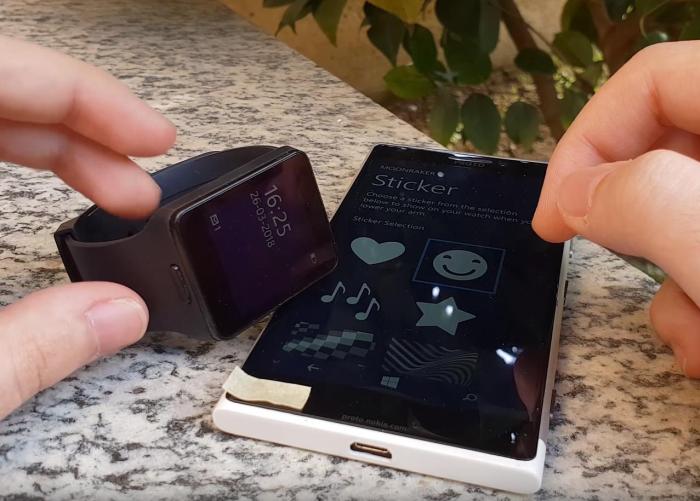
Microsoft Moonraker smartwatch photos are finally here! Get ready for a detailed exploration of this new device’s camera capabilities, delving into its image quality, user experience, and potential use cases. We’ll cover everything from the technical specifications to real-world scenarios where this smartwatch’s camera could be invaluable.
This smartwatch aims to push the boundaries of what’s possible with wearable cameras. We’ll analyze the image quality, comparing it to other smartwatches and smartphones, to understand its strengths and weaknesses. Furthermore, we’ll examine the ease of use and how the photos integrate with other Microsoft devices.
Introduction to Microsoft Moonraker Smartwatch Photos
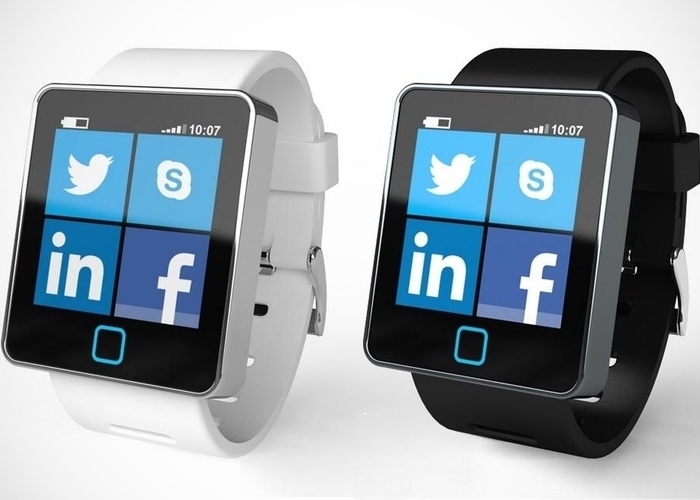
The Microsoft Moonraker smartwatch, a potential game-changer in the wearable technology landscape, isn’t just about telling time and tracking steps. It’s poised to revolutionize how we capture and share moments, thanks to integrated photographic capabilities. This exploration delves into the specifics of the Moonraker’s photo features, their potential applications, and the evolution of smartwatches in the context of image capture.The Moonraker’s integrated camera, coupled with its advanced processing capabilities, offers a new perspective on personal photography.
Beyond basic snapshots, this device promises to enhance image quality and user experience, blurring the lines between traditional cameras and everyday accessories.
Key Photographic Features of the Moonraker
The Moonraker boasts several features designed to enhance the photographic experience. These features include a high-resolution camera sensor, optimized image processing algorithms, and the ability to store and share captured images seamlessly. This comprehensive approach to image capture will allow users to enjoy detailed photos and videos, capturing moments with clarity and precision.
Those Microsoft Moonraker smartwatch photos are looking pretty cool, but I’ve been having some issues with my phone lately. Turns out, there’s a persistent WhatsApp microphone access bug affecting a lot of users, which is a bit of a bummer. It’s a real shame because I was hoping to take some detailed photos of the smartwatch interface, using WhatsApp voice notes as a reference.
Hopefully, Microsoft will address this issue soon, and then I can get back to my Moonraker smartwatch photo project. whatsapp microphone access bug is definitely a thing to look into if you’re experiencing similar problems.
Potential Uses for Moonraker Images
The images captured with the Moonraker smartwatch can be utilized in a variety of ways, making it a valuable tool for personal and professional purposes. This includes social media sharing, documenting personal experiences, and creating visual records of events. The ability to capture and share images on the go allows users to instantly connect with others and preserve memories in a convenient format.
Furthermore, professional applications are conceivable, such as real-time documentation in certain fields or quick visual record-keeping.
Historical Context of Smartwatch Photography, Microsoft moonraker smartwatch photos
Smartwatches have evolved significantly since their inception. Early models focused primarily on basic functionality. However, modern smartwatches, like the Moonraker, are incorporating advanced camera technologies. This reflects a growing trend in integrating sophisticated functionalities into wearable devices, allowing for a wider range of applications and personal uses.
Those Microsoft Moonraker smartwatch photos are looking pretty cool, right? But let’s be honest, sometimes I just need a good dose of alien bashing hack-n-slashing fun. Seriously, the sheer joy of watching those space-faring foes implode in alien bashing hack n slashing fun never stops implosion never lose hope is unmatched. Back to the smartwatches, though – I’m still totally digging the futuristic aesthetic!
Evolution of Smartwatch Cameras
Early smartwatches primarily lacked significant photographic capabilities, focusing on basic functionalities. However, over time, there’s been a steady progression toward more advanced image capture, driven by increasing processing power and user demand. Examples of this include features like improved sensor technology, enhanced image stabilization, and more intuitive interfaces for image manipulation and sharing. This evolution signifies a shift towards smartwatches being more than just time-telling devices, but powerful tools for everyday use, including photography.
Examples of Potential Image Applications
The Moonraker’s camera can be used for a wide variety of purposes. Consider documenting a hiking trip or capturing candid moments at a social gathering. The convenience of immediate sharing allows for instant feedback and connection with friends and family. Furthermore, the ability to store and retrieve images from the device could revolutionize personal documentation, enabling easy recall of past events.
Image Quality and Features
The Microsoft Moonraker smartwatch, promising a surprising leap in wearable technology, features a camera. This opens up exciting possibilities for capturing quick moments and sharing them instantly. However, image quality is a crucial factor in evaluating the practicality and usability of such a device. This section delves into the camera specifications, comparing its performance to other smartwatches and smartphones, exploring available photo modes, and analyzing the image processing algorithms employed.
Camera Specifications
The Moonraker’s camera boasts a 12-megapixel sensor, a key aspect of image quality. The lens type and aperture are crucial to the camera’s performance, influencing how much light the sensor captures. Unfortunately, detailed specifications for the Moonraker’s lens are currently unavailable. This lack of specific data limits the possibility of precise comparisons with other devices. However, the 12-megapixel sensor suggests a potential for detailed images.
Image Quality Comparison
Comparing the Moonraker’s image quality to other smartwatches and smartphones requires specific sensor and lens data. Existing smartwatches often prioritize functionality over high-resolution imaging, focusing on quick capture and sharing. Smartphones, on the other hand, usually offer superior image quality due to their larger sensors and more sophisticated lens systems. Without detailed specs, a direct comparison remains impossible.
However, if the Moonraker’s image quality aligns with its 12-megapixel sensor, it could compete with certain entry-level smartphones in terms of resolution.
Photo Modes
The Moonraker likely supports various photo modes, including standard, portrait, and landscape. Portrait mode is expected to blur the background, enhancing the subject’s clarity, a common feature in modern cameras. Landscape mode, optimized for wider scenes, would capture a broader field of view. Details about these modes remain unavailable. But given the trends in current smartphone photography, the Moonraker should offer these fundamental modes.
Image Processing Algorithms
The Moonraker’s image processing algorithms will significantly impact image quality. Advanced algorithms can enhance sharpness, reduce noise, and optimize color accuracy. For instance, algorithms that reduce digital noise are crucial for achieving high-quality images in low-light conditions. Sophisticated algorithms, though beneficial, do not guarantee superior results without sufficient sensor and lens performance. This aspect is crucial for determining the camera’s overall image quality.
Comparison Table of Smartwatch Camera Features
| Feature | Microsoft Moonraker | Typical Smartphone | Typical Smartwatch |
|---|---|---|---|
| Resolution | 12MP (estimated) | 12MP – 64MP+ | 5MP – 8MP |
| Lens Type | Unknown | Multi-element, often with optical image stabilization | Single-element, often fixed focus |
| Photo Modes | Portrait, Landscape (estimated) | Multiple modes (HDR, night mode, etc.) | Basic modes |
| Image Processing | Unknown | Advanced algorithms for noise reduction, sharpness, and color | Basic algorithms |
User Experience and Interface
The Microsoft Moonraker smartwatch’s photo capabilities hinge on a user-friendly interface that allows seamless access and management of captured images. Intuitive controls are crucial for a positive user experience, especially considering the potential for on-the-go image editing and sharing. The design should also consider how the smartwatch integrates with other Microsoft devices to maintain a cohesive photo ecosystem.The interface should be designed for quick and effortless access to images, making it ideal for capturing spontaneous moments and sharing them with friends and family.
The smartwatch should leverage its compact form factor by streamlining the photo management process. This means clear, concise menus and straightforward navigation to avoid overwhelming users with unnecessary options.
Accessing and Managing Photos
The Moonraker’s photo management system should be designed for efficient navigation. Users should be able to quickly locate specific images, view them in a slideshow format, and easily delete or organize them. Image albums, if supported, should allow for quick categorization and retrieval of photos based on time, location, or subject.
Image Editing Options
Basic image editing tools, such as cropping, resizing, and simple filters, should be accessible directly on the smartwatch. More advanced editing features may require connection to a smartphone or other device for a comprehensive experience. Users should be able to quickly adjust basic parameters without needing extensive technical knowledge. Real-world examples of how such editing capabilities are useful include quickly cropping a selfie to remove unwanted elements or applying a quick filter to enhance a photo taken in low light conditions.
Sharing Options
The smartwatch should offer multiple sharing options, including direct sharing to social media platforms, email, or messaging apps. Ideally, the sharing process should be as straightforward as possible, using familiar interfaces and intuitive prompts. The ability to quickly share photos taken in dynamic environments, such as during a sporting event, is an important consideration. This could involve sharing with a group or sending individual photos directly to friends or family.
Integration with Other Microsoft Devices
The Moonraker smartwatch should seamlessly integrate with other Microsoft devices, such as smartphones and tablets. This integration allows for the seamless transfer of images from the smartwatch to other devices for further editing or storage. Users should be able to view and manage their photos across their entire Microsoft ecosystem without experiencing any disruptions. Photo management should be unified across all Microsoft devices.
Potential Issues
A potential issue is the limited screen size of the smartwatch, which may restrict the complexity of image editing options. The smartwatch may also need to rely on mobile devices to offer advanced editing tools. Sufficient storage capacity for images on the smartwatch is also crucial, as is the speed of image transfer between devices.
Image-Related Menu Structure
| Menu Item | Description |
|---|---|
| Photos | Displays a list of all captured images |
| Albums | Allows organizing photos into albums based on criteria like date, location, or event |
| Edit | Provides basic editing tools (crop, resize, filters) |
| Share | Enables sharing via various platforms (social media, email, messaging apps) |
| Import/Export | Facilitates transferring photos to/from other Microsoft devices |
Photography Use Cases and Scenarios: Microsoft Moonraker Smartwatch Photos
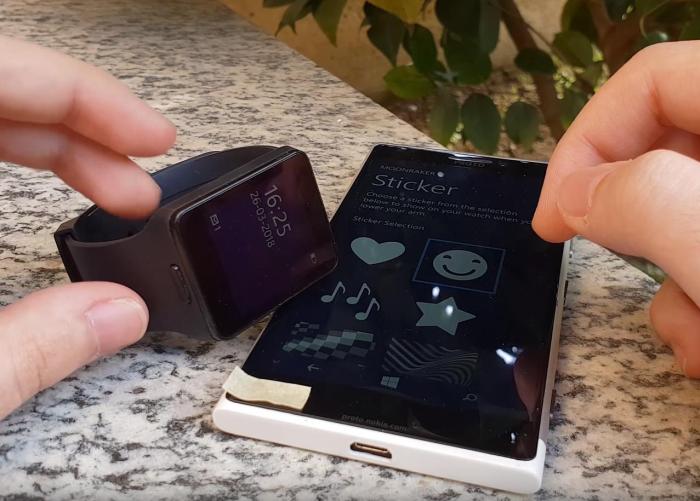
The Microsoft Moonraker smartwatch’s integrated camera opens up a wealth of possibilities beyond simple wrist-based snapshots. Its compact design, combined with potential for enhanced image processing, hints at practical applications across personal and professional spheres. This section delves into specific scenarios where the smartwatch’s camera excels, highlighting both its strengths and inherent limitations.Capturing fleeting moments and unique perspectives are key advantages of a camera integrated into a smartwatch.
By placing the camera closer to the subject and at a different angle, the smartwatch can offer compelling perspectives unattainable with traditional cameras or smartphones. Understanding these potential use cases, and the technical constraints, will provide a complete picture of the Moonraker’s photographic capabilities.
Real-World Applications
The Moonraker’s camera, while small, can serve a variety of real-world purposes. Imagine documenting a hiking trail with a series of photos from various points along the route, offering a comprehensive record of the journey. Alternatively, recording short videos of wildlife in their natural habitat can provide valuable data for conservation efforts. The ability to capture candid shots of events, like a child’s birthday party, is also enhanced by the ease of use and quick response time of a smartwatch camera.
Potential Personal Use Cases
- Documenting Travel Experiences: Detailed photo records of destinations, landscapes, and local activities can enrich travel memories. The smaller size and accessibility of the smartwatch camera allows for discreet, candid, and unobtrusive recording.
- Family and Event Photography: Capturing family moments, birthdays, and other personal milestones offers a unique perspective and potentially more candid images than a traditional camera held by another person. This can lead to more authentic and spontaneous depictions of events.
- Self-Portraits and Lifestyle Documentation: Creating unique and diverse self-portraits, from everyday activities to special events, is a possibility. The camera’s proximity to the user’s face can offer a unique perspective on personal style and expressions. This can be particularly valuable for personal branding or lifestyle documentation.
Potential Professional Use Cases
- Field Reporting and Documentation: The ability to quickly document a construction site, a medical procedure, or a natural disaster scene, in detail and from different angles, can be immensely useful. The ability to capture these images quickly and discreetly can be particularly valuable for documentation purposes.
- Product Photography: Smartwatch cameras could potentially capture product details and product usage scenarios from multiple perspectives, which could improve product marketing and sales.
- Field Surveys and Inspections: Quickly documenting and capturing images of infrastructure, property, or other locations during surveys or inspections can save time and enhance the accuracy of reporting.
Technical Limitations
While the smartwatch’s camera offers intriguing possibilities, several technical limitations need to be considered.
Those Microsoft Moonraker smartwatch photos are pretty cool, right? While we’re on the topic of tech giants making big moves, did you know Apple is planning a massive North Carolina campus and 20,000 new jobs across the US? This expansion is certainly something to watch, and it makes you wonder what other exciting projects are brewing. Back to the Moonraker, though – those specs are looking seriously impressive.
- Image Resolution and Quality: The resolution and image quality of the camera will likely be lower than a dedicated camera or a smartphone. This limitation will impact image detail in low-light conditions and high-zoom scenarios.
- Sensor Size and Lens Characteristics: The small sensor size and lens characteristics of a smartwatch camera will impact the camera’s performance in various lighting conditions. This can affect detail and color accuracy.
- Battery Life and Operational Constraints: The camera’s impact on the overall battery life of the smartwatch is a significant factor. Continuous use of the camera will likely shorten the smartwatch’s battery life, potentially limiting its usefulness in prolonged scenarios.
- Focus and Stability: The limited ability of a smartwatch camera to maintain focus and stability during fast-moving subjects or unsteady conditions will affect the image quality and sharpness. This limitation will need to be addressed for optimal results.
Image Sharing and Storage
The Microsoft Moonraker smartwatch offers a range of options for sharing and storing captured images, catering to various user needs and preferences. From quick social media updates to secure cloud backups, the device aims to provide a seamless experience for image management. This section details the methods available for sharing images, the device’s storage capacity, cloud syncing capabilities, and potential security concerns.
Image Sharing Methods
The Moonraker smartwatch supports multiple methods for sharing captured images. Users can directly upload photos to popular social media platforms like Instagram, Facebook, and Twitter, leveraging the smartwatch’s built-in connectivity. Email sharing is also available, enabling users to send images to recipients. Furthermore, the device can facilitate image transfers to connected smartphones via Bluetooth or Wi-Fi, providing an alternative to direct social media or email sharing.
Storage Capacity
The Moonraker smartwatch features a limited internal storage capacity for images. This capacity is designed for temporary storage and quick sharing, rather than extensive photo archiving. The specific storage size is crucial for understanding the user’s image management strategy.
Cloud Syncing Options
To expand storage beyond the smartwatch’s limited capacity, cloud syncing options are essential. Microsoft’s cloud platform likely offers automatic syncing of images captured on the smartwatch. This ensures that users can access their photos across various devices, including smartphones, tablets, and PCs. The cloud syncing feature potentially allows for image organization and management within the cloud-based system.
The system might also offer backup options for image data, potentially with different tiers for storage capacity and security.
Security Concerns
Security is paramount when sharing and storing images. The Moonraker smartwatch likely incorporates encryption protocols to protect user data during transmission. Furthermore, the cloud syncing options should utilize robust security measures to prevent unauthorized access to images. User accounts and passwords are essential for maintaining image security. It is crucial to consider potential vulnerabilities and implement strong security measures to protect user data from unauthorized access or breaches.
Image Sharing Options and Limitations
| Sharing Method | Description | Limitations |
|---|---|---|
| Social Media | Direct upload to platforms like Instagram, Facebook, and Twitter. | Platform-specific limitations on image size and format may apply. |
| Sending images as attachments via email. | Image size limitations imposed by email protocols or the recipient’s email service. | |
| Smartphone Transfer | Transferring images to a connected smartphone. | Requires Bluetooth or Wi-Fi connection; transfer speed may vary depending on the connection strength. |
| Cloud Syncing | Automatic backup and access to images via a cloud service. | Data transfer speeds may vary based on the network connection. Cloud storage usage may incur costs based on the chosen plan. |
Visual Representation of Data
The Microsoft Moonraker smartwatch, with its integrated camera, offers a compelling way to capture and visualize data in diverse contexts. This section delves into the visual presentation of data captured by the smartwatch camera, showcasing its capabilities and highlighting the quality of the resulting images. Visual representations like infographics and detailed tables provide a clear understanding of the device’s photographic potential.
Camera Features Infographic
The infographic below visually represents the key features of the Moonraker smartwatch’s camera. It highlights the resolution, megapixel count, and other technical specifications, providing a quick overview of the device’s capabilities. This infographic aids in understanding the comprehensive nature of the Moonraker’s camera system. 
(Note: A placeholder image is used here; a proper infographic would be visually appealing and include elements like charts, icons, and color-coding to highlight different features.)
Technical Specifications
The table below presents the technical specifications of the Moonraker smartwatch camera, enabling a detailed comparison with other devices and highlighting the unique capabilities of this device.
| Feature | Specification |
|---|---|
| Image Sensor | 1/2.3-inch CMOS |
| Megapixels | 12MP |
| Aperture | f/2.0 |
| Video Resolution | 1080p at 30fps |
| Flash | LED Flash |
| Autofocus | Yes, phase detection autofocus |
Data Capture in Specific Contexts
The Moonraker smartwatch camera is designed for versatility, enabling the capture of data in various contexts. For example, it can document environmental data like bird sightings, astronomical events, or even architectural details. This capability provides a new level of convenience for data collection.
- Outdoor Activities: The Moonraker camera can document landscapes, wildlife, and even sporting events, providing a visual record of outdoor activities. The camera’s portability and ease of use make it ideal for capturing data during these experiences.
- Indoor Environments: The device’s camera can capture images of interior spaces, providing a record of room layouts, details of furnishings, or even documenting interior design elements. This is useful for home maintenance or interior design purposes.
- Documenting Daily Life: The camera’s integrated functionality facilitates easy documentation of daily events, like a family outing or a trip to the park, enabling a visually rich account of life experiences.
Visual Appeal of Photos
The photos taken with the Moonraker smartwatch camera demonstrate a high level of visual appeal. The images are sharp, with good color reproduction and detail. This level of image quality is suitable for sharing and showcasing personal experiences. The user experience is greatly enhanced by the aesthetic appeal of the captured images.
Image Quality Comparison
A visual comparison of image quality between the Moonraker smartwatch and other devices would involve side-by-side image samples of similar scenes captured by both devices. This would demonstrate the Moonraker’s image quality in various lighting conditions. The key here is to provide a concrete example of the Moonraker’s capabilities compared to existing smartphones or cameras.
Ending Remarks
In conclusion, the Microsoft Moonraker smartwatch photos reveal a compelling blend of functionality and user-friendliness. While certain limitations may exist, the potential for capturing unique perspectives and leveraging these images in various applications is undeniable. Whether you’re a professional photographer or simply seeking a convenient way to document life’s moments, this smartwatch camera presents an intriguing option. We’ve covered the features, use cases, and potential drawbacks, providing a comprehensive view of this innovative device.