

Dicktowns John Hodgman says posting Wordle scores is like whistling, a comparison that sparks intriguing questions about online behavior and the subtle meanings behind our digital actions. Is it harmless self-expression, or a less-than-meaningful display? This exploration delves into the analogy, examining the context, motivations, and potential interpretations behind this witty observation.
The core of the comparison lies in the perceived lack of substantial impact. Just as whistling often lacks a clear purpose beyond personal enjoyment, posting Wordle scores might be seen as a similar form of self-indulgent sharing. We’ll analyze this notion by examining the possible intended meanings and exploring how this concept relates to broader social media trends.
Dick Towns and John Hodgman’s Analogy
Dick Towns and John Hodgman, in their discussion, likened posting Wordle scores to whistling. This seemingly simple comparison, however, reveals a deeper commentary on the nature of self-expression and the motivations behind it. The analogy invites us to consider the subtle ways in which we communicate our experiences and achievements.The comparison implies that posting Wordle scores, like whistling, is a largely performative act, a display of personal accomplishment or engagement with a particular activity.
It suggests that the act of sharing these scores isn’t necessarily driven by a desire for profound connection or meaningful interaction, but rather a more superficial form of self-announcement. This is akin to the enjoyment derived from the act of whistling itself, which is often more about the sound and the feeling of accomplishment, rather than the communication of a complex message.
Intended Meaning of the Comparison
The core meaning of the comparison is to highlight the performative aspect of sharing Wordle scores. It suggests a certain lack of depth or substance in the act, emphasizing the focus on the outward display rather than the internal experience. This echoes the common human tendency to present a curated version of ourselves to the world. Think of sharing a perfectly framed photo – the intention is not merely to share the image but to project a certain image of oneself.
This can be seen as a kind of social signaling, a way to subtly communicate one’s engagement with the world, even if the actual engagement is relatively inconsequential.
Possible Motivations Behind the Comparison
The motivations behind making such a comparison could be multifaceted. One possibility is a critique of the superficiality of social media and the often performative nature of sharing personal information online. Another is to acknowledge the enjoyment derived from the activity itself, separate from any need for external validation. This is akin to appreciating the satisfying sound of a good whistle, independent of its communicative value.
DickTowns’ John Hodgman’s comment about Wordle scores being like whistling is spot on, isn’t it? It’s all about that quiet, almost pointless, self-satisfaction. Speaking of pointless but satisfying things, did you see that the Roomba i4 evo 190 is on sale? Snag a roomba i4 evo 190 off deal while you can, and then you can just keep whistling to yourself about how productive you are.
You know, just like posting your Wordle scores.
Finally, the comparison could simply be an observation of a common human behavior, noting the tendency to share positive experiences in a way that might seem insignificant to others.
Different Interpretations of the Comparison
Interpretations of the comparison vary. Some might see it as a playful observation, while others might view it as a more critical assessment of modern social media trends. A purely humorous interpretation would focus on the shared enjoyment of a relatively trivial game. Conversely, a more cynical interpretation might see the act of sharing as a form of social validation-seeking.
Ultimately, the interpretation depends on the individual’s perspective and the context in which they encounter the comparison.
Comparison Table: Whistling vs. Posting Wordle Scores
| Activity | Purpose | Audience | Impact |
|---|---|---|---|
| Whistling | Self-enjoyment, possible subtle communication | Potentially limited, often no specific audience | Generally minor impact, mostly personal |
| Posting Wordle Score | Self-expression, social validation, potentially connection with others | Friends, followers, online community | Potential for varied impact; from mild engagement to social recognition |
Context and Background
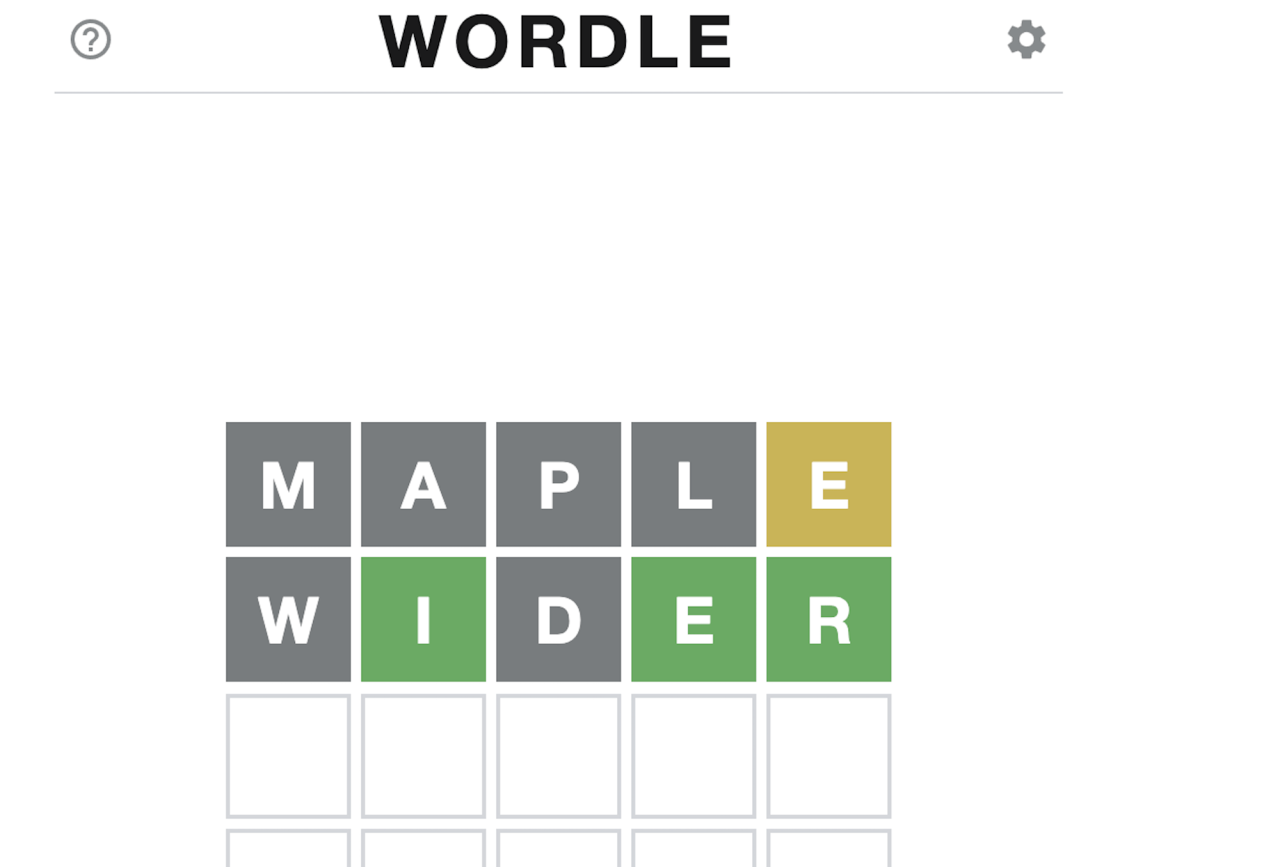
The observation that posting Wordle scores is akin to whistling, as articulated by Dick Towns and John Hodgman, likely stems from a blend of societal trends and personal perspectives. Their comedic analysis likely touches upon the perceived triviality of sharing seemingly insignificant achievements, juxtaposed against the act of self-expression or perceived validation. This humorous comparison invites deeper exploration into the context of social media sharing and the cultural significance of such seemingly mundane activities.The context surrounding the statement is crucial for understanding its implications.
Dicktown’s John Hodgman’s take on posting Wordle scores being like whistling is pretty interesting, right? It makes you think about the seemingly insignificant, yet somehow deeply human act of sharing those little daily victories. Interestingly, this mirrors Meta’s defense strategy, as detailed in here are the slides Meta used to lay out its defense , highlighting how seemingly minor actions can contribute to a larger narrative.
Ultimately, both situations underscore how the small things can hold significant weight, much like those Wordle scores John Hodgman is talking about.
It was likely made during a period when social media, particularly platforms like Twitter and Facebook, were increasingly popular, leading to a surge in sharing seemingly inconsequential updates, including game scores and achievements. This era also witnessed a rise in discussions about the nature of online interactions and the pressures to curate a public image. Hodgman and Towns, known for their insightful and often humorous observations, likely recognized this pattern and used the analogy to satirize the phenomenon.
Potential Influences on Perspective
The perspectives of Dick Towns and John Hodgman, as comedic commentators, are inherently shaped by their understanding of societal trends. Their comedic observations often stem from recognizing and exaggerating existing patterns of behavior. Humor, in this case, functions as a lens through which to analyze social phenomena, highlighting the absurdity or triviality of certain actions. Their observations on the nature of social media, likely informed by their own experiences and observations of the online world, provided a platform for critical examination of online interactions.
For example, their observation could have been influenced by the pervasive nature of online achievement displays in various forms, not just limited to Wordle.
Similar Comparisons in Other Contexts
The comparison of posting Wordle scores to whistling can be seen as analogous to other situations where individuals share trivial or seemingly insignificant information online. For instance, the act of posting about minor daily events or routine activities, such as what one ate for breakfast or the weather, can be viewed in a similar light. This resonates with the concept of “performing” for an online audience, a common theme in social media analysis.
Another example is the sharing of highly specific details of one’s daily activities on social media, which might be perceived as a desire for online validation or attention.
Cultural Relevance of the Analogy
The analogy’s cultural relevance lies in its ability to capture a universal aspect of human behavior: the desire for social connection and validation. Posting Wordle scores, or any other seemingly inconsequential achievement, is a way for individuals to connect with others who share similar interests. This behavior highlights the complex interplay between individual expression and social pressures in the digital age.
Furthermore, the analogy reflects a broader societal trend toward sharing personal details online, highlighting both the potential benefits and drawbacks of such interactions.
Historical and Cultural Background of Wordle
| Feature | Historical/Cultural Context |
|---|---|
| Simplicity | Wordle’s straightforward gameplay and easy-to-understand rules resonated with a broad audience, leading to rapid adoption and viral spread. |
| Accessibility | Its availability on various platforms (web, mobile apps) and the lack of significant barriers to entry contributed to its massive popularity. |
| Shared Experience | The shared nature of the game encouraged online interactions and discussion, as players competed and celebrated successes. |
| Trendy | Wordle’s popularity aligns with the trend of online puzzle games and word games, often driven by social media trends and the desire for shared entertainment. |
Wordle, as a viral word puzzle game, emerged from the cultural context of the digital age. Its rapid rise in popularity, fueled by social media, reflects a desire for accessible, shareable, and engaging entertainment. This trend was further influenced by existing online communities and a growing appetite for social interaction through shared experiences.
Underlying Meanings and Implications: Dicktowns John Hodgman Says Posting Wordle Scores Is Like Whistling
The comparison of posting Wordle scores to whistling, as articulated by John Hodgman, offers a fascinating lens through which to examine the nuances of social media engagement. It touches on the performative nature of online activity and the subtle judgments we often make about others’ choices. This exploration dives into the deeper meanings behind this analogy, examining its implications for online behavior, and considering the potential criticism or praise inherent in the comparison.The core implication of Hodgman’s analogy lies in its depiction of the act of sharing Wordle scores as a somewhat trivial, self-serving, and ultimately, performative gesture.
It suggests that the primary motivation behind these posts isn’t necessarily to connect with others or to share meaningful insights, but rather to broadcast a sense of accomplishment or even, in some cases, to solicit validation. The “whistling” aspect highlights the lack of profound or substantial meaning behind the action.
Underlying Meaning of the Comparison
The comparison implies a certain lack of substance or depth to the activity of posting Wordle scores. It suggests that the act is primarily for personal gratification rather than meaningful interaction. The act of whistling, in everyday life, is often seen as a less-than-serious, perhaps even frivolous, pursuit. The analogy draws a parallel between this perceived triviality and the perceived triviality of sharing a game score online.
Dicktown’s John Hodgman’s take on posting Wordle scores being like whistling feels surprisingly relevant in the context of the ongoing New York Times vs. OpenAI/Microsoft lawsuit about copyright infringement. This legal battle highlights how seemingly trivial actions, like sharing Wordle results, can suddenly feel significant when copyright concerns are introduced. It’s a reminder that even seemingly insignificant acts can become intertwined with complex legal issues, much like Hodgman’s whistling analogy.
This is not to say that posting scores is inherently bad, but rather that the comparison highlights the potential lack of significant engagement in the activity.
Implications for Social Media and Online Behavior, Dicktowns john hodgman says posting wordle scores is like whistling
The analogy has implications for understanding the complexities of social media interactions. Posting trivial updates, while seemingly harmless, can contribute to a culture of superficiality online. This can lead to a decreased emphasis on deeper connections and meaningful conversations. Furthermore, the comparison underscores the performative aspects of social media. Users may engage in actions, like posting Wordle scores, not necessarily to communicate something profound, but to project a certain image of themselves.
Potential Criticism or Praise Implied
The analogy implicitly critiques the superficiality of certain online activities. It suggests that some social media interactions may be more performative than substantive. Conversely, the analogy might be seen as a humorous observation, acknowledging the lighter aspects of online behavior. The implied criticism hinges on the perception of the activity’s value to others. Sharing a Wordle score might not be seen as a significant contribution, but it can still be a harmless, lighthearted activity.
Comparison to Other Social Media Activities
The comparison to “whistling” can be extended to other seemingly insignificant social media activities. Sharing a meal picture, commenting on an influencer’s post, or participating in online quizzes all fall into this category. The underlying question is whether the activity fosters meaningful engagement or simply contributes to a broader trend of online performance.
Table of Social Media Activities and Their Parallels
| Social Media Activity | Potential Parallel (to “whistling”) | Explanation |
|---|---|---|
| Posting a picture of food | Playing a frivolous tune | Both actions are primarily for self-expression or to garner attention, rather than to convey profound information. |
| Commenting on an influencer’s post | Making a lighthearted remark | The primary purpose might be validation or a sense of connection, not necessarily a deep discussion. |
| Participating in online quizzes | Singing a tune | The focus is often on the immediate satisfaction and entertainment value, not on intellectual growth. |
| Sharing a Wordle score | Whistling a tune | The act often serves to demonstrate a personal accomplishment or to engage in a lighthearted activity, without significant implications for others. |
Alternative Interpretations
The “whistling” analogy used by John Hodgman and Dick Towns regarding posting Wordle scores evokes a range of potential interpretations, extending beyond the straightforward comparison to mundane, inconsequential activities. These interpretations reveal the nuanced ways in which we perceive and engage with social media interactions. Understanding these alternatives is crucial for comprehending the full impact of the analogy.Different audiences might draw various conclusions based on their pre-existing assumptions and experiences with social media.
Some might interpret it as a commentary on the trivialization of online interactions, while others might see it as a reflection on the performative aspects of sharing personal achievements. The analogy invites us to examine the motivations behind our online behaviors.
Alternative Perspectives on the Analogy
The “whistling” analogy can be viewed through different lenses. For instance, it can be interpreted as a criticism of the superficiality of online sharing, especially in the context of achievements as trivial as Wordle scores. From this perspective, the analogy highlights the tendency to prioritize fleeting, insignificant displays over more substantial contributions or genuine connections.Alternatively, the analogy might be interpreted as a commentary on the performative nature of online presence.
Posting a Wordle score can be seen as a way to subtly display one’s intelligence or wit to a digital audience, akin to a carefully crafted performance. The analogy prompts a deeper consideration of the motivations behind online engagement, moving beyond mere enjoyment and towards a more nuanced understanding of social performance.
Potential for Misinterpretations
The analogy’s potential for misinterpretation stems from its broad applicability. Someone unfamiliar with the context of Wordle or online sharing might interpret the analogy as a general criticism of social media engagement, without recognizing the specific nuances of the scenario. This lack of context could lead to misinterpretations about the intended target audience or the underlying message. Furthermore, the analogy’s reliance on the shared experience of online engagement can also create potential biases in interpretation.
Different individuals may have varying levels of comfort or involvement with online platforms, leading to differing interpretations of the analogy’s intended meaning.
Social and Cultural Interpretations
The interpretation of the analogy can be shaped by cultural and social factors. In cultures where social validation is highly valued, posting Wordle scores might be viewed differently than in cultures that prioritize privacy or intellectual modesty. For example, in a culture where personal achievements are frequently celebrated, the analogy might be perceived as a lighthearted critique of the “show-off” aspect of social media.
Conversely, in cultures that emphasize individual privacy, the analogy might be interpreted as a more significant commentary on the pressures to share personal information. This demonstrates the dynamic nature of cultural interpretations, influencing the way we understand the underlying meaning of the analogy.
Table of Potential Interpretations
| Interpretation | Nuances | Potential Biases |
|---|---|---|
| Criticism of superficial online sharing | Focuses on the triviality of the content | May underestimate the value individuals place on social validation |
| Commentary on online performance | Highlights the performative aspects of online interactions | May overlook the genuine enjoyment some individuals derive from sharing |
| Cultural Commentary | Dependent on cultural values regarding privacy and sharing | Can lead to misunderstandings if cultural contexts are not considered |
Illustrative Examples
The “whistling” analogy, as presented by John Hodgman, highlights a subtle but pervasive aspect of social media behavior. It suggests that certain actions, seemingly insignificant, can be perceived as performative or lacking genuine depth, much like the seemingly trivial act of whistling. Understanding this analogy requires looking at specific examples of social media activity and how they relate to this “whistling” concept.
Social Media Behaviors Comparable to “Whistling”
This section explores social media behaviors that resonate with the “whistling” analogy, focusing on the performative aspect and the potential lack of genuine engagement. The key is recognizing the potential for actions to be seen as empty displays rather than meaningful interactions.
| Social Media Activity | Potential “Whistling” Interpretation | Example Situation | Impact on Individuals/Community |
|---|---|---|---|
| Posting perfectly curated travel photos | Showing off, rather than sharing authentic experiences. | A user posts numerous pictures of exotic locations, all meticulously staged and filtered, without any mention of personal struggles or challenges faced while traveling. | May foster envy or a sense of disconnect among followers, creating a facade of a perfect life. |
| Sharing overly positive or inspirational quotes | A performative display of positivity without addressing underlying struggles or complexities. | A user posts numerous quotes that offer an optimistic view of life, without engaging in any real-world problem-solving or addressing negative aspects of society. | Can be seen as superficial and fail to engage with difficult issues, potentially masking underlying negativity. |
| Constantly posting about achievements (e.g., job promotions, new purchases) | Highlighting accomplishments without acknowledging the effort or context. | A user incessantly posts updates about new jobs, promotions, and luxury purchases without mentioning the hard work or sacrifices involved. | May alienate those who haven’t achieved similar milestones, or who are facing challenges in their own lives. |
| Posting Wordle scores | A trivial display of a skill without genuine connection. | A user posts their Wordle score, a relatively insignificant daily activity, as a constant update on social media. | The act may seem empty and performative to others, especially if it’s not shared in a way that’s meaningful or relevant to the community. |
Examples of Wordle Scores as “Whistling”
Posting Wordle scores can be perceived as “whistling” when it becomes a frequent, isolated, and ultimately meaningless display. The act itself isn’t inherently negative, but the context and frequency can contribute to the perception of it as performative. Consider these situations:
- A user posts their Wordle score every day, without any further context or engagement with other users. This can come across as a superficial update, much like casually whistling.
- A user consistently posts their Wordle score as a way to boast or compare themselves to others. This can be perceived as a performative display of skill rather than a genuine sharing of an experience.
- A user posts their Wordle score in response to a comment, but the comment has no connection to the Wordle score, leading to a disjointed and potentially superficial interaction.
Applying the Analogy to Other Online Activities
The “whistling” analogy can be applied to various online activities. It highlights the importance of considering the context and intention behind our actions. Posting short updates or comments without substantial engagement, or solely focusing on showcasing accomplishments, can be seen as a form of social “whistling.”
Last Recap
Ultimately, the comparison between posting Wordle scores and whistling highlights a broader discussion about the nature of online activity. Is there a fine line between meaningful contribution and superficial engagement? We’ve explored the different interpretations and contexts, and now it’s up to you to decide where you fall on this spectrum. The discussion encourages critical thought about the often-unremarkable yet impactful actions we take in the digital world.