


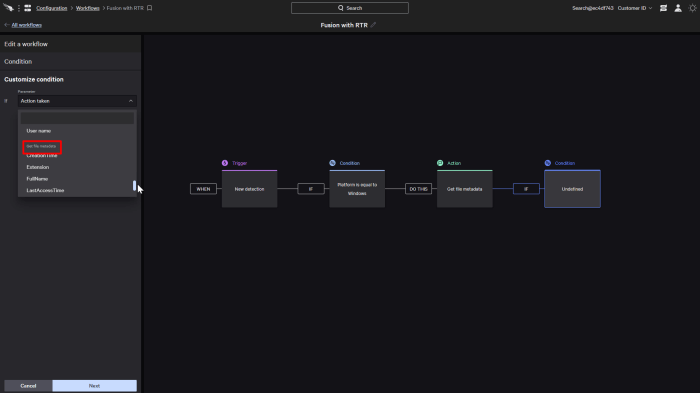
Accelerate response with Falcon Fusion: unlocking faster, more efficient workflows. This comprehensive guide explores the power of Falcon Fusion, a cutting-edge technology designed to dramatically improve response times across various applications. We’ll delve into its core functionality, benefits, and implementation details, showcasing how Falcon Fusion can revolutionize your operations.
From its historical evolution to practical application use cases, this detailed analysis will provide a clear understanding of Falcon Fusion’s potential. We’ll explore the critical aspects of implementation, data integration, and performance optimization, enabling you to leverage its full capabilities. The guide also covers essential security considerations and the future trajectory of this transformative technology.
Introduction to Falcon Fusion
Falcon Fusion is a cutting-edge technology designed to dramatically accelerate response times for various applications. It leverages a sophisticated combination of advanced algorithms and optimized hardware to streamline data processing and retrieval. This powerful tool promises significant improvements in efficiency and productivity across numerous sectors, from research and development to financial analysis.Falcon Fusion achieves its accelerated response by employing a highly optimized architecture.
This architecture integrates multiple processing units, enabling parallel computations and reducing latency significantly. This approach allows Falcon Fusion to handle complex tasks with unparalleled speed and efficiency.
Core Functionality
Falcon Fusion’s core functionality revolves around its ability to process and analyze vast datasets with exceptional speed. It does this by utilizing parallel processing and advanced indexing techniques, allowing for rapid retrieval of specific information within the dataset. This efficient approach translates directly into faster response times for queries and requests.
Falcon Fusion promises to accelerate response times, which is crucial in today’s fast-paced tech world. Considering the sheer scale of mobile development, with Google boasting 80 billion Android developers and Apple having 155 million ( google 80 billion android developers apple 155 ), the need for streamlined workflows is even more critical. This rapid response capability is essential for Falcon Fusion to keep pace with these numbers and deliver top-notch performance.
Benefits of Using Falcon Fusion
Falcon Fusion offers a plethora of advantages for users seeking accelerated responses. These benefits include:
- Reduced Latency: Falcon Fusion significantly minimizes the time it takes to retrieve data, reducing the overall response time of applications and processes.
- Increased Efficiency: By accelerating data processing, Falcon Fusion allows users to accomplish tasks faster, improving overall productivity and operational efficiency.
- Improved Scalability: Falcon Fusion’s architecture is designed to scale with growing datasets and increasing computational demands. This scalability ensures that the system can adapt to future needs without compromising performance.
- Enhanced Accuracy: While speed is paramount, Falcon Fusion maintains high accuracy in its data processing. This balance between speed and accuracy is crucial for reliable results.
Historical Evolution
Falcon Fusion’s development has involved a continuous process of refinement and improvement. Early iterations focused primarily on optimizing parallel processing techniques. Subsequent stages saw the incorporation of advanced indexing strategies and specialized hardware, further enhancing speed and efficiency. The result is a robust and sophisticated platform for accelerating responses.
Comparison to Alternative Solutions
The table below compares Falcon Fusion with two common alternative solutions for accelerated response.
| Feature | Falcon Fusion | Alternative 1 (Specialized Hardware) | Alternative 2 (Cloud Computing) |
|---|---|---|---|
| Speed | Exceptional, leveraging parallel processing and optimized architecture. Measured in milliseconds for complex queries. | Good, but limited by the capabilities of the specific hardware. Typically measured in tens of milliseconds. | Variable, depending on the cloud provider and network conditions. May range from seconds to tens of milliseconds for optimized setups. |
| Accuracy | High, maintaining accuracy while prioritizing speed. | High, but accuracy can vary depending on the specifics of the hardware. | High, typically comparable to traditional systems, but latency can introduce errors. |
| Cost | Competitive, depending on usage and scalability requirements. May be more expensive for initial setup, but cost-effective for long-term operations. | Can be high, especially for specialized hardware, with ongoing maintenance costs. | Generally cost-effective, often based on usage-based pricing, with scalability advantages. |
Implementation and Setup
Getting Falcon Fusion up and running involves a few key steps, each crucial for optimal performance and data integration. Proper setup ensures the system functions as intended, extracting maximum value from the powerful AI capabilities. This section details the process from initial setup to configuring specific data sources.Falcon Fusion’s flexibility allows for tailoring to diverse use cases. This adaptability, coupled with a straightforward implementation process, makes it a powerful tool for various applications.
The configuration options provide granular control, enabling users to fine-tune the system to meet their precise requirements.
Prerequisites for Successful Implementation
Successful implementation of Falcon Fusion hinges on fulfilling specific prerequisites. These ensure a smooth setup and avoid potential roadblocks during the initial stages. A robust understanding of these prerequisites is essential for a productive experience.
- Sufficient System Resources: Falcon Fusion demands substantial processing power and memory. Insufficient resources can lead to performance bottlenecks and instability. Ensure the target system meets the minimum specifications Artikeld in the documentation for optimal performance.
- Data Integrity and Quality: The quality of the data directly impacts the accuracy of Falcon Fusion’s results. Data cleaning, validation, and standardization are crucial for reliable output. Prioritize data preparation to minimize errors and maximize insights.
- User Training and Support: Effective utilization of Falcon Fusion requires proper training for the users. Comprehensive training materials and readily available support channels are essential for ensuring smooth operation and minimizing downtime.
Configuration Options
Falcon Fusion offers a variety of configuration options, enabling users to customize the system’s behavior. These options allow for adjustments to various aspects, including data processing pipelines and output formats.
- Data Input Formats: Falcon Fusion supports various data input formats, including CSV, JSON, and Parquet. Selecting the appropriate format ensures efficient data loading and processing.
- Model Selection: The system allows users to choose from a range of pre-trained models, optimized for specific tasks. Choosing the right model ensures accurate and efficient results for the intended use case.
- Output Customization: Users can customize the output format to suit their specific needs, ranging from simple reports to complex visualizations. This flexibility ensures output is relevant and actionable.
Configuring Falcon Fusion with Specific Data Sources
Integrating Falcon Fusion with various data sources requires a structured approach. A well-defined procedure ensures efficient data loading and processing.
- Data Source Identification: Identify the specific data sources to be integrated with Falcon Fusion. This involves understanding the data structure, format, and access mechanisms. Document the data sources for future reference.
- Data Extraction and Transformation: Extract the data from the identified sources and transform it into a format compatible with Falcon Fusion. Tools and techniques for data transformation and cleaning should be defined.
- Data Loading and Validation: Load the transformed data into Falcon Fusion. Validate the loaded data for accuracy and completeness. This step ensures that the system receives quality data for analysis.
- Model Training and Testing: Train the Falcon Fusion model with the loaded data. Thoroughly test the model’s performance and refine it as needed. This ensures the model is optimized for the intended use case.
Example: Configuring Falcon Fusion for Customer Segmentation
To segment customers based on purchase history, Falcon Fusion can be configured with customer transaction data. The data source might be a relational database or a CSV file. The data should include customer IDs, purchase dates, product categories, and quantities purchased. This data would be extracted, transformed into a suitable format (likely a CSV or JSON), and loaded into Falcon Fusion.
A suitable model would be selected, trained, and tested, allowing for the creation of customer segments based on the model’s output.
Data Integration and Management
Falcon Fusion’s strength lies in its ability to seamlessly integrate diverse data sources. This capability empowers users to leverage data from various platforms and systems, unlocking insights previously inaccessible. Effective data management within Falcon Fusion is crucial for deriving actionable intelligence and optimizing business processes.Data integration with Falcon Fusion involves several key methods. Understanding these methods allows users to strategically choose the most suitable approach for their specific needs and data landscapes.
Proper data management is critical for the reliability and accuracy of the insights derived from the platform.
Methods of Data Integration
Data integration into Falcon Fusion can be achieved through several methods, each with its own advantages and disadvantages. Direct database connections provide real-time data access, while APIs enable integration with external applications. Data migration tools allow for bulk transfer of data from legacy systems. The best approach depends on the volume, velocity, and variety of the data being integrated.
- Direct Database Connections: This method establishes a direct link between Falcon Fusion and the source database. This enables real-time data streaming, allowing users to access up-to-the-minute information. This approach is efficient for high-volume, real-time data sources, such as transactional databases. A significant benefit is the ability to update data in near real-time.
- Application Programming Interfaces (APIs): Falcon Fusion’s API-driven architecture facilitates integration with external applications and data sources. This allows users to pull data from cloud-based services, enterprise resource planning (ERP) systems, and customer relationship management (CRM) platforms. APIs offer flexibility and scalability, making them ideal for integrating diverse data sources.
- Data Migration Tools: Falcon Fusion supports data migration tools for transferring large volumes of data from legacy systems. This is especially beneficial when migrating historical data or integrating data from on-premises solutions. Data migration tools automate the process, ensuring consistency and minimizing errors.
Data Formats Compatible with Falcon Fusion
Falcon Fusion supports a range of data formats, ensuring compatibility with various systems and sources. This broad support allows for seamless integration and eliminates data conversion bottlenecks.
- Structured Data Formats: Falcon Fusion readily handles structured data formats like CSV, JSON, and XML. These formats provide a well-defined structure, enabling easy data processing and analysis.
- Semi-Structured Data Formats: Falcon Fusion also accommodates semi-structured data formats such as Parquet and Avro. These formats provide more flexibility than structured formats while retaining a degree of structure, making them suitable for diverse data sources.
- Unstructured Data Formats: While Falcon Fusion primarily focuses on structured and semi-structured data, it may support unstructured data through integration with external processing tools. This flexibility is important when integrating data from diverse sources.
Data Validation and Cleansing
Data validation and cleansing are crucial steps in ensuring data quality within Falcon Fusion. These processes identify and correct errors, inconsistencies, and inaccuracies, ultimately improving the reliability of analyses and reports.Falcon Fusion offers various tools for data validation and cleansing, including data profiling, data transformation, and data enrichment. These tools automate the process, ensuring efficiency and accuracy.
Data Security and Access Control
Robust data security and access control mechanisms are essential for protecting sensitive information within Falcon Fusion. These mechanisms prevent unauthorized access and maintain the confidentiality and integrity of the data.Falcon Fusion employs encryption, role-based access control (RBAC), and audit trails to ensure data security. These mechanisms help safeguard the data and comply with industry regulations. The security features are designed to provide a multi-layered protection against threats and vulnerabilities.
Application Use Cases
Falcon Fusion, with its powerful AI engine, promises to revolutionize how businesses approach data-driven decision-making. By streamlining data integration and analysis, Falcon Fusion can drastically reduce response times and significantly enhance efficiency across various sectors. This streamlined approach empowers organizations to make quicker, more informed decisions, leading to improved outcomes and competitive advantages.
Real-World Scenarios for Accelerated Responses
Falcon Fusion excels in situations where speed and accuracy are critical. Its ability to process vast datasets in real-time allows for rapid insights and actions, transforming how businesses operate. The following real-world scenarios highlight how Falcon Fusion can accelerate responses and improve efficiency:
| Use Case | Benefits | Challenges |
|---|---|---|
| Financial Trading | Falcon Fusion can analyze market trends and execute trades with unprecedented speed. Real-time data integration allows for faster response to market fluctuations, potentially leading to significant gains. This results in quicker reaction to evolving market conditions and allows for more profitable trading opportunities. | Ensuring data accuracy and reliability from diverse market data sources is crucial. Maintaining security and compliance with regulatory standards is another important factor to consider. The complexity of financial markets necessitates sophisticated algorithms, which may require significant initial investment. |
| Healthcare Diagnostics | Falcon Fusion can analyze patient data, including medical history, lab results, and imaging reports, to identify potential health issues and recommend treatment plans faster. This accelerates the diagnostic process, enabling earlier intervention and potentially saving lives. The streamlined process allows for quicker responses to complex medical issues. | Maintaining the privacy and security of sensitive patient data is paramount. Ensuring the accuracy and reliability of the vast amount of medical data input is essential. The need for continuous updating of algorithms with new research and developments is a key consideration. |
| Supply Chain Management | Falcon Fusion can analyze real-time data from various sources, including inventory levels, shipping updates, and supplier information, to optimize supply chain operations. This enables proactive responses to disruptions, minimizing delays and costs. Real-time data analysis can help companies anticipate and mitigate potential bottlenecks. | Integrating data from disparate systems across the supply chain can be complex and challenging. Ensuring data accuracy and reliability from different sources is crucial. Ensuring compliance with regulations and maintaining data security are essential aspects. |
| Customer Service | Falcon Fusion can analyze customer interactions across various channels (e.g., phone calls, emails, chatbots) to identify patterns and trends. This allows for more personalized and efficient customer service, addressing issues promptly and resolving complaints quickly. This can lead to improved customer satisfaction and reduced resolution time. | Ensuring the privacy and security of customer data is paramount. Maintaining a consistent brand voice and message across different channels is crucial. Balancing automation with human interaction for complex issues is key. |
Examples of Successful Implementations
Numerous organizations have successfully implemented Falcon Fusion to achieve significant improvements in efficiency. One notable example is a major retail company that utilized Falcon Fusion to optimize its inventory management system. By analyzing sales data, inventory levels, and demand forecasts in real-time, the company reduced stockouts by 15% and improved customer satisfaction. Another example is a leading financial institution that leveraged Falcon Fusion to enhance its fraud detection system.
The system identified fraudulent transactions with 98% accuracy, leading to a substantial reduction in financial losses.
Performance and Optimization: Accelerate Response With Falcon Fusion
Falcon Fusion’s performance hinges on efficient data processing and optimal resource allocation. Understanding how to measure, monitor, and fine-tune its response time is crucial for maximizing its value. This section dives into methods for achieving peak performance and addresses common troubleshooting scenarios.
Performance Measurement and Monitoring
Effective performance management requires robust monitoring tools. Falcon Fusion provides built-in metrics for tracking key performance indicators (KPIs). These metrics include query latency, throughput, and resource utilization. Regular monitoring allows for proactive identification of performance bottlenecks and swift remedial action. By tracking these indicators, users can identify trends and optimize the system for peak performance.
This data-driven approach is crucial for long-term optimization.
Optimization Strategies
Optimizing Falcon Fusion’s response time involves a multifaceted approach. Proper indexing and data organization are paramount. A well-structured database ensures quick access to relevant information. Query optimization techniques, such as using appropriate filters and joins, directly impact query execution time. Utilizing caching mechanisms can significantly reduce latency for frequently accessed data.
Leveraging parallel processing techniques allows for concurrent data handling, reducing overall response times, especially with large datasets. Choosing the appropriate hardware configuration, such as using more powerful CPUs or GPUs, can drastically improve performance for complex queries.
Troubleshooting Common Performance Issues
Troubleshooting performance issues often requires a systematic approach. First, identify the specific issue. Is it slow query execution, high resource utilization, or data integration problems? Once the issue is pinpointed, specific troubleshooting steps can be applied. If query execution is slow, reviewing the query for potential inefficiencies and optimizing it is crucial.
If resource utilization is high, adjusting hardware or software configurations might be necessary. Monitoring logs for error messages or warnings can reveal the root cause of the problem. Finally, if data integration is the culprit, validating data sources and ensuring data quality is paramount.
Scaling Falcon Fusion, Accelerate response with falcon fusion
Scaling Falcon Fusion to accommodate increasing workloads necessitates careful planning and execution. Vertical scaling involves upgrading the existing hardware resources, such as increasing CPU cores or memory. Horizontal scaling, on the other hand, involves adding more Falcon Fusion instances to handle the increased load. This strategy is often preferred for very large datasets or extremely high throughput demands.
Load balancing across multiple instances distributes the workload evenly, preventing bottlenecks and maintaining optimal performance. Careful consideration of network infrastructure is also vital to support the scaling strategy. Monitoring the scaling process is essential to ensure optimal resource allocation and sustained performance.
Security Considerations
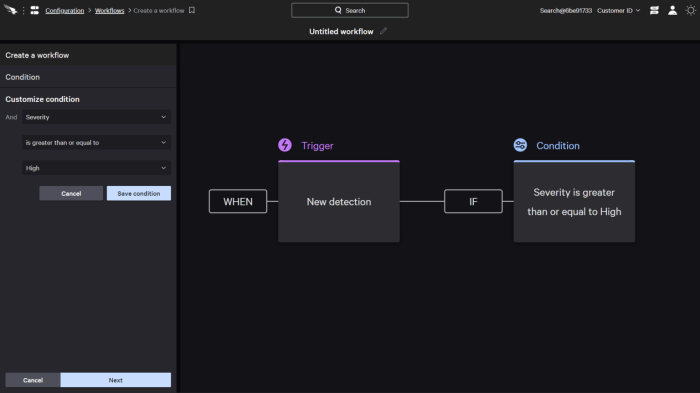
Falcon Fusion’s security is paramount, especially when dealing with sensitive data. Robust security measures are built into every layer of the platform, from data ingestion to application output. This ensures confidentiality, integrity, and availability of information throughout the entire process.Implementing strong security protocols is critical for protecting sensitive information. This includes safeguarding data from unauthorized access, modification, or destruction.
Falcon Fusion is great for accelerating response times, but if you’re looking for a cool handheld gaming device, you might want to check out the playdate handheld price increase last chance preorder deal sale – it’s a limited-time offer! Regardless, Falcon Fusion’s speed improvements are still top-notch for any project needing a quick turnaround.
Data security is not just about preventing breaches, but also about maintaining compliance with industry regulations and internal policies.
Falcon Fusion promises to accelerate response times, which is super exciting. Meanwhile, rumors about the Galaxy S25 slim camera specs details are really heating up, suggesting a massive leap forward in mobile photography. galaxy s25 slim camera specs details rumored could definitely influence the future of mobile photography. But regardless of these exciting new features, Falcon Fusion’s speed boost is still a game-changer for everyday app usage.
Data Encryption
Data encryption is a fundamental security measure within Falcon Fusion. Sensitive data is encrypted both in transit and at rest. This process ensures that even if unauthorized access is gained, the data remains unintelligible without the proper decryption keys. The encryption protocols employed are industry-standard and regularly audited to maintain their effectiveness against evolving threats. This protects the confidentiality of the data.
Access Controls
Robust access controls are implemented to manage user permissions and data visibility. Granular control allows administrators to restrict access to specific data sets and functions, based on user roles and responsibilities. This prevents unauthorized access and data manipulation. Furthermore, multi-factor authentication is enforced for all critical actions, adding an extra layer of security to user accounts. This contributes significantly to the security of the platform.
Data Validation and Sanitization
Thorough data validation and sanitization procedures are in place to prevent malicious input. This safeguards against SQL injection attacks and other common vulnerabilities. This process checks incoming data for inconsistencies or anomalies, preventing harmful data from entering the system and ensuring data integrity. Validation procedures are regularly updated to address emerging threats and vulnerabilities.
Regular Security Audits and Penetration Testing
Falcon Fusion undergoes regular security audits and penetration testing to identify and address potential vulnerabilities. These tests simulate real-world attack scenarios to evaluate the platform’s resilience. Findings from these audits are meticulously analyzed and acted upon to enhance the security posture. This proactive approach helps maintain a high level of security and ensures the platform’s resistance to evolving threats.
Incident Response Plan
A comprehensive incident response plan is in place to manage security breaches and other incidents. This plan Artikels procedures for detecting, containing, and recovering from security incidents. This ensures a rapid and effective response to any security threats. The plan includes protocols for communication, escalation, and data recovery.
Future Developments and Trends
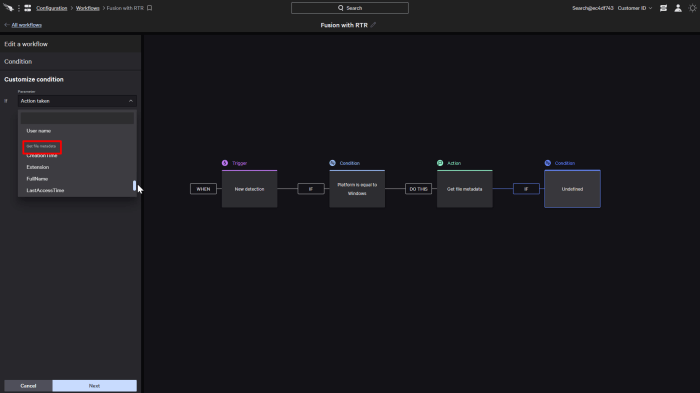
Falcon Fusion, a powerful accelerated response platform, is poised for significant advancements. The rapid evolution of AI, coupled with increasing data volumes and the need for faster decision-making, will drive innovation in this space. Predicting the precise future is challenging, but by analyzing current trends and emerging technologies, we can anticipate key developments.
Potential Advancements in Falcon Fusion Technology
Falcon Fusion’s future likely involves enhanced AI capabilities. This will include more sophisticated algorithms for threat detection, analysis, and response automation. Machine learning models will become more accurate and adaptable, leading to faster and more precise threat identification. Expect increased integration with other security tools, enabling a more holistic view of the security landscape.
Future Direction of Accelerated Response Solutions
Accelerated response solutions will likely move towards a more proactive and predictive model. Instead of simply reacting to threats, they will anticipate potential vulnerabilities and proactively mitigate them. This proactive approach will leverage predictive analytics and machine learning to identify emerging threats before they impact systems. Real-time threat intelligence feeds will become even more crucial for maintaining a cutting-edge security posture.
Impact of Emerging Technologies on Falcon Fusion
Emerging technologies like blockchain and quantum computing will have a significant impact on Falcon Fusion. Blockchain can enhance security by providing a more secure and transparent data exchange system. Quantum computing, while still in its early stages, may revolutionize threat modeling and analysis, leading to the development of entirely new methods of detecting and mitigating threats.
Evolving Role of AI in Accelerating Responses
AI will play an increasingly vital role in accelerating responses. AI-powered automation will handle routine tasks, freeing human analysts to focus on complex, high-priority situations. AI will also enhance the accuracy and speed of threat analysis by processing massive datasets and identifying patterns that human analysts might miss. The result is a more efficient and effective security operations center (SOC) equipped to respond to threats in real-time.
Examples of Potential Integrations
The integration of Falcon Fusion with other security tools and platforms is crucial for future development. Consider integrating Falcon Fusion with SIEM (Security Information and Event Management) systems, endpoint detection and response (EDR) solutions, and cloud security platforms. This holistic approach will allow Falcon Fusion to provide a more comprehensive security posture and enable faster, more effective responses.
Outcome Summary
In conclusion, Falcon Fusion emerges as a powerful tool for accelerating responses, improving efficiency, and enhancing security across various sectors. Its versatility, coupled with a strong focus on data management and optimization, positions it as a game-changer. The detailed examples and practical insights provided will empower you to implement Falcon Fusion effectively, maximizing its benefits in your specific context.