Rivian’s AI Assistant Will Soon Order Your Coffee and Schedule Service Appointments

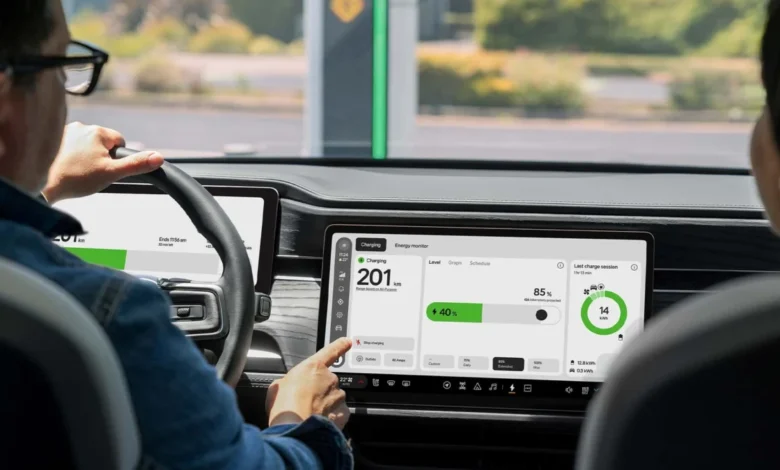
When electric vehicle manufacturer Rivian originally launched its proprietary in-house artificial intelligence assistant in May, the company introduced the technology as a versatile tool designed to transcend the limitations of traditional voice commands. Rather than merely answering basic queries akin to standard ChatGPT implementations, adjusting cabin climate controls, or dictating text messages on the fly, Rivian pitched a deeply integrated digital companion tailored specifically for its flagship R1S SUV and upcoming R2 platform. The overarching vision promised a virtual assistant embedded not only within the vehicle’s operating system but seamlessly woven into the broader daily lifestyle of the driver.
The rollout of the Rivian Assistant began incrementally. Initial software iterations brought robust Google Calendar compatibility, empowering drivers to adjust schedules, manage appointments, and reschedule meetings safely while navigating roadways. This capability expanded further in October with the integration of Gmail, allowing users to interact with incoming correspondence through voice prompts. However, according to recent statements from Rivian leadership, these productivity features merely scratch the surface of the company’s long-term software roadmap.
Expanding the Digital Ecosystem
In a recent interview on the InsideEVs Plugged-In Podcast, Rivian Chief Software Officer Wassym Bensaid outlined an ambitious future for the company’s software architecture. Bensaid detailed forthcoming integrations aimed at transforming the vehicle cabin into an extension of a driver’s personal digital ecosystem, leveraging advanced agentic AI capabilities.
"What I’m really excited about is the possibility in the future where you can bring your own personal digital ecosystem to the car through these AI integrations, and then also the possibility that you can start integrating with multiple other agentic experiences," Bensaid explained during the podcast.
Among the more consumer-facing use cases highlighted by Bensaid is contextual, predictive errand management. For instance, instead of manually searching for a local cafe while commuting to work, drivers will soon be able to rely on the Rivian Assistant to coordinate the entire transaction. The system is designed to identify the optimal coffee shop along a specific route, place the order at precisely the right time to align with traffic conditions and arrival estimates, and ensure the beverage is prepared and warmed to the correct temperature the moment the driver pulls up to the curb.
Beyond convenience features, Rivian is targeting significant operational friction points within the automotive ownership experience, most notably vehicle maintenance and servicing.
Revolutionizing the Service Experience
For decades, traditional automotive service has remained largely reactive, burdensome, and disconnected from modern digital conveniences. Owners typically notice an issue, schedule an appointment weeks in advance, drop off the vehicle, and wait for diagnostic results, often leading to supply chain delays if specialized replacement parts are not in stock.
Rivian aims to completely upend this traditional paradigm through proactive, AI-driven vehicle diagnostics. According to Bensaid, the company’s upcoming software advancements will leverage machine learning and continuous telemetry data to autonomously detect mechanical or software anomalies before they result in catastrophic failures or driver inconvenience.
Once an issue is identified, the Rivian Assistant will proactively initiate the service scheduling process on behalf of the owner. Furthermore, the system will interface directly with Rivian service centers to verify parts availability, automatically ordering necessary components prior to the vehicle’s arrival. This closed-loop logistical efficiency ensures that repair bays are prepared, components are stocked, and turnaround times are minimized.
"That’s a complete paradigm shift in that entire experience, and not only enables us to have a much more delightful experience for customers, but then it’s a big efficiency lever for us and it helps us be much more competitive from a cost standpoint for something like service," Bensaid stated.
By streamlining the diagnostic and administrative overhead associated with vehicle maintenance, Rivian expects to dramatically lower operating expenditures related to warranty claims and physical service center operations—a critical objective for electric vehicle startups striving to achieve sustained profitability in a fiercely competitive market.
Timeline and Implementation Challenges
While the technological ambitions outlined by Rivian’s executive team point toward a highly automated future, implementing complex agentic AI within a safety-critical automotive environment requires rigorous testing and refinement. When pressed on a concrete timeline for these advanced features, Bensaid noted that while much of the underlying infrastructure is actively under development, reliability remains the primary gatekeeper for deployment.
Rather than rushing unfinished capabilities to market, Rivian is prioritizing system stability and deterministic reliability. Bensaid indicated that consumers can reasonably expect these comprehensive ecosystem integrations and automated service features to officially roll out to customer vehicles by 2027.

The cautious rollout strategy follows early consumer feedback regarding the initial iteration of the Rivian Assistant. While owners have praised the system’s voice responsiveness and calendar integration, early adopters have also reported typical technological growing pains, including occasional retrieval errors, latency issues, and occasional misunderstandings of complex multi-part prompts.
Addressing these teething issues, Bensaid acknowledged that refining the software requires an iterative partnership between Rivian’s internal engineering teams and external third-party service providers. Grounding complex user requests accurately within the vehicle’s localized architecture and external cloud services remains an ongoing engineering priority.
The Ultimate Goal: Total Touchscreen Parity
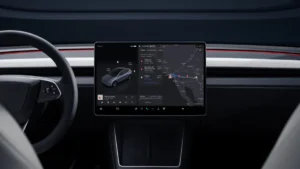
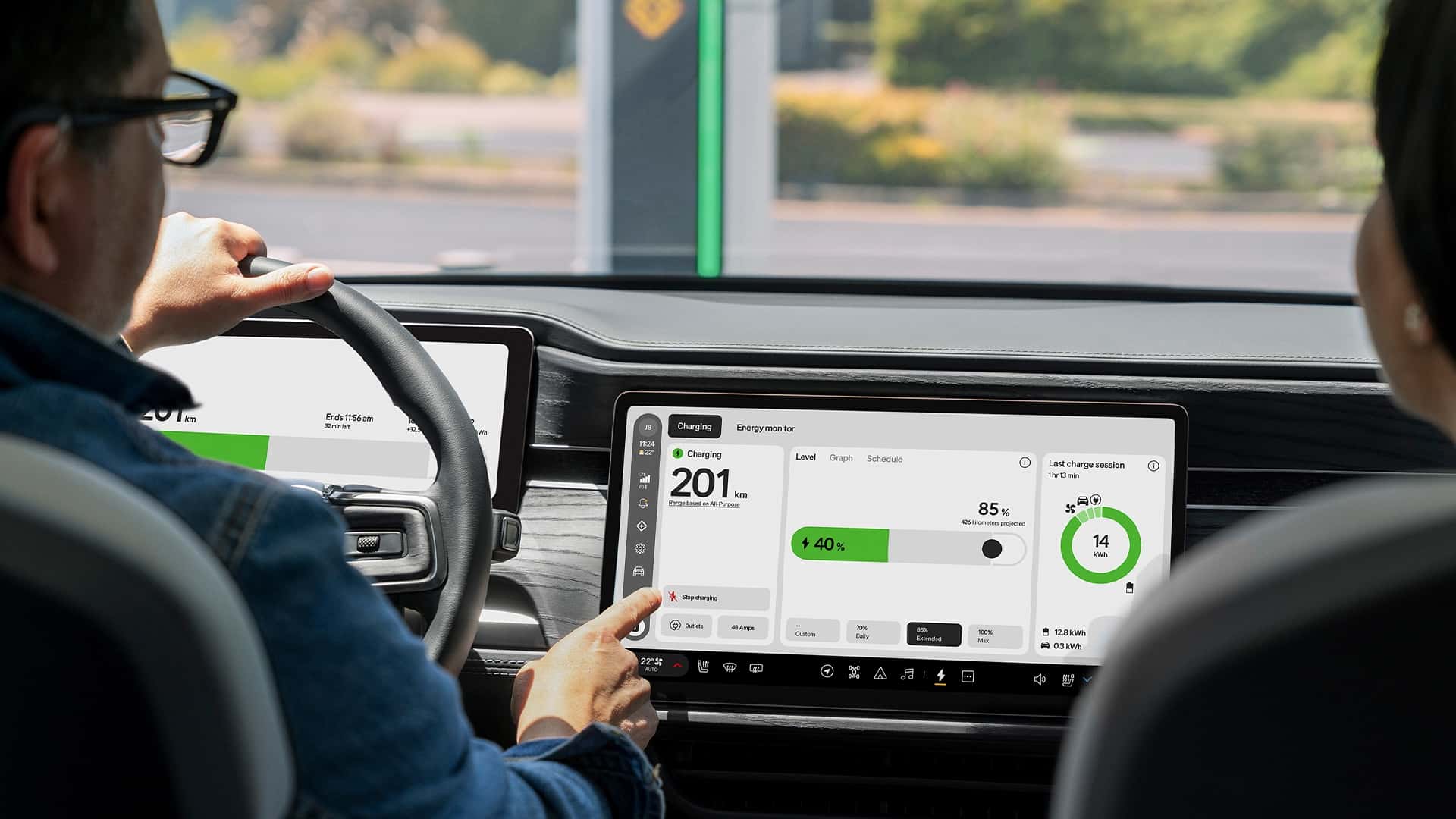
Looking beyond calendar management, coffee orders, and automated service coordination, Rivian’s long-term design philosophy envisions a completely voice-centric cabin experience. The ultimate engineering objective is to eliminate the need for physical tactile inputs on the central touchscreen display for standard operational tasks.
"Our philosophy is eventually, through that deep OS integration, the end state is really having that ability to, through voice and through AI, you will be able to do everything that you’re doing with your fingers on the screen," Bensaid said.
Achieving total operational parity between voice commands and physical touchscreen navigation represents a monumental technical hurdle in the automotive industry. Most legacy and modern infotainment systems rely on rigid, keyword-based command structures that frequently frustrate users. Rivian’s intent to deploy a fully conversational, context-aware agent capable of executing deep vehicle controls—ranging from climate adjustments and suspension tuning to navigation routing and media management—signals a significant shift in how drivers will interact with their vehicles over the remainder of the decade.
As Rivian continues to scale production of its R1 lineup and ramp up manufacturing of the high-volume R2 platform, software differentiation is rapidly becoming a primary battleground for EV adoption. By positioning its in-house AI assistant not merely as a novelty, but as a deeply integrated operational backbone for both daily living and vehicle maintenance, Rivian aims to redefine consumer expectations of what a modern electric vehicle can accomplish.