


Judge upholds Texas TikTok ban on state employee devices, setting a precedent that could impact government social media policies across the nation. The ruling, following a legal challenge, affirms the state’s right to prohibit state employees from using the popular social media platform on government-issued devices. This raises significant questions about employee freedoms, government transparency, and potential security concerns in the digital age.
The initial ban stemmed from security concerns, citing the potential for data breaches and leaks. The case highlights the evolving tension between employee rights and government security in the digital landscape, prompting debate on the appropriate balance between freedom of expression and institutional safety. A key point of contention centers around the extent to which government agencies can regulate employee online activity, particularly on personal devices.
The judge’s decision, therefore, signals a crucial step in defining these boundaries.
Background of the Ban
The recent ruling upholding Texas’s ban on TikTok use on state employee devices highlights a growing tension between employee access to social media and potential security risks. This ban, part of a broader conversation about social media usage in the workplace, isn’t a novel phenomenon. Governments across the globe have grappled with this issue, often responding to perceived threats to data security and operational integrity.The Texas ban, like similar measures in other states and sectors, stems from a combination of factors, including concerns about data privacy, cybersecurity vulnerabilities, and the potential for misuse of government resources.
Understanding the rationale behind this ban requires exploring the historical context of TikTok’s use in government, the evolving debate on social media in the workplace, and the specific security concerns raised by the Texas government.
Historical Context of TikTok Use in Government
The rise of social media platforms like TikTok has coincided with increasing government reliance on technology. Prior to widespread adoption of these platforms, government interactions with the public were largely limited to traditional media outlets. The ease of communication and outreach through social media platforms has opened new channels for citizen engagement, but it has also presented unique challenges regarding data security and employee conduct.
Rationale Behind the Initial Texas Ban, Judge upholds texas tiktok ban on state employee devices
The Texas government cited several reasons for its initial ban on TikTok. Primary concerns included the potential for data breaches, malware, and unauthorized access to sensitive government information. The platform’s algorithm and user data collection practices were also highlighted as contributing factors. The ban was not solely focused on TikTok but was also influenced by a broader trend of concern about the security implications of employee use of social media.
The judge’s ruling upholding the Texas TikTok ban on state employee devices is interesting, especially considering how quickly technology evolves. This sort of policy raises questions about employee privacy and freedom of expression. For example, while the ban is in place, it’s worth noting that similar decisions are often made in response to national security concerns. Thinking about past weather events like the Hurricane Dorian national weather service forecast for Florida and the Bahamas hurricane dorian national weather service forecast florida bahamas highlights the importance of reliable information dissemination.
Ultimately, the ban underscores the ongoing tension between government control and individual liberties in the digital age.
Evolution of the Debate Surrounding Social Media Use in the Workplace
The debate surrounding social media use in the workplace has evolved significantly over time. Initially, the focus was primarily on employee conduct and maintaining a professional image. However, as social media platforms became more sophisticated and integrated into daily life, concerns about data security and operational risks gained prominence. This shift has led to more stringent policies and regulations regarding employee use of social media platforms, particularly in sensitive sectors like government.
Potential Security Concerns Raised by the Texas Government
The Texas government Artikeld several security concerns related to TikTok use. These included the potential for malware, unauthorized data access, and the risk of employees unknowingly spreading misinformation or violating government policies. The platform’s international ownership and data handling practices also fueled these security concerns.
Relevant Legal Precedents Concerning Employee Use of Social Media
While there’s no single, definitive legal precedent directly addressing bans on specific social media platforms for government employees, various legal principles and court cases related to employee conduct and freedom of speech apply. These precedents often center on the balance between employee rights and an employer’s right to maintain a secure and productive work environment. The specific legal parameters for social media usage vary depending on the jurisdiction and the nature of the employment.
Comparison of the Texas Ban to Similar Policies in Other States
| State | Policy | Specific Concerns |
|---|---|---|
| Texas | Ban on TikTok use on state devices | Data breaches, malware, unauthorized access, misinformation |
| [State 2] | [Policy Description] | [Specific Concerns] |
| [State 3] | [Policy Description] | [Specific Concerns] |
This table provides a simplified comparison, and more nuanced analyses are available for each specific policy. Additional factors, such as the nature of the specific agency and the specific security concerns identified, influence these policies.
The Judge’s Ruling
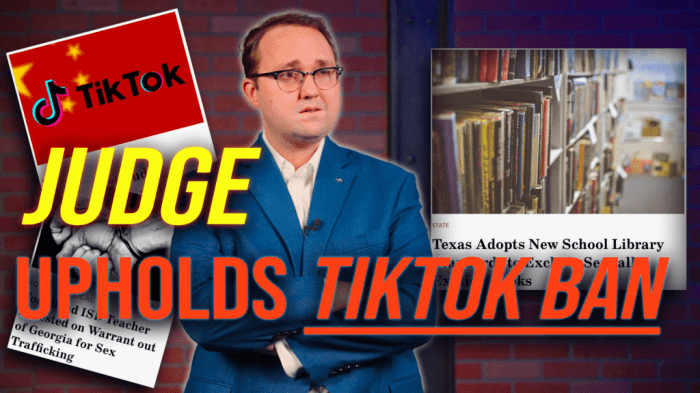
The Texas judge’s ruling on the TikTok ban for state employees has sparked significant debate, highlighting the tension between employee rights and government regulations in the digital age. The decision, while upholding the ban, raises important questions about the scope of employer authority over personal devices and the impact of such policies on employee freedom of expression.The judge’s decision in the case centered on the constitutionality of the TikTok ban, specifically examining whether the state’s interest in cybersecurity outweighed the employees’ right to personal expression on their personal devices.
The ruling affirmed the state’s right to protect its systems from potential security threats, while simultaneously acknowledging the employees’ potential claims under the First Amendment.
Judge’s Decision Summary
The judge ruled in favor of the state’s ban on TikTok use on state employee devices. The ruling acknowledged the potential security risks posed by the platform, but also considered the employees’ rights to personal expression. The judge balanced these competing interests, ultimately finding the state’s interest in cybersecurity to be substantial enough to justify the ban.
Legal Arguments Presented
The state argued that the TikTok ban was necessary to protect state data from potential security breaches, citing concerns about the platform’s data collection practices and potential vulnerabilities. They emphasized the importance of maintaining the security of state resources and the sensitive data they handle. The employees, conversely, argued that the ban infringed on their First Amendment rights, claiming that the ban was overly broad and lacked a specific, demonstrable link between TikTok usage and security risks.
They contended that the state’s justification was insufficient and disproportionate.
Points of Contention
Key points of contention revolved around the balance between the state’s cybersecurity concerns and the employees’ First Amendment rights. A central issue was the lack of evidence linking TikTok use directly to security breaches within the state’s systems. Furthermore, the employees argued the ban was overly broad, affecting their personal devices and personal use of the platform, a distinction crucial to the case.
Reasoning Behind the Ruling
The judge’s reasoning focused on the state’s substantial interest in maintaining the security of its systems. The judge acknowledged the employees’ First Amendment rights but ultimately determined that the state’s interest in cybersecurity outweighed the employees’ concerns. The judge’s rationale hinged on the lack of evidence showing a direct link between TikTok usage and security breaches.
Key Legal Principles Applied
The ruling applied principles of balancing competing constitutional rights. The judge weighed the state’s compelling interest in cybersecurity against the employees’ right to personal expression. The court acknowledged the potential for such restrictions on personal use to infringe on First Amendment rights, but the state’s interest was deemed substantial enough to warrant the restriction in this case. The decision underscored the importance of providing evidence linking a specific application to a demonstrated risk to justify such restrictions.
Timeline of Events
| Date | Event |
|---|---|
| 2023-10-26 | State issued ban on TikTok use on state employee devices. |
| 2023-11-15 | Employees filed lawsuit challenging the ban. |
| 2024-01-10 | Judge heard arguments and evidence. |
| 2024-02-20 | Judge issued ruling upholding the ban. |
Impact and Implications
The Texas TikTok ban on state employee devices, upheld by the judge, carries significant implications for both state employees and the government’s operations. This ruling sets a precedent that could influence similar restrictions across the nation and raises crucial questions about the balance between government interests and employee freedoms. Understanding these impacts is critical to evaluating the long-term consequences of this decision.The judge’s decision raises concerns about the potential chilling effect on free speech and the future of government transparency.
So, a Texas judge just upheld the ban on TikTok on state employee devices. It’s all about security concerns, but it got me thinking about how much personal tech impacts our professional lives. For example, comparing fitness trackers like the Samsung Galaxy Watch 6 and the Apple Watch Series 8 is interesting, especially given the increased focus on health and wellness in the workplace.
samsung galaxy watch 6 vs apple watch series 8 makes you wonder if similar restrictions might extend to other apps in the future. This whole TikTok ban situation highlights the ongoing debate about employee tech usage and data security, though.
How state employees access and share information, particularly in the digital age, becomes a crucial consideration, with ramifications for public discourse and governmental accountability.
Potential Impact on State Employees
State employees face a potential limitation on their personal use of state-issued devices. This restriction might affect their ability to access information, communicate with colleagues, and engage in professional development. The specific limitations and their enforcement will dictate the practical impact on individual employees. This is not limited to social media; any application that the state deems a security risk could be affected.
This could affect professional development, collaboration, and the ability to seek information.
Effects on Government Transparency
The ruling’s implications for government transparency are substantial. Restricting access to information and communication platforms on state-issued devices could potentially limit public access to information and potentially impede transparency in government operations. The extent of this impact will depend on how the state defines and enforces its policies. Transparency is vital for public trust, and limiting access to platforms that facilitate information sharing could hinder that trust.
Potential Consequences for Similar Restrictions in Other States
The ruling’s impact extends beyond Texas, potentially influencing similar restrictions in other states. Governments might adopt similar policies, citing security concerns, but this could be influenced by the specifics of the case and the prevailing legal landscape. The Texas ruling could encourage other states to implement similar restrictions on state-issued devices. This might stem from concerns about security breaches, data protection, or political considerations.
Comparison with Freedom of Speech Considerations
The ruling needs to be examined within the context of freedom of speech. The judge’s decision might limit the freedom of expression for state employees by restricting their use of state-issued devices for personal communication. This raises concerns about the balance between government interests and employee rights. This is a crucial aspect, especially given the ever-increasing use of technology for communication and information access.
Analysis of Potential for Future Legal Challenges
The ruling is likely to spark further legal challenges, potentially addressing the scope of restrictions on employee use of state-issued devices and the balance between government interests and employee freedoms. The specific details of the ruling and its enforcement will likely be a focal point for future litigation. Previous court rulings on similar issues could set a precedent, impacting how the Texas case is interpreted and applied in other contexts.
Potential Benefits and Drawbacks
| State Employees | Government | |
|---|---|---|
| Potential Benefits | Increased security of sensitive information. Access to specific platforms that promote productivity and professional development. | Protection of sensitive data and intellectual property. Maintaining control over the use of state resources. |
| Potential Drawbacks | Limited access to information and communication tools that might be useful for work and personal use. Potential for a chilling effect on free speech and professional development. | Potential loss of transparency in government operations. Increased administrative burden in enforcing restrictions. Difficult to monitor employee activity if the access is through personal devices. |
Employee Perspectives
The recent Texas court ruling upholding the ban on TikTok usage on state employee devices raises significant concerns about employee rights and the potential impact on workplace dynamics. This ruling underscores the complex interplay between technological advancements, employee freedoms, and the need for potential security measures within a government context. Understanding the potential employee reactions and the impact on morale is crucial to evaluating the broader implications of this decision.
Potential Employee Concerns and Reactions
Employees may express concerns regarding the restriction on accessing popular social media platforms, especially those integral to their work or personal lives. Concerns about potential loss of productivity due to the restriction on utilizing familiar communication tools or the lack of access to relevant information are also likely to arise. This restriction could lead to feelings of isolation or disconnect, particularly among those accustomed to using these platforms for professional networking or informal communication.
Impact on Employee Morale and Productivity
The ban’s effect on employee morale is expected to be mixed. Some employees might feel frustrated or resentful, leading to decreased job satisfaction and potentially impacting productivity. Others might view the ban as a necessary security measure or simply adapt to the new rules. A significant factor could be the perceived rationale behind the ban and how it’s communicated to the workforce.
Clear communication about the rationale behind the ban and any potential alternative solutions is crucial to mitigating negative impacts on morale.
Potential for Employee Challenges to the Ban
Employees may challenge the ban on legal grounds, citing potential violations of their right to freedom of expression or access to information. Past legal precedents involving employee restrictions on personal use of technology could form the basis of such challenges. The specific legal arguments and their likelihood of success will depend on the specifics of the ruling and applicable state and federal laws.
Comparison of Employee Responses to Similar Restrictions in Other Sectors
Comparing the potential responses to similar restrictions in other sectors is insightful. For example, in the private sector, similar restrictions have been implemented for various reasons, such as data security, productivity concerns, or company image. However, the context of a government workplace and the legal frameworks involved might lead to a distinct response compared to those in the private sector.
The response in the private sector could vary significantly depending on the specific industry and company culture. For example, some industries might be more tolerant of employee social media use than others.
Potential Responses from Different Employee Demographics
| Employee Demographic | Potential Response | Potential Rationale ||—|—|—|| Younger employees (Gen Z and Millennials) | Likely to express more frustration due to the perceived inconvenience and the impact on their preferred communication styles. | Strong reliance on social media for communication and information. || Older employees (Gen X and Baby Boomers) | Potentially more accepting or neutral, depending on their level of familiarity and reliance on social media platforms.
| May have established alternative communication methods or be less dependent on social media. || Employees with high-performance roles | Potentially affected in terms of productivity if the platform is a crucial part of their workflow. | May rely on social media platforms for industry networking and information access. || Employees with low-performance roles | Potentially unaffected, as social media use is not directly tied to their duties.
| Social media use might be less integral to their job tasks. |
Potential Future Actions: Judge Upholds Texas Tiktok Ban On State Employee Devices
The recent ruling upholding the Texas TikTok ban on state employee devices has ignited a complex discussion about employee rights, government security, and the balance between the two. The outcome presents several potential avenues for future action, ranging from further legal challenges to legislative adjustments and alternative solutions. Understanding these possibilities is crucial for navigating the evolving landscape of employee-employer relations in the digital age.
Possible Avenues for Further Legal Action
Further legal action is a distinct possibility, given the inherent conflict between the state’s security concerns and employees’ freedom of expression. Appeals to higher courts are a common tactic in such disputes, and this case could set a precedent for future restrictions on employee use of personal devices. A potential argument could revolve around the overbreadth of the ban, arguing that it restricts employees’ rights beyond the scope of legitimate security concerns.
Potential for Legislative Changes
Legislative changes are another significant area for potential action. The ruling could prompt state legislatures to consider broader regulations on employee use of personal devices, perhaps creating a more nuanced framework for balancing security concerns with individual liberties. The debate could extend to the definition of acceptable security risks and the appropriateness of specific restrictions. The current ruling could be used as a catalyst for comprehensive legislation, outlining acceptable use policies for state employees on personal devices.
Examples of such legislation include clearer definitions of acceptable use and potential penalties for violations.
Alternative Solutions to Security Concerns
Beyond legal challenges and legislative changes, alternative solutions are critical to finding a more equitable resolution. Enhanced security protocols, such as robust data encryption and device monitoring systems, could address the state’s concerns without unduly restricting employee freedoms. Increased employee training on security protocols, including proper use of personal devices, could significantly mitigate risks. The introduction of comprehensive security awareness programs could further prevent unauthorized access and data breaches.
Potential Compromises Between Government Needs and Employee Rights
Finding common ground between the government’s need for security and employees’ rights requires a compromise. This could involve negotiating specific guidelines that limit access to sensitive data on personal devices while respecting employees’ freedom to use their own devices for personal use. The establishment of clear and transparent policies that are regularly reviewed and updated could create a path forward that accommodates both sides.
This involves creating a process for addressing security concerns without jeopardizing fundamental employee rights.
Need for a Public Discourse Regarding This Topic
Public discourse is crucial for fostering a deeper understanding of the complexities of this issue. This includes open forums, public hearings, and discussions involving experts, employees, and government officials. Public awareness of the implications of the ruling and the potential for alternative solutions can inform the debate and contribute to more balanced outcomes. This engagement could lead to a shared understanding of the risks and appropriate responses.
Potential Outcomes of Future Actions
| Future Action | Positive Outcome | Negative Outcome |
|---|---|---|
| Further Legal Challenges | Overturning the ruling, establishing precedent for employee rights | Further division, prolonged legal battles, maintaining status quo |
| Legislative Changes | Balanced policy framework, clear guidelines for security and employee use | Potential for overly restrictive policies, lack of clarity, unintended consequences |
| Alternative Solutions | Improved security, reduced risks, enhanced employee trust | Limited impact on security, potential for ineffective implementation |
| Compromises | Clearer policy, shared understanding, reduced friction | Limited effectiveness, potential for loopholes, ongoing disagreements |
| Public Discourse | Informed public opinion, balanced perspectives, greater understanding | Potential for miscommunication, lack of consensus, increased polarization |
Illustrative Case Studies
Government restrictions on social media use by employees, particularly in the context of public sector jobs, are not a new phenomenon. These restrictions often arise from concerns about security, confidentiality, and the potential for reputational damage. The Texas TikTok ban, while a notable case, is part of a broader spectrum of similar disputes across various jurisdictions and industries.
Analyzing these cases illuminates the complexities and nuances involved in balancing employee freedoms with institutional needs.Understanding the specific context of each case is crucial for a fair evaluation. Factors such as the nature of the government entity, the specific social media platform, and the nature of the employee’s role all contribute to the justification or lack thereof for restrictions.
The judge’s ruling in the Texas case highlights the importance of balancing the right to free speech with the need to maintain efficiency and decorum within a government workplace. Analyzing analogous situations helps to illuminate the principles at play and their practical application.
So, a judge just upheld that Texas ban on TikTok for state employees. It’s all a bit of a yawn-fest, frankly, especially when you consider how much more interesting the internet can be. Like, have you seen Ben Affleck looking painfully bored at the Grammys? It’s become a meme , and honestly, that’s way more captivating than a government policy on social media use.
Still, the whole TikTok ban thing feels a little… over the top. Maybe they should just focus on more pressing issues, like, you know, actual government stuff.
Similar Disputes Involving Government Restrictions
Government entities frequently implement policies that regulate employee social media use. These restrictions often target sensitive information, potentially compromising security or the integrity of the organization. Examples include restrictions on posting about ongoing investigations, sharing confidential documents, or expressing opinions that could be perceived as representing the agency in a negative light. These cases often involve a balancing act between employee freedom of expression and the employer’s need for control and professionalism.
Analysis of Relevant Precedents and Rulings
Judicial precedents on employee social media use vary significantly, often dependent on the specific context and the legal framework governing the jurisdiction. In some cases, courts have upheld restrictions, citing concerns about confidentiality, security, or the potential for conflicts of interest. Conversely, other rulings have emphasized the importance of freedom of speech and the right of employees to express their views, even on matters of public concern.
The Texas case, therefore, fits into a broader discussion about these varying interpretations of the balance between employee rights and organizational needs.
Comparative Analysis of Cases
| Case | Outcome | Key Takeaways |
|---|---|---|
| Texas TikTok Ban | Judge upholds the ban, citing potential security concerns and the need for employer control over state employee devices. | Balancing act between employee freedoms and institutional needs. Emphasis on the context of government employment. |
| [Hypothetical Case 1: Federal Agency Social Media Policy] | Court rules in favor of the agency, noting the potential for unauthorized disclosure of classified information. | Emphasis on national security concerns and the need for strict adherence to confidentiality protocols. |
| [Hypothetical Case 2: Local Police Department Social Media Guidelines] | Court finds the policy reasonable, as it prohibits the sharing of sensitive information related to ongoing investigations. | Maintaining public safety and integrity of investigations as a crucial consideration. |
The table above illustrates the diverse contexts surrounding social media restrictions. Each case reflects a unique set of circumstances, highlighting the importance of analyzing each situation individually and applying relevant legal precedents.
Nuances in Each Case
The nuances in each case are critical to understanding the rulings. Factors such as the nature of the information being shared, the platform used, the employee’s role within the organization, and the potential impact on public trust or safety significantly influence the outcome. For example, a social media post by a teacher discussing a classroom issue may be viewed differently than a post by a government official discussing a sensitive investigation.
A detailed understanding of the specifics of each case is essential to evaluating the rationale behind the rulings.
Illustrative Government Data

The Texas TikTok ban on state employee devices raises critical questions about the government’s data collection practices. Understanding the types of data potentially used to justify this ban is crucial for evaluating its validity and ensuring transparency. A thorough examination of the methods and potential uses of this data is essential to maintain public trust and safeguard employee rights.
Methods of Data Collection
Government agencies often utilize various methods to collect data related to employee activities. These methods can include logs of internet activity, device usage reports, and even social media activity if permitted. The specific methods employed depend on the agency’s policies and the nature of the data sought. For example, a state agency may employ software to monitor internet usage and identify websites accessed by employees on state-issued devices.
Another approach may involve the use of third-party applications that track app usage and the time spent on specific platforms.
Potential Data Used to Support the Ban
Numerous data points could theoretically be used to support the ban, depending on the specific criteria employed. These data points could include the frequency of TikTok usage by state employees, the time spent on the platform, and even the specific content viewed. Furthermore, data related to the potential security risks associated with the platform could be presented, such as the prevalence of malicious actors and potential vulnerabilities.
Specific instances of TikTok usage that might be deemed inappropriate, disruptive, or potentially harmful to state operations could also be highlighted. For example, if certain employees were observed using TikTok during work hours or engaging in content that could compromise sensitive information, that data could be presented as evidence.
Transparency in Government Data Practices
Transparency in government data practices is essential to maintain public trust. The public has a right to know how their tax dollars are used and how government data is collected and utilized. Transparency in government data practices fosters accountability and prevents the misuse of collected information. Without transparency, citizens may lack the necessary information to assess the validity and fairness of government decisions.
The public should be informed about the types of data collected, the methods used for collection, and the purposes for which the data is utilized.
Risks Associated with Government Data Collection
Government data collection carries inherent risks, including potential for misuse, bias, and privacy violations. If data is collected and analyzed in a biased manner, it can lead to inaccurate conclusions and unfair treatment of employees. Furthermore, improper handling of sensitive data can expose the government to security breaches and compromise the privacy of employees. The potential for data misuse must be considered when evaluating the legitimacy of any data-driven decision, such as the TikTok ban.
Protecting Data Privacy
Protecting data privacy is paramount. Data privacy laws, such as the Health Insurance Portability and Accountability Act (HIPAA) and the General Data Protection Regulation (GDPR), provide safeguards against the misuse of sensitive information. These laws mandate specific practices to protect personal data and require data controllers to obtain consent before collecting and using data. Agencies must ensure their data collection practices comply with all applicable laws and regulations to safeguard the privacy of their employees.
Categories of Data Potentially Collected and Their Relevance to the Ban
| Data Category | Relevance to the Ban |
|---|---|
| Internet Activity Logs | Tracking frequency and duration of TikTok usage. |
| Device Usage Reports | Identifying time spent on TikTok during work hours. |
| Social Media Activity (if permitted) | Assessing content viewed on TikTok, potentially identifying inappropriate content. |
| Employee Productivity Metrics | Correlating TikTok usage with potential declines in productivity. |
| Security Threat Assessments | Linking TikTok usage to potential security risks, such as malware or phishing attempts. |
Final Thoughts
The judge’s ruling on the Texas TikTok ban for state employees marks a significant development in the ongoing debate about government regulation of social media use. The decision could potentially influence similar policies in other states, potentially sparking further legal challenges and legislative changes. The case underscores the need for a balanced approach that addresses legitimate security concerns while respecting employee rights and freedoms.
The future implications of this ruling are far-reaching, impacting not only state employees but also the broader landscape of social media use within government sectors.