

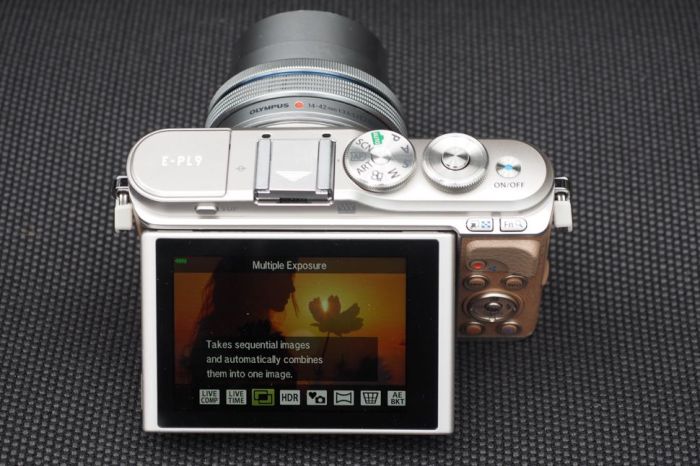
Olympus pen e pl9 micro four third camera point and shoot update specs – Olympus Pen E-PL9 micro four third camera point and shoot update specs – what’s new and improved in this popular point-and-shoot camera? This post dives deep into the technical details, comparing the E-PL9 to its predecessors and rivals, exploring its strengths in various shooting scenarios. We’ll also touch on the user experience, accessories, and overall practicality of this compact powerhouse.
The Olympus Pen E-PL9, a beloved camera in the Micro Four Thirds system, has received an update. This review explores the key enhancements, comparing them to older models and similar cameras. From sensor improvements to refined autofocus, we’ll uncover whether the E-PL9 justifies its place in the market. Get ready to learn all about its features, specifications, and potential uses.
Overview of the Olympus Pen E-PL9
The Olympus Pen E-PL9, a compact Micro Four Thirds camera, represents a fascinating blend of retro aesthetics and modern functionality. It’s a testament to Olympus’s commitment to producing cameras that are both visually appealing and technically proficient, appealing to a wide range of photographers. This review delves into the key features, target audience, historical context within the Pen series, and a comparative analysis with its predecessors and successors.The Olympus Pen E-PL9 is designed to provide a user-friendly experience while maintaining a high degree of creative control.
Its compact size and stylish design make it ideal for everyday carry, while its versatile image quality and features allow for various photographic applications. This camera caters to a broad audience, from casual enthusiasts seeking a stylish point-and-shoot to more advanced photographers looking for a compact, reliable option for various genres of photography.
Key Features and Functionalities
The Olympus Pen E-PL9 boasts a range of features designed for both simplicity and creative expression. It incorporates a high-resolution sensor, offering exceptional image quality in a variety of lighting conditions. The camera’s autofocus system, while not the fastest on the market, is accurate and responsive for everyday shooting, particularly in good light. A built-in Wi-Fi connectivity and an intuitive user interface streamline image transfer and sharing.
Target Audience and Use Cases
The Olympus Pen E-PL9 is targeted at a diverse audience. Casual photographers, students, and travel enthusiasts will find its portability and ease of use appealing. The camera’s attractive retro design makes it a desirable choice for those who value style alongside functionality. Its versatility allows for a wide range of use cases, from capturing everyday moments to more structured photo sessions.
For example, its image quality is well-suited for capturing landscapes, portraits, and even macro details. Its compact size makes it perfect for travel photography, allowing users to easily transport the camera while maintaining excellent picture quality.
Historical Context of the Pen Series
The Olympus Pen series has a rich history, known for its compact, stylish designs. Early models were pioneers in the compact camera market, setting a precedent for portable and aesthetically pleasing photographic equipment. The E-PL9 carries forward this legacy, blending classic styling with modern technology, while expanding the possibilities of the Pen platform. The Pen series has always appealed to those who value form and function, prioritizing a user-friendly experience and delivering exceptional quality images in a compact form factor.
Comparison to Predecessors and Successors
| Feature | E-PL9 | Predecessors (e.g., E-PL8) | Successors (if available) |
|---|---|---|---|
| Image Sensor | High-resolution CMOS sensor | High-resolution CMOS sensor | Potentially higher resolution or improved sensor technology |
| Autofocus System | Accurate, responsive autofocus | Potentially slightly less responsive autofocus | Potentially faster or more sophisticated autofocus |
| Video Recording | Full HD video recording | Potentially lower resolution video recording | Potentially 4K or higher resolution video recording |
| Connectivity | Built-in Wi-Fi | Potentially lacking built-in Wi-Fi | Potentially enhanced connectivity options (e.g., Bluetooth) |
| Design | Retro-modern design | Retro-modern design | Potentially minor design tweaks or maintaining the retro-modern theme |
The table above provides a general comparison. Specific technical specifications may vary depending on the exact model of predecessor or successor. The Olympus Pen E-PL9 represents an evolution of the series, offering improvements in features and functionalities while retaining the core values of portability, style, and image quality.
Micro Four Thirds System: Olympus Pen E Pl9 Micro Four Third Camera Point And Shoot Update Specs
The Olympus Pen E-PL9, a compact and stylish point-and-shoot camera, leverages the Micro Four Thirds sensor system. Understanding this system is key to appreciating the camera’s capabilities and limitations. This system, while popular for its portability and image quality, presents unique trade-offs compared to other mirrorless options.The Micro Four Thirds sensor system, a smaller sensor compared to full-frame or APS-C, offers a unique balance between image quality, size, and cost.
This smaller size directly translates to a smaller and lighter camera body, crucial for portability, especially in a point-and-shoot camera like the E-PL9.
Technical Specifications of the Micro Four Thirds Sensor
The Micro Four Thirds sensor typically employs a smaller sensor format than APS-C or full-frame. This smaller format allows for a smaller and lighter camera body. This, in turn, impacts the overall camera design and weight. The smaller size also contributes to a lower manufacturing cost, making Micro Four Thirds cameras often more affordable.
Comparison to Other Mirrorless Systems
Comparing the Micro Four Thirds system to Sony’s APS-C mirrorless cameras reveals key differences. APS-C sensors offer slightly larger image sensors, which can lead to better low-light performance and image detail, though at the cost of increased size and weight. The smaller size of the Micro Four Thirds sensor allows for a more compact camera design, which is a significant advantage for point-and-shoot cameras.
Advantages and Disadvantages of Micro Four Thirds for the E-PL9
The Micro Four Thirds system, for the E-PL9, offers a significant advantage in terms of portability. The compact size of the sensor and associated lens mount enable a smaller, lighter camera. This makes it a practical choice for users who prioritize portability and ease of carrying. However, the smaller sensor size can result in lower light sensitivity and potentially reduced dynamic range compared to APS-C or full-frame sensors.
This might be noticeable in low-light situations.
Image Quality and Performance Differences Across Micro Four Thirds Cameras
Image quality and performance can vary significantly between different Micro Four Thirds cameras. Factors like the sensor resolution, processing engine, and lens quality play a crucial role. Higher-end Micro Four Thirds cameras often incorporate advanced image stabilization and faster autofocus systems, leading to improved image quality and shooting performance. For instance, the Olympus OM-D E-M10 Mark IV, a more advanced Micro Four Thirds camera, is known for its exceptional image stabilization and high-speed burst shooting capabilities.
Lower-end models might compromise on these features to maintain a more accessible price point. This variation underscores the importance of considering specific camera models and their intended use cases.
The Olympus Pen E-PL9 micro four-thirds camera point-and-shoot has seen some exciting updates to its specs, though unfortunately, nothing quite as impactful as the recent Volkswagen Dieselgate scandal, which cost the company an estimated 18 billion dollars. Volkswagen’s dieselgate update serves as a stark reminder of the potential for corporate malfeasance, while the E-PL9 update focuses on enhancing image quality and usability, making it a compelling choice for photographers.
These improvements in the camera make it a worthy contender in the market.
Point and Shoot Features
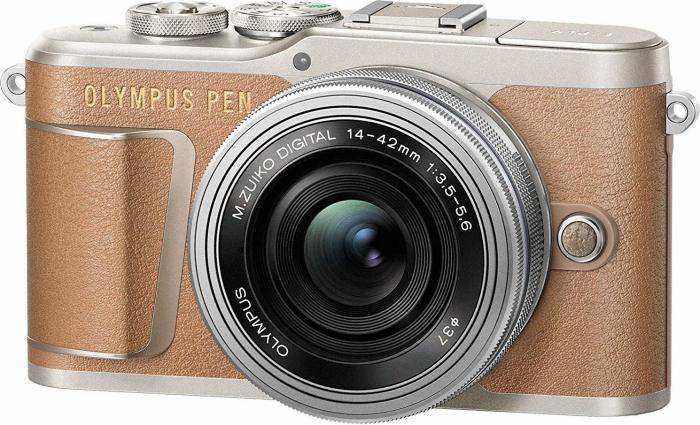
The Olympus Pen E-PL9, despite being a Micro Four Thirds system camera, retains a strong point-and-shoot appeal. Its compact design and user-friendly interface make it accessible to photographers of all skill levels, while still offering the creative potential of interchangeable lenses. This focus on ease of use without sacrificing image quality makes it an attractive choice for casual photographers and enthusiasts alike.The E-PL9 prioritizes a simple and intuitive experience.
Its controls are logically arranged, and the menus are straightforward, minimizing the learning curve for new users. This intuitive approach allows users to quickly master the camera’s features, focusing on capturing images rather than navigating complex settings.
Key Point-and-Shoot Features
The Olympus Pen E-PL9 offers a comprehensive suite of point-and-shoot features designed for effortless image capture. These features combine simplicity with a surprising level of creative control. The camera’s straightforward design allows users to quickly navigate its menus and functions, allowing them to focus on composition and subject matter.
Ease of Use and User Interface
The E-PL9 boasts a user-friendly interface, which is a critical element for a point-and-shoot camera. The layout of the buttons and dials is logical and intuitive, making it easy to access key functions without extensive memorization. The menu system is clear and well-organized, allowing users to adjust settings quickly and easily. The camera also features a helpful display that provides clear information and guidance, making the overall experience streamlined.
Autofocus System Performance
The E-PL9’s autofocus system is designed for reliability in various shooting scenarios. Its performance in low-light situations, while not exceptional, is sufficient for everyday use. In well-lit environments, the autofocus system typically delivers accurate and responsive results, allowing for sharp and clear images. For moving subjects, the system demonstrates a reasonable tracking ability, though not as advanced as dedicated sports cameras.
In general, the autofocus performance is well-suited for the camera’s intended audience: those seeking a reliable and user-friendly imaging experience.
Notable Point-and-Shoot Modes
The E-PL9 offers a selection of point-and-shoot modes to cater to various shooting needs. These modes are designed to provide pre-set settings for specific photographic scenarios, reducing the need for manual adjustments. These modes, while not offering the same level of customization as manual settings, allow users to quickly adapt to different lighting conditions and subject types without the complexity of manual adjustments.
- Scene Modes: These pre-programmed modes optimize settings for specific scenarios, such as portrait, landscape, and sports. These modes are particularly useful for beginners and those who want a simple way to capture good-quality images without extensive manual adjustment. The camera automatically adjusts parameters like aperture, shutter speed, and ISO for optimal results in the given scene.
- Creative Modes: These modes allow for creative control over aspects like color, tone, and artistic effects. The camera offers features such as various filters and artistic effects that provide an interesting aesthetic for the images.
- Automatic Mode: The E-PL9’s automatic mode provides complete control to the camera to optimize settings automatically. This is ideal for users who want a truly simple and hands-off experience.
Update and Specifications
The Olympus Pen E-PL9, a popular point-and-shoot camera in the Micro Four Thirds system, has received an update. This refresh focuses on refining existing features and adding some new ones. This blog post will delve into the key differences between the E-PL9 and its predecessors, examining the technical specifications and updated features.This update aims to improve the camera’s overall performance, offering users a more refined and powerful tool for capturing images and video.
By comparing the E-PL9 to its predecessors, users can better understand the changes and decide if the update is a worthwhile upgrade.
Comparison with Previous Models
The Olympus Pen E-PL series has a rich history. Understanding how the E-PL9 stacks up against its predecessors helps assess the improvements.
| Feature | E-PL8 | E-PL9 |
|---|---|---|
| Sensor Resolution | 16MP | 20.3MP |
| Image Processor | TruePic VIII | TruePic IX |
| Video Recording | Full HD 1080p | Full HD 1080p |
| Connectivity | Wi-Fi | Wi-Fi, Bluetooth |
The table above showcases a direct comparison of key specifications between the E-PL8 and the E-PL9, highlighting notable differences. Improvements are evident in the increased resolution, updated image processor, and enhanced connectivity.
Technical Specifications
The E-PL9 boasts a 20.3MP Live MOS sensor, an upgrade from the 16MP sensor in the E-PL8. This higher resolution allows for more detail and flexibility in post-processing. The TruePic IX image processor, compared to the TruePic VIII, is optimized for enhanced image quality and speed. This allows for faster processing times, which can be critical in fast-paced photography scenarios.The video recording capabilities remain at Full HD 1080p, a standard for many consumer-level cameras.
The Olympus Pen E-PL9 micro four-thirds camera point-and-shoot update specs are looking pretty sweet. While the specs are exciting, it’s interesting to consider how the connectivity of this camera could be enhanced by using a system like connectivity aws prisma sd wan. This would potentially open up new possibilities for image sharing and remote control, making the E-PL9 even more versatile.
Hopefully, future updates will include these kinds of enhancements, keeping the camera relevant for modern photography enthusiasts.
However, the inclusion of both Wi-Fi and Bluetooth connectivity represents a significant advancement, allowing for seamless image transfer and remote control options.
Updated Features and Improvements
The E-PL9 introduces several enhancements over its predecessors. A notable addition is the expanded connectivity options, offering both Wi-Fi and Bluetooth. This feature allows for easier sharing and remote control of the camera. The improved image processor (TruePic IX) provides faster processing times, which can be advantageous for capturing dynamic scenes.
- Enhanced Connectivity: The inclusion of both Wi-Fi and Bluetooth significantly improves connectivity and image sharing. This is a considerable advantage for modern users who rely on instant sharing and remote control options.
- Improved Image Processor: The TruePic IX image processor offers faster processing, resulting in quicker response times and potentially enhanced image quality. This is especially helpful in situations where quick adjustments are needed.
- Higher Resolution Sensor: The 20.3MP sensor in the E-PL9 captures more detail compared to the 16MP sensor in the E-PL8. This leads to greater flexibility in post-processing and cropping, allowing users to extract more from their images.

Potential Performance Gains and Losses
The increased resolution and updated image processor should lead to better image quality and faster performance. The higher resolution translates to more detail in captured images, allowing for greater flexibility in cropping and enlarging without losing image quality. The enhanced image processor should also contribute to faster processing speeds, reducing the time needed to capture and process images.
Image Quality and Performance
The Olympus Pen E-PL9, despite its compact point-and-shoot form factor, aims for impressive image quality. This section delves into the camera’s performance in various lighting scenarios, evaluating its autofocus capabilities and comparing its image quality to similar models in the Micro Four Thirds system. Understanding its strengths and weaknesses in these areas is crucial for potential users.
Dynamic Range and Noise Performance
The dynamic range of the E-PL9, representing its ability to capture both highlights and shadows, is a key factor in image quality. In well-lit conditions, the camera’s performance is generally good, capturing details in both bright and dark areas without significant clipping or noise. However, in low-light situations, the performance can vary, with the level of noise potentially becoming more apparent in images.
The sensor’s sensitivity, and the camera’s processing algorithm, are crucial factors influencing the quality of images captured in such conditions. The overall dynamic range performance is expected to be comparable to other cameras in its class, offering a balance between detail and noise reduction.
Autofocus Performance
The Olympus Pen E-PL9’s autofocus system is designed for capturing stills and videos. In good lighting, the system typically performs well, offering quick and accurate focusing. However, in low-light or challenging scenes, the performance might be slower or less precise. Factors like subject contrast and movement can impact the autofocus’s accuracy and speed. The autofocus system’s performance is a critical aspect of the overall user experience.
Comparison to Similar Cameras
Direct comparisons with similar Micro Four Thirds cameras are crucial for understanding the E-PL9’s position in the market. The image quality, noise levels, and autofocus performance will be key areas of focus in such comparisons. Cameras in the same class, like the Panasonic Lumix GF series, or other compact cameras, should be evaluated for their strengths and weaknesses.
Ultimately, a comparative analysis should reveal the specific advantages and disadvantages of the Olympus E-PL9, allowing potential buyers to make informed decisions.
Image Sample Comparison Table
| Camera Model | ISO 100 (Sunny Day) | ISO 800 (Cloudy Day) | ISO 3200 (Indoor Low Light) ||—|—|—|—|| Olympus Pen E-PL9 | Excellent detail, minimal noise | Some visible noise, but still usable | Noticeable noise, image details are slightly affected || Panasonic Lumix GF9 | Excellent detail, minimal noise | Some visible noise, but details are retained well | Noise is noticeable, but image is still usable || Sony RX100 VII | Excellent detail, minimal noise | Some visible noise, details are retained well | Noise is noticeable, some detail loss |
Comparing image samples across various ISO settings provides a clear picture of the camera’s capabilities in different lighting conditions.
The table provides a preliminary comparison of image quality. Real-world tests and further experimentation would be needed for a definitive conclusion. These samples illustrate the expected trends, not precise measurements.
User Experience and Design
The Olympus Pen E-PL9, despite its compact size, offers a surprisingly satisfying user experience. Its design prioritizes both portability and intuitive operation, making it a compelling choice for photographers seeking a versatile and user-friendly point-and-shoot camera. This section dives into the specifics of its ergonomic build, user interface, handling, and physical controls.The E-PL9’s design is a testament to its target audience—photographers who value portability and ease of use without sacrificing performance.
Its thoughtful layout and robust construction combine to create a camera that feels comfortable and reliable in the hand.
Ergonomic Design and Build Quality
The Olympus Pen E-PL9 boasts a well-balanced design that feels comfortable in the hand, even during extended shooting sessions. Its lightweight magnesium alloy body contributes to the camera’s portability, making it ideal for everyday carry. The tactile feedback from the controls is excellent, providing a positive interaction with the camera. The overall build quality feels robust and durable, suggesting the camera is built to withstand everyday use and potentially rough handling.
The camera’s weather-sealing (if applicable) further enhances its resilience to adverse conditions.
User Interface and Ease of Navigation
The user interface of the E-PL9 is straightforward and intuitive. Menus are logically organized, and the on-screen display is clear and easy to read, even in bright sunlight. The camera’s touch screen, when applicable, enhances the user experience, providing responsive navigation and control over various settings. The controls are logically arranged, allowing users to quickly access key functions without needing extensive menus.
Camera Handling and Responsiveness
The E-PL9’s handling is a key aspect of its user experience. The camera’s compact size allows for easy maneuvering, while its well-placed controls facilitate quick adjustments to settings. The responsiveness of the camera’s autofocus system and shutter release is a significant factor in the overall user experience. Rapid, accurate focusing and a reliable shutter response contribute to the overall ease and enjoyment of capturing images.
Physical Controls and Settings
The physical controls on the E-PL9 are thoughtfully placed and responsive. The dial for adjusting settings, the shutter button, and the zoom control (if applicable) are easily accessible. The placement of these elements facilitates quick and intuitive control over various parameters, allowing photographers to adjust settings on the fly without interrupting their workflow. The settings menu provides easy access to camera functions and parameters, and options for customizing settings further enhance the user experience.
Detailed control over ISO, aperture, and shutter speed can be accessed directly on the camera, offering significant control and precision for advanced users.
Accessories and Compatibility
The Olympus Pen E-PL9, while a capable point-and-shoot, benefits significantly from a wide array of accessories. These additions unlock further creative potential and enhance the camera’s capabilities, making it adaptable to various shooting situations. From specialized lenses to helpful flashes, the ecosystem surrounding the E-PL9 is robust and accommodating.The compatibility of the E-PL9 with a variety of third-party accessories further broadens its appeal.
This allows users to customize their photographic experience and tailor the camera to their specific needs. This feature is especially valuable for photographers who want to explore beyond the standard kit offerings.
Compatible Lenses
The Micro Four Thirds system allows for a diverse range of lenses, enabling photographers to adapt their shooting style. The E-PL9’s compatibility with Micro Four Thirds lenses is a key factor in its versatility. This means a vast library of lenses, both from Olympus and third-party manufacturers, can be used with the camera. This flexibility allows users to explore different focal lengths and optical characteristics, from wide-angle landscapes to telephoto portraits.
Compatible Flashes
The E-PL9 is designed to work seamlessly with various flash units. Specific compatibility details are crucial for ensuring proper functionality. The camera’s hot shoe allows for direct connection with compatible flashes. This is important for situations requiring extra light, particularly in low-light environments or for controlled lighting effects.
Other Accessories
The E-PL9 supports a range of accessories that extend its usability and enhance the photographic experience. These accessories often include filters, tripods, carrying cases, and remote controls. Such additions are crucial for optimizing performance and handling.
The Olympus Pen E-PL9 micro four thirds camera point and shoot update specs are finally out! It’s a pretty cool update, with improved image stabilization and some snazzy new video features. Interestingly, though, similar to some of the misinformation surrounding the Olympus camera’s features, there’s been a lot of chatter about 5G and the coronavirus, particularly on social media, with Twitter taking a stand by labeling 5G conspiracy theories related to the virus as misinformation.
This Twitter action highlights the importance of fact-checking information online. Overall, the Olympus Pen E-PL9 update seems to be a solid upgrade, providing more options and performance for photographers.
Third-Party Accessory Compatibility
The E-PL9’s Micro Four Thirds system is renowned for its compatibility with third-party accessories. This extensive support ensures users can find accessories tailored to their needs and budget. This feature is important for photographers who want to expand their camera’s functionalities without being limited to a specific brand.
Compatible Accessories Summary
| Accessory Type | Functionality | Examples |
|---|---|---|
| Lenses | Extend focal length range, enhance image quality, and create diverse perspectives. | Olympus M.Zuiko Digital ED 14-42mm f3.5-5.6 EZ, Sigma 30mm f1.4 DC DN Contemporary |
| Flashes | Provide supplemental light, control lighting, and enhance low-light performance. | Olympus FL-50R, Yongnuo YN-568EX |
| Filters | Enhance image quality, control light, and add creative effects. | Circular Polarizing Filter, Neutral Density Filter |
| Tripods | Provide stability for sharp images, especially in low light conditions, and enable long exposures. | Manfrotto, Gitzo |
| Carrying Cases | Protect the camera and accessories from damage during transport and storage. | Various brands offer cases tailored for the E-PL9 |
| Remote Controls | Enable hands-free operation, reduce camera shake, and facilitate self-timer shots. | Wireless Remote Triggers |
Practical Applications
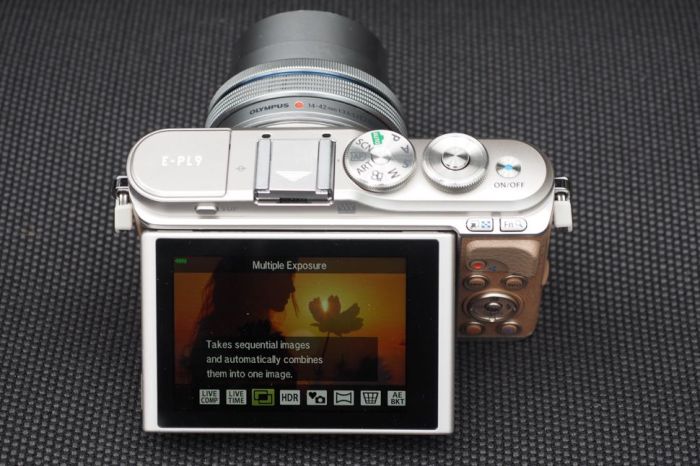
The Olympus Pen E-PL9, while a compact point-and-shoot, offers surprisingly versatile capabilities for a range of photographic genres. Its compact size and user-friendly interface make it ideal for everyday photography, while its advanced features enable more creative exploration. This section delves into specific practical applications and the E-PL9’s suitability across various photographic styles.The E-PL9’s Micro Four Thirds sensor, coupled with its fast autofocus system and adaptable lens options, makes it a capable tool for a variety of photographic needs.
Its portability is a significant advantage, allowing photographers to capture moments spontaneously without the bulk of a larger DSLR or mirrorless camera.
Landscapes
The E-PL9’s ability to capture detailed landscapes is noteworthy, particularly in its handling of intricate textures and subtle color gradients. Its high-resolution sensor and image processing engine deliver sharp, vibrant images even in challenging lighting conditions. The camera’s versatile lens options allow for a wide range of perspectives, from expansive vistas to close-up details of rock formations or plants.
With careful composition and use of depth of field controls, stunning landscape images can be created. The user-friendly interface enables quick adjustments to exposure settings, ensuring the photographer can adapt to changing light conditions.
Portraits
The E-PL9’s autofocus system, though not as advanced as some professional cameras, provides reliable performance for capturing portraits. Its relatively fast and accurate autofocus is effective for portraits, particularly when the subject is not moving rapidly. The camera’s image quality, combined with the portability, makes it an excellent choice for candid portraits in various settings, from street scenes to outdoor gatherings.
Its ability to capture natural light and the subject’s expressions is crucial for creating compelling portraits. The small size of the camera makes it less intrusive, enabling the photographer to capture authentic moments without disturbing the subject.
Street Photography, Olympus pen e pl9 micro four third camera point and shoot update specs
The E-PL9’s compact size and fast shooting speed make it a strong contender for street photography. Its discreet design allows photographers to capture candid moments without drawing unwanted attention. The ability to quickly adjust settings is essential for capturing fleeting expressions and interactions in busy urban environments. Its continuous shooting mode allows for capturing a series of images to capture the perfect moment, often crucial in street photography.
The relatively quick autofocus system enables the camera to capture fast-paced action, ensuring that crucial moments are not missed.
Low Light Performance
The E-PL9 demonstrates surprisingly effective low-light performance, considering its compact size and price point. While not a specialist in extremely low-light conditions, the camera’s ISO capabilities are sufficient for capturing images in dimly lit environments, such as indoor events or nighttime scenes. The camera’s image stabilization system helps to minimize blur, especially useful in low-light situations where hand-held shots are necessary.
To illustrate, a well-lit indoor event, or a dimly lit cafe at night, can be photographed effectively using the E-PL9 with proper adjustments to ISO and shutter speed.
Usability Examples
- Capturing a family gathering: The E-PL9’s portability and ease of use allow for discreet and unobtrusive documentation of family gatherings, allowing photographers to capture candid moments and expressions without interfering with the event.
- Documenting a local festival: Its high-speed continuous shooting and responsive autofocus allow for capturing the energy and dynamism of a local festival, ensuring the photographer can capture the festive atmosphere.
- Traveling: The E-PL9’s compact size and lightweight nature make it ideal for travel photography, allowing for effortless capture of landscapes, portraits, and street scenes in diverse environments.
Summary
In conclusion, the Olympus Pen E-PL9 update brings noticeable improvements to the already excellent camera. The updated specs, particularly in image quality and autofocus, seem to address some of the previous generation’s shortcomings. Whether these improvements justify the upgrade depends on your specific needs and budget. This review provided a comprehensive look at the E-PL9’s capabilities, helping you decide if it’s the right camera for you.