

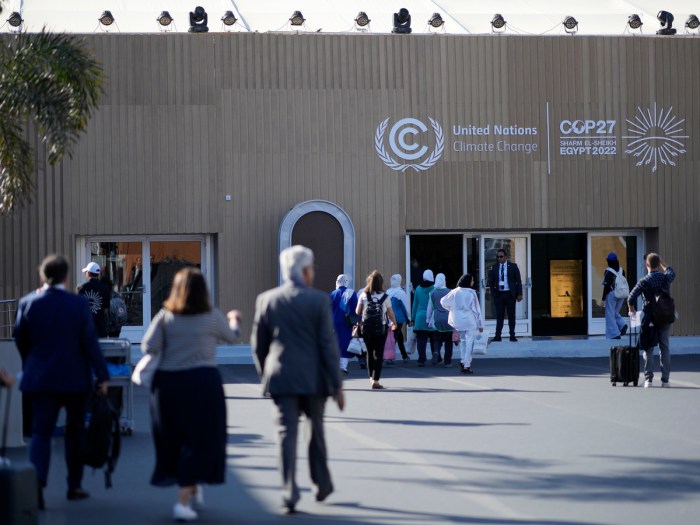
COP27 United Nations Climate Change Conference Egypt kicked off with high hopes and significant challenges. This crucial gathering brought together world leaders, NGOs, businesses, and concerned citizens to address the pressing issue of climate change. The conference aimed to build upon previous agreements and forge new pathways for global action. Discussions ranged from adaptation strategies to financial commitments, highlighting the multifaceted nature of the climate crisis and the urgent need for collective action.
The conference focused on critical issues such as loss and damage, climate finance, and adaptation strategies. Different perspectives were presented, and the atmosphere was characterized by a blend of optimism and frustration. The outcome will shape the future of global climate action.
Overview of COP27
The COP27 United Nations Climate Change Conference, held in Sharm El-Sheikh, Egypt, was a significant global gathering focused on accelerating action to combat climate change. This year’s conference aimed to build on previous commitments and address the urgent need for tangible progress towards a sustainable future. It brought together a diverse range of stakeholders, from government representatives to NGOs and businesses, to foster collaboration and solutions.COP27’s primary objective was to drive forward the implementation of the Paris Agreement, focusing on concrete steps to limit global warming and mitigate its effects.
The conference sought to foster a collaborative spirit and address the pressing needs of vulnerable communities most affected by climate change.
Key Objectives and Goals
COP27 aimed to enhance the implementation of the Paris Agreement’s goals. This involved exploring and committing to actions that reduce greenhouse gas emissions, adapt to the unavoidable impacts of climate change, and provide financial support to developing nations. Crucially, the conference sought to address the issue of loss and damage, recognizing the significant impacts already being experienced in many parts of the world.
Major Themes and Topics
A multitude of themes were addressed at COP27. These included financial commitments for climate action, particularly for developing countries, as well as the critical issue of loss and damage. Discussions surrounding technology transfer and capacity building to support climate resilience in vulnerable regions were also prominent. The conference also explored the role of various sectors, such as energy, agriculture, and transportation, in achieving climate goals.
Stakeholders Involved
The conference brought together numerous stakeholders. Government representatives from around the world played a central role in setting targets and negotiating agreements. Non-governmental organizations (NGOs) actively contributed through advocacy, awareness campaigns, and the provision of critical data and expertise. Businesses also participated, showcasing their innovative approaches to sustainable practices and technologies. Civil society organizations, local communities, and indigenous groups were also involved, contributing their local knowledge and perspectives to the global dialogue.
International organizations like the UN provided vital support and coordination for the entire process.
Overall Atmosphere and Tone
The atmosphere at COP27 was characterized by a blend of urgency and cautious optimism. The recognition of the severity of the climate crisis was palpable, but there was also a palpable sense of hope that concrete agreements and commitments would be reached. While negotiations were often complex and challenging, a shared understanding of the critical need for collective action emerged as a strong driving force.
There was an increased emphasis on the need for solidarity and collaboration between developed and developing nations.
Key Agreements and Outcomes: Cop27 United Nations Climate Change Conference Egypt

COP27, held in Sharm El-Sheikh, Egypt, marked a significant step in global climate negotiations, although the journey remains fraught with challenges. The conference focused heavily on adaptation measures for vulnerable nations, and the crucial issue of financial support for developing countries in their climate mitigation and adaptation efforts. While concrete milestones were achieved, the overall success of the summit hinges on the consistent implementation of agreed-upon actions.The discussions surrounding climate finance, loss and damage, and the need for increased ambition in reducing greenhouse gas emissions were central to the outcomes.
COP27, the UN climate change conference in Egypt, was definitely a significant event. While discussing crucial global issues, it’s easy to get caught up in the big picture and forget about the smaller things, like finding the perfect Otterbox MagSafe compatible gaming clip for your Xbox controller and iPhone 12 mini, pro, or max. Checking out the latest prices for otterbox magsafe compatible gaming clip xbox controller price iphone 12 mini pro max is important for gamers, but the larger issues surrounding climate change still demand our attention and action.
Ultimately, both the future of gaming and the future of our planet depend on mindful choices.
A key theme was the urgency of supporting vulnerable nations to build resilience and adapt to the impacts of climate change. The agreements reached, while significant, also highlight the persistent gap between the ambition needed and the actions taken.
Financial Commitments for Developing Nations
The crucial issue of providing financial resources to developing countries to combat climate change was a major focus. COP27 saw a commitment to establishing a dedicated fund for “loss and damage” – a significant step forward in recognizing the need to compensate vulnerable nations for the irreversible impacts of climate change. However, the exact details and implementation mechanisms of this fund remain unclear, and the scale of funding commitments from developed countries remains a point of contention.
- Developed countries pledged increased financial support for adaptation and mitigation efforts in developing nations, but the specifics of how this will be delivered and measured are still being finalized.
- The creation of a fund for loss and damage represents a critical acknowledgment of the disproportionate impact of climate change on vulnerable populations, but the operational details, including funding mechanisms and eligibility criteria, remain uncertain.
Progress on Climate Action Areas
The conference saw progress on various climate action fronts. Significant efforts were made to strengthen global cooperation in reducing greenhouse gas emissions. The need for greater ambition in mitigation and adaptation was consistently emphasized.
- While COP27 saw a focus on adaptation, the lack of a clear timetable for the implementation of adaptation measures could limit its effectiveness in the long run. The need for targeted, region-specific adaptation strategies remains crucial.
- The discussion on mitigation strategies highlighted the importance of technology transfer and the need for increased investment in renewable energy sources. However, progress in implementing these strategies was uneven across different nations.
Controversies and Disagreements
Despite the progress, disagreements and controversies lingered. The level of financial commitment from developed countries to developing nations was a source of contention, with some arguing that the pledges were insufficient to address the scale of the climate crisis. Furthermore, disagreements over the definition and operationalization of loss and damage remained unresolved.
- A lack of specific timelines and targets for emission reductions continues to be a significant concern.
- The question of accountability and enforcement mechanisms for achieving the commitments made at COP27 remains a key concern.
Long-Term Impact
The agreements reached at COP27, while not a complete solution to the climate crisis, are expected to have a positive long-term impact. The establishment of a loss and damage fund, though still nascent, signifies a crucial step in acknowledging the disproportionate impacts of climate change on vulnerable nations. The commitments to increased financial support for adaptation and mitigation, if implemented effectively, could bolster efforts to limit global warming and build resilience to its effects.
The long-term impact will depend on the consistency of follow-through and increased ambition in subsequent years.
Discussions on Key Issues at COP27
COP27, held in Egypt, saw intense negotiations on various critical climate change issues. Discussions ranged from the urgent need for financial support to address loss and damage, to the crucial role of adaptation strategies in vulnerable regions. The conference highlighted the complex interplay between these issues and the varying perspectives of participating nations. Ultimately, the discussions aimed to forge a path forward towards a more sustainable future.
Loss and Damage
The issue of loss and damage, encompassing irreversible impacts of climate change, was a focal point of debate. Developed nations, historically responsible for greenhouse gas emissions, faced pressure to provide financial support to developing countries experiencing severe climate-related losses and damages. Negotiations centered on establishing a dedicated fund or mechanism for addressing these losses. The debate emphasized the need for concrete actions, not just promises, to support vulnerable nations in recovering from catastrophic climate events.
- A critical aspect of the discussion involved defining what constitutes “loss and damage,” distinguishing it from adaptation and resilience measures.
- There was considerable discussion about the responsibilities of developed countries in supporting developing nations affected by loss and damage, and the establishment of a dedicated fund was a key point of contention.
- Existing mechanisms for financial support were examined, and the need for new, effective channels was underscored to ensure timely and adequate financial assistance to affected nations.

Climate Finance
Climate finance remained a key topic of discussion, focusing on the gap between pledged and delivered funding. Developing countries emphasized the need for increased financial support to implement climate action plans, adapt to climate change impacts, and transition to cleaner energy sources. The need for transparent and accountable mechanisms to track and monitor climate finance flows was also raised.
Adaptation
Adaptation strategies aimed at mitigating the effects of climate change were also a subject of debate. Discussions emphasized the need for tailored solutions to address specific regional vulnerabilities. The need for capacity building and technology transfer to support adaptation efforts in developing countries was highlighted.
- A crucial aspect of adaptation was the need for localized solutions, taking into account the specific vulnerabilities and contexts of different regions.
- The role of indigenous knowledge and traditional practices in developing effective adaptation strategies was acknowledged.
- The importance of integrating adaptation measures into national development plans was recognized as essential for long-term success.
Global Response and Implications

COP27, held in Egypt, marked a crucial juncture in global climate action. The conference’s outcomes, while not universally celebrated, reflect a complex interplay of national interests and shared anxieties about the future. Analyzing the reactions of various countries, the potential impacts on different regions, and the anticipated global response provides a critical perspective on the conference’s legacy and the road ahead.
Reactions of Countries to COP27 Outcomes
The international community’s response to COP27’s agreements varied significantly. Nations with ambitious environmental goals often expressed satisfaction, albeit with reservations about specific provisions. Conversely, nations with strong economic interests tied to fossil fuels or less developed infrastructure voiced concerns about the financial and logistical burdens of the agreements.
Potential Impacts of COP27 Decisions on Regions
The decisions made at COP27 are likely to have a significant impact on different regions of the world. The implications will vary depending on a region’s vulnerability to climate change, its economic structure, and its capacity to adapt to new policies.
COP27 in Egypt was all about tackling climate change, but honestly, sometimes I find myself wishing for more user-friendly tech solutions to help me manage my home’s energy use. A helpful feature like multi-user support in the Google Home app could really improve the experience for everyone in the household. Knowing how to manage different routines and preferences for each person could be incredibly useful in this context.
This could definitely help to make our home smarter and help us contribute to the bigger picture of environmental awareness. Ultimately, COP27 is about making a collective effort, and hopefully, technology like google home app multi user support can make that easier.
Anticipated Global Response to COP27 Outcomes
The global response to COP27’s outcomes will likely be a mix of cautious optimism and cautious skepticism. While many nations acknowledge the urgency of climate action, concerns about implementation and equity remain. The anticipated response will be shaped by the extent to which the agreements translate into concrete actions and tangible results.
Consequences of Agreements on Sectors
COP27’s agreements will have a cascading effect on various sectors. The transition to renewable energy sources will impact the energy sector, agricultural practices will be affected by climate-related changes, and the need for adaptation will influence infrastructure and urban planning.
- Energy Sector: The transition to renewable energy sources will require significant investment and policy changes. This shift may lead to job losses in fossil fuel industries but will also create new opportunities in renewable energy production and maintenance. Examples of this transition are visible in countries like Germany and Spain.
- Agriculture: Climate change impacts on agriculture will require adaptation strategies, such as drought-resistant crops and improved water management. Developing countries heavily reliant on agriculture may face challenges in adapting to these changes. Examples of this are drought-resistant corn varieties and water conservation technologies.
- Infrastructure: Adaptation to climate change impacts, such as sea-level rise and extreme weather events, will require substantial investments in resilient infrastructure. This includes flood defenses, drought-resistant water systems, and disaster-preparedness infrastructure.
Visual Representation of Key Data
COP27, like previous climate conferences, generated a wealth of data on commitments, pledges, and progress. Visualizing this data is crucial to understanding the complexities of the negotiations and identifying trends. Effective visualizations can highlight key takeaways, reveal potential challenges, and inspire further action.
COP27, the UN climate change conference in Egypt, was definitely a big deal. While global warming and its effects are incredibly serious, it’s fascinating to see how different issues intersect. For example, the epic v Apple Fortnite app store trial, specifically Peely Day 6, which was all about the rights of developers and distribution platforms , offers a glimpse into the often-overlooked digital landscapes that still impact the world.
Ultimately, all these debates, from climate change to app store policies, affect our lives in ways we might not always immediately see. COP27 highlighted the interconnectedness of global challenges, both the big and the small.
COP27 Funding Commitments, Cop27 united nations climate change conference egypt
The conference saw numerous pledges and commitments towards climate finance. A bar chart showcasing the distribution of these commitments across different countries and sectors provides a clear overview. The x-axis would represent the countries or regions, and the y-axis would represent the amount of funding pledged. Different colors could distinguish between sectors (e.g., adaptation, mitigation, technology transfer).
Trends might reveal a concentration of commitments in certain regions or for specific initiatives. For example, the chart might show a significant increase in pledges from developed nations compared to developing ones. This data helps to understand the current landscape of climate finance and identify areas needing further attention.
Key Emissions Reduction Pledges
A line graph can track the progress of countries’ emissions reduction pledges over time. The x-axis would represent years, and the y-axis would represent the percentage of emissions reduction. Different colored lines would represent individual country pledges. The graph could highlight any significant increases or decreases in pledged reductions. The data would help to identify countries that have made ambitious commitments and those that need further encouragement.
An example of this visualization would show the trajectory of emissions reduction pledges made by countries over the past five years, highlighting the overall trend.
Global Temperature Increase Projections
A bar chart showing projected temperature increases by the end of the century (2100) is a powerful tool. The x-axis would represent different scenarios (e.g., business-as-usual, ambitious mitigation, and high ambition). The y-axis would represent the projected temperature increase in degrees Celsius. Color-coding different scenarios allows for easy comparison. The chart would clearly illustrate the difference in potential outcomes based on different levels of global action.
For instance, a scenario of continued high emissions could lead to a significantly higher temperature increase than a scenario where nations aggressively pursue emissions reduction targets. This visualization emphasizes the urgency of immediate action to limit global warming.
Alternative Visualizations
Alternative visualizations, such as a network graph, could display the interconnections between different nations’ pledges and commitments. This network would show which countries are cooperating, the scale of these collaborations, and potential gaps in cooperation. A bubble chart could visually represent the size of each country’s economy versus its emissions reduction targets. Larger bubbles would indicate larger economies and potential for greater impact, and the size of the bubbles would also reflect the ambition of the emission reduction target.
This allows a direct comparison of a country’s economic output and its commitment to climate action.
Importance of Data Visualization
Data visualization is essential for understanding the outcomes of COP27. It makes complex data accessible and understandable to a wider audience, fostering engagement and encouraging informed discussions. By visually representing key data points, we can easily identify trends, patterns, and potential areas of concern. This in turn promotes a more effective global response to climate change, ensuring that the decisions made at COP27 translate into tangible action.
Future Outlook and Recommendations
COP27, while not achieving all hoped-for breakthroughs, marks a crucial step in the global climate journey. The conference highlighted both the urgency and the complexities of the climate crisis. Moving forward, the commitments made and the challenges encountered will significantly shape future climate action. The road ahead demands both renewed dedication and innovative approaches to overcome the obstacles.The outcomes of COP27 underscore the need for a multifaceted approach to climate change.
Individual nations, corporations, and individuals all bear a responsibility to contribute to mitigating climate change. Addressing the financial gap for developing nations is critical, as is promoting technological innovation and sustainable practices.
Potential Impact of COP27 on Future Climate Action
COP27’s emphasis on loss and damage funding for vulnerable nations signals a potential shift in international climate finance. This commitment, if effectively implemented, could significantly improve the resilience of vulnerable communities to the impacts of climate change. The agreement on enhanced transparency mechanisms suggests a greater focus on accountability and progress monitoring. This will hopefully lead to more concrete and measurable actions.
Areas Requiring Further Action
The conference highlighted persistent gaps in climate finance and adaptation measures. Developing nations continue to face significant hurdles in accessing funding for adaptation projects and mitigation strategies. Strengthening existing international frameworks for climate finance and promoting innovative financing mechanisms are crucial. Increased investment in renewable energy technologies and energy efficiency measures are essential to accelerate the transition to a low-carbon economy.
Potential Recommendations for Future Climate Negotiations
Future climate negotiations should prioritize concrete and measurable targets for emissions reductions. Establishing clear timelines and milestones for the implementation of agreed-upon actions is vital. Further, fostering collaboration and knowledge sharing among nations is essential to accelerate technological advancements and best practice exchanges. International partnerships and financial support must be increased to aid developing countries in their adaptation and mitigation efforts.
Possible Challenges and Opportunities for Global Climate Action
One major challenge is maintaining momentum beyond COP27. Political will and consistent policy support are crucial for translating commitments into tangible actions. Another challenge is bridging the gap between developed and developing nations in terms of financial and technological resources. However, opportunities abound in the form of technological advancements, innovative solutions, and renewed commitments from various sectors.
The rise of green technologies and sustainable practices presents a significant opportunity for economic growth and job creation.
Long-Term Implications of the Agreements Made
The agreements made at COP27, especially those related to loss and damage, could have profound long-term implications for international relations and global cooperation. They signal a growing recognition of the interconnectedness of climate change and its impact on global security and stability. The long-term implications are multifaceted, and they will affect how the global community responds to future climate challenges.
The outcomes of COP27 will determine the trajectory of global climate action for years to come.
End of Discussion
COP27 Egypt, a pivotal moment in global climate negotiations, concluded with a mix of progress and lingering concerns. While some significant agreements were reached, particularly regarding financial commitments, the path ahead remains complex. The conference underscored the need for continued dialogue and collaboration, especially considering the diverse perspectives and varying levels of commitment among nations. Ultimately, COP27 served as a crucial step towards addressing the urgent climate crisis, but much work still lies ahead.
The outcomes will be closely monitored as the world grapples with the implications of these agreements.