


Oracle tiktok larry ellison lindsey graham super pac donation jaime harrison – Oracle TikTok, Larry Ellison, Lindsey Graham, Super PAC donation, Jaime Harrison—this intricate web of connections reveals a fascinating intersection of technology, politics, and influence. Oracle’s foray into TikTok, coupled with Ellison’s public pronouncements, Graham’s Super PAC involvement, and Harrison’s political actions, paints a picture of potential conflicts of interest and significant impact on Oracle’s public image. The potential for public backlash or support hinges on how Oracle navigates this complex landscape.
This exploration delves into Oracle’s TikTok strategy, analyzing Larry Ellison’s political engagements, and examining Lindsey Graham’s Super PAC activities. We’ll also investigate the role of Super PAC donations in the current political climate and Jaime Harrison’s involvement. Ultimately, we’ll assess how these interactions could shape Oracle’s public image and future strategies.
Oracle’s TikTok Presence and Influence
Oracle, a behemoth in the enterprise software industry, has yet to fully embrace the vibrant world of TikTok. While many competitors are actively engaging on the platform, Oracle’s current presence is minimal. This lack of a substantial TikTok strategy is notable given the platform’s potential for reaching younger audiences and fostering brand awareness. This article will explore Oracle’s current TikTok strategy, potential impact, and opportunities for improvement.Oracle’s limited TikTok engagement suggests a deliberate approach, potentially focused on more traditional marketing channels for its core enterprise clientele.
However, this strategy may inadvertently limit their visibility to a younger demographic who are increasingly influential in shaping purchasing decisions.
Oracle’s Current TikTok Engagement Strategy
Oracle’s current TikTok presence, if any, is not publicly evident. A lack of consistent posting and engagement suggests a minimal or non-existent strategy. This is unlike other enterprise software companies that are successfully leveraging TikTok for targeted marketing.
Potential Impact on Brand Image and Public Perception
Oracle’s absence on TikTok could negatively impact its brand image, particularly among younger professionals and potential customers. The platform is often associated with innovation and relatability, elements that are increasingly important in attracting a modern workforce. By not engaging on TikTok, Oracle may be perceived as less contemporary or forward-thinking. The platform is often used to showcase innovative products and services in a dynamic way.
This lack of presence could be perceived as a missed opportunity for engagement.
Comparison with Successful TikTok Campaigns
Numerous companies in similar industries have successfully leveraged TikTok to increase brand awareness and generate leads. For instance, Salesforce frequently uses short-form video to showcase its products in an accessible and engaging way, targeting a broad audience. Similarly, Microsoft leverages TikTok to promote its cloud services, connecting with a tech-savvy audience. These campaigns often highlight the ease of use and practicality of their products through concise and engaging content.
By contrast, Oracle’s lack of presence means it’s missing out on the opportunity to demonstrate its modern approach.
Performance Metrics Comparison
Unfortunately, publicly available data on Oracle’s TikTok performance is unavailable. Therefore, a direct comparison with competitors is impossible. However, we can infer that Oracle’s performance would likely lag significantly behind companies like Salesforce or Microsoft, which actively engage with the platform.
Hypothetical TikTok Campaign for Oracle
A hypothetical TikTok campaign for Oracle targeting a specific demographic, such as young software engineers, could focus on showcasing the practical applications of Oracle’s cloud-based products. The campaign could highlight how Oracle’s solutions simplify complex tasks, leading to increased productivity and efficiency. The content would be designed to resonate with the target audience’s interests, using relatable scenarios and problem-solving approaches.Visual elements would include dynamic graphics, text overlays, and user-generated content to emphasize the user experience.
The key messaging would revolve around simplicity, efficiency, and innovation. For instance, a short video could showcase how a complex data analysis task can be streamlined using Oracle’s tools, thereby highlighting the problem-solving aspect. This approach could effectively communicate the value proposition of Oracle’s products to a younger audience.
Recent news about Oracle, TikTok, Larry Ellison, and Lindsey Graham’s Super PAC donation to Jaime Harrison has got me thinking about the power dynamics in tech. It’s fascinating how these big-name players are influencing political landscapes, but it’s equally important to look at the worker’s side of the equation. For instance, the recent Kickstarter employee vote to unionize, as detailed in this article ( kickstarter employee vote union unionize ), highlights a growing trend of employees seeking better working conditions and representation.
Ultimately, the complex web of influence between corporations and politics, exemplified by the Oracle/TikTok/Graham/Harrison situation, is mirrored in these grassroots efforts to empower employees, demonstrating a push and pull between capital and labor.
Larry Ellison’s Public Statements and Actions
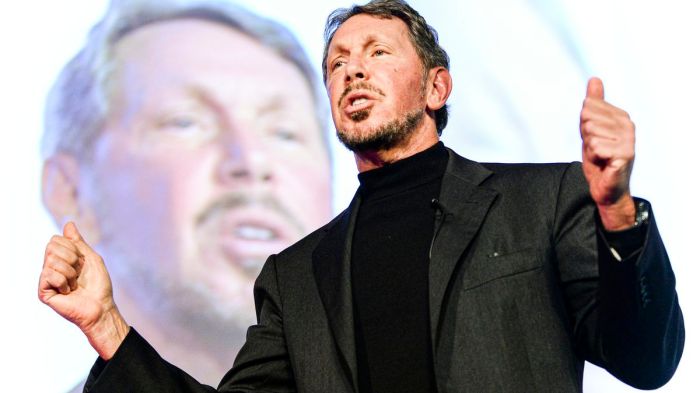
Larry Ellison, the visionary founder and chairman of Oracle Corporation, has consistently been a prominent figure in both the tech industry and the political arena. His public statements often reflect a strong stance on various issues, and these pronouncements have inevitably sparked discussions about their potential influence on Oracle’s business decisions and overall image. This analysis delves into Ellison’s public pronouncements, exploring their possible motivations and potential consequences for Oracle.Ellison’s involvement in the political landscape isn’t merely a passing interest; it’s a demonstrably active engagement.
He has a history of making public statements on issues ranging from economic policy to social trends. Understanding his motivations and the possible correlations between these statements and Oracle’s business strategies is crucial for evaluating the impact of his actions on the company’s trajectory.
Ellison’s Political Stances
Ellison’s public statements often display a conservative viewpoint, although his actions and stances have varied over time. He has made endorsements and contributions to political candidates and causes, reflecting a particular perspective on the direction of the country. It’s important to acknowledge the potential for these political activities to impact Oracle’s image and its relationship with different stakeholders.
Potential Motivations
Ellison’s motivations for engaging in political discourse are multifaceted. He may believe his opinions hold significant value in shaping policy, aiming to influence the direction of legislation or the implementation of regulations that could affect Oracle’s business interests. Alternatively, his actions could be driven by personal conviction, with a desire to support candidates or causes he believes in.
The motivations behind his public statements are likely a combination of these factors.
Correlation with Oracle’s Business Strategies
Ellison’s pronouncements can sometimes have a direct or indirect impact on Oracle’s business strategies. For instance, his views on government regulations might influence the company’s approach to compliance and lobbying efforts. Likewise, his support for specific policies could affect Oracle’s decisions regarding market expansion or technological development. Careful observation of these connections is necessary to comprehend the implications of Ellison’s political activity on Oracle’s operations.
Examples of Public Statements
A significant example is Ellison’s known support for specific political candidates. Records and news reports indicate his contributions to political campaigns, which can be viewed as a form of expressing his political views. Another example might involve his comments on specific legislative proposals that directly or indirectly affect Oracle’s business. Further examples may include his remarks on economic policies, as these policies could have an effect on Oracle’s growth and success.
Finding verifiable records and media accounts of such statements is crucial for analysis.
Consequences for Oracle’s Image and Market Standing
Ellison’s public pronouncements can significantly impact Oracle’s public image. Positive endorsements or alignment with popular viewpoints could enhance the company’s reputation. Conversely, controversial statements could damage its image, potentially alienating specific segments of the market or the general public. This is a complex relationship that requires ongoing monitoring. The company’s standing in the market and with stakeholders will be affected by these public pronouncements.
Lindsey Graham’s Political Stance and Super PAC Involvement
Lindsey Graham, a prominent Republican senator, has a long and often controversial history in the US Senate. His political positions have frequently aligned with conservative interests, including a focus on national security and a strong stance against certain aspects of the technology industry. His involvement with Super PACs has drawn significant attention, particularly in relation to his perceived influence on political discourse and potential impact on large corporations like Oracle.Senator Graham’s political stances often reflect a blend of traditional Republican values and a pragmatism that acknowledges the realities of modern political engagement.
He consistently advocates for policies that promote American economic interests, sometimes at the expense of broader social or technological considerations. This is especially true when it comes to his views on international trade and the role of government regulation in the tech industry.
Senator Graham’s Stances on Technology Issues
Senator Graham has voiced concerns about the potential anti-competitive practices of some technology companies, particularly in the context of their market dominance and influence on the broader economy. He has also expressed reservations about the impact of foreign ownership and influence within the tech sector. These concerns have sometimes led to calls for stricter regulatory oversight of technology companies, though specifics on his proposals are often vague and dependent on the specific situation.
Super PAC Involvement and Motivations
Super PACs play a significant role in modern political campaigns. They allow for unlimited contributions from individuals and organizations, enabling them to fund political advertisements and activities. Senator Graham’s involvement with Super PACs, while not always explicitly stated, likely stems from a desire to amplify his political voice and influence. Super PACs are a crucial tool in contemporary campaigns, allowing for strategic investment in media and grassroots mobilization.
The Oracle-TikTok-Larry Ellison-Lindsey Graham Super PAC donation-Jaime Harrison saga is fascinating, but it’s worth considering the parallel with current AI advancements like those found in Microsoft Bing AI Edge’s chatbot. These chatbots, with their conversation limits, highlight a similar dynamic of control and potential manipulation. Just like the intricate political maneuvering in the Ellison-Graham-Harrison drama, understanding the microsoft bing ai edge chatbot conversation limits reveals how these new technologies might be used and misused.
This, in turn, makes the Oracle-TikTok situation seem even more significant in its potential for both progress and peril.
The financial backing afforded by Super PACs, while not necessarily a direct reflection of the senator’s personal beliefs, can nevertheless influence the direction of his political messaging.
The Oracle-TikTok saga, with Larry Ellison’s involvement and Lindsey Graham’s Super PAC donation to Jaime Harrison, is definitely interesting. This kind of political maneuvering often reflects broader economic shifts, like the recent Uber Europe court decision regarding Airbnb’s role in the market, uber europe court decision airbnb. Ultimately, these actions all point back to the intricate web of power and influence in the tech and political worlds, particularly when it comes to Larry Ellison and the Oracle story.
The Role of Super PACs in Political Discourse
Super PACs have become an important component of modern political discourse, influencing public opinion and shaping the narrative surrounding political issues. Their role in amplifying specific viewpoints and potentially shaping electoral outcomes is undeniable. They can play a significant role in swaying public opinion on particular issues and candidate profiles. However, the impact of Super PACs on public perception and electoral results can be highly complex, with many factors at play.
The influence of Super PACs on elections is a matter of ongoing debate, with varying viewpoints on their overall effect on the democratic process.
Impact on Public Perception of Oracle and the Tech Industry
Senator Graham’s Super PAC involvement, when considered alongside his public statements on the technology industry, could potentially affect public perception of Oracle and the tech sector as a whole. A negative portrayal, for example, could create a perception of bias or undue influence, whereas a neutral or positive representation could enhance trust. The long-term impact on public opinion is difficult to predict.
Comparison with Other Political Figures
Comparing Senator Graham’s Super PAC involvement with other political figures reveals a varied landscape. Some figures may prioritize specific policy areas, while others focus on general political strategy. The motivations and strategies vary significantly between individuals, and the impact of these activities can be quite different, depending on the political context and the individuals involved.
Super PAC Donations and their Political Impact
Super PACs, or Super Political Action Committees, have emerged as a significant force in modern political campaigns. They operate independently of candidates and parties, allowing for substantial fundraising and spending on political advertising and advocacy. Understanding their role and impact is crucial for grasping the evolving landscape of American politics.Super PACs operate under a unique legal framework, distinguishing them from traditional political committees.
This allows for unlimited contributions from individuals, corporations, and unions, leading to a substantial influx of funds into political campaigns. Their influence extends beyond direct candidate endorsements, often shaping public discourse and influencing policy decisions through targeted media campaigns.
Funding Sources and Influence
Super PACs are funded by a diverse range of sources, including wealthy donors, corporations, and labor unions. This unrestricted funding allows them to mobilize considerable resources for political advocacy, often targeting specific issues or candidates. Their influence is multifaceted, encompassing direct spending on advertising, research, and grassroots organizing. This often translates into significant impact on the political narrative, sometimes overshadowing the candidate’s own message.
Potential Impact on the Political Landscape
The influence of Super PACs can significantly impact the political landscape, especially in areas like technology. The significant financial resources they command can tilt the playing field in favor of specific candidates or policies, potentially leading to outcomes that reflect the interests of their donors. This raises concerns about the potential for conflicts of interest and the perception of undue influence by certain powerful entities.
Examples of Super PAC Donations and Outcomes
Numerous examples demonstrate the influence of Super PACs. For instance, the role of Super PACs in the 2016 presidential election, supporting or opposing specific candidates, demonstrated their capacity to sway public opinion and potentially affect election results.
Top Super PAC Donors and Their Areas of Influence
| Donor | Area of Influence |
|---|---|
| Koch Brothers’ network | Business, conservative policies |
| Various Technology Companies | Technology, innovation, specific policies related to tech sector |
| Corporate Donors | Industry-specific interests, lobbying efforts |
| Individual Wealthy Donors | Broad range of political interests |
This table provides a glimpse into the diverse landscape of Super PAC donors and their respective areas of influence. Note that the table is not exhaustive, but rather a representative sampling of prominent donors and their influence. The precise impact of these donations can vary, but it’s clear that Super PACs are a potent force in modern campaigns.
Potential for Conflicts of Interest
The unrestricted nature of Super PAC donations raises concerns about potential conflicts of interest. Donations from corporations or wealthy individuals might incentivize politicians to prioritize the interests of their donors over the broader public good. This can lead to policies that benefit particular groups at the expense of others, eroding public trust in the political process. The perception of bias can be significant, potentially diminishing the legitimacy of the political process.
Jaime Harrison’s Political Career and Actions: Oracle Tiktok Larry Ellison Lindsey Graham Super Pac Donation Jaime Harrison
Jaime Harrison’s political career has been marked by a strong focus on issues related to the economy, technology, and the future of the Democratic Party. He has consistently sought to position himself as a progressive voice, advocating for policies that he believes will benefit the American people. His background and actions reveal a complex interplay of political motivations and personal convictions.
Political Background and Motivations, Oracle tiktok larry ellison lindsey graham super pac donation jaime harrison
Harrison’s career began in the South Carolina state legislature, where he gained experience in policy-making and political strategy. He later served as the Chairman of the Democratic National Committee, a position that provided him with a national platform to advocate for his political agenda. His motivations seem rooted in a desire to advance progressive policies and create a more inclusive and equitable society.
He likely sees the political landscape as an arena to enact changes that align with his values.
Political Stance on Issues Relevant to Technology Companies
Harrison’s stance on technology companies is complex, reflecting the evolving relationship between politics and the tech industry. He has not publicly taken a position that would be explicitly anti-tech, but has instead focused on issues such as worker rights, fair competition, and consumer protection. This approach likely stems from a desire to balance the benefits of technological innovation with the need for responsible regulation and oversight.
He likely recognizes that technology companies can have a significant impact on the lives of ordinary Americans, and seeks to ensure that their influence is positive and beneficial.
Potential Impact of Harrison’s Actions on the Relationship Between Politics and the Tech Industry
Harrison’s actions could potentially shift the political discourse surrounding technology companies. By focusing on issues such as worker rights and fair competition, he could encourage a more balanced and nuanced discussion about the role of technology in society. This could lead to more comprehensive regulations and policies that address the needs of both consumers and businesses. The impact is uncertain, but his actions could be a catalyst for change.
Comparison to Other Relevant Figures
Harrison’s career presents interesting comparisons to other political figures, particularly those involved in the tech industry. While some figures have explicitly advocated for deregulation of the tech sector, Harrison’s approach seems to prioritize a more balanced approach, emphasizing both the benefits and potential harms of technological advancement. Differences in political ideologies and motivations are likely to lead to varying perspectives on the role of technology in society.
For example, a comparison with someone like a tech-focused senator could show a clear divergence in policy priorities.
Examples of Harrison’s Public Statements and Actions
Harrison has consistently supported policies aimed at strengthening worker protections and promoting competition in the tech sector. His public statements often emphasize the need for ethical considerations in the development and deployment of technology. Specific examples of such statements or actions would require further research into his public pronouncements and legislative records. These would provide concrete evidence of his stance and the potential impact of his actions.
Relationships Between Oracle, Ellison, Graham, and Harrison
The intricate web of connections between Oracle, its founder Larry Ellison, Senator Lindsey Graham, and Congressman Jaime Harrison, while not always overtly apparent, presents a complex interplay of business, politics, and personal relationships. Understanding these relationships is crucial to assessing potential biases and impacts on both the tech industry and the political landscape. Examining their interactions, motivations, and possible consequences allows a more complete picture of the dynamics at play.These individuals occupy positions of considerable influence.
Oracle, a major player in the tech industry, has a substantial financial footprint. Ellison’s leadership within Oracle has shaped its trajectory. Senator Graham and Congressman Harrison, both figures in the political sphere, hold positions of power and influence within the US government. This intersection of power and influence necessitates careful consideration of potential conflicts of interest and the impact on the public sphere.
Potential Connections and Motivations
Oracle, under Ellison’s leadership, has a long history of engaging in political activities. The company’s political donations and involvement often align with the interests of influential figures, such as Senator Graham. Political donations, including those from Super PACs, are often driven by strategic goals, including furthering business interests, promoting specific policies, and enhancing the company’s image and influence.
Harrison, a political figure, may seek financial support from companies like Oracle for his campaigns or projects. These interactions, though seemingly separate, could be part of a broader network of influence and support.
Analysis of Potential Impacts
The potential impacts of these relationships on the political landscape and the tech industry are significant. Oracle’s political involvement, often mediated through Ellison’s actions and Super PAC donations, could potentially influence policy decisions that affect the company’s operations and future. Similarly, political connections might influence the tech industry’s regulatory environment. Conversely, these political connections could create undue influence in the political process, potentially leading to accusations of undue influence or conflicts of interest.
Summary of Known Interactions
| Individual | Oracle | Lindsey Graham | Jaime Harrison |
|---|---|---|---|
| Larry Ellison | Founder and CEO | Recipient of political support/donations (potentially via Super PACs) | Potential contributor to political campaigns |
| Lindsey Graham | Potential recipient of political support/donations | Senator | Unknown |
| Jaime Harrison | Potential recipient of political support/donations | Unknown | Congressman |
Note: This table presents a summary of potential interactions and is not exhaustive. Further research is required to ascertain the full extent of their relationships.
Potential Conflicts of Interest
The relationships between these individuals could raise concerns about conflicts of interest. If Oracle’s political contributions influence policy decisions affecting the company, or if political contributions from individuals or entities connected to Oracle impact legislative outcomes, it could raise concerns about undue influence in the political process. The potential for quid pro quo exchanges or other forms of corruption should not be dismissed.
Further investigation into specific interactions and financial transactions is necessary to assess the potential for these conflicts of interest. Public scrutiny and transparency are crucial in maintaining public trust and ensuring the integrity of the political and economic processes.
Potential Impact on Oracle’s Public Image

Oracle’s involvement with figures like Larry Ellison, Lindsey Graham, and the Super PAC donations, coupled with Jaime Harrison’s actions, creates a complex landscape for public perception. The company’s public image could be significantly affected by the perceived political leanings and actions of these individuals. This analysis explores the potential for positive or negative public backlash and offers strategies Oracle could employ to navigate this situation.This analysis delves into the potential consequences of these intertwined relationships.
The public scrutiny surrounding political donations and endorsements can cast a shadow over any corporation, regardless of its prior reputation. It’s crucial to understand the diverse perspectives and potential reactions of various stakeholder groups to anticipate the impact.
Potential for Public Backlash
The interconnectedness of Oracle, Ellison, and Graham, particularly given the Super PAC donations, could attract public criticism. The perception of political alignment, especially if perceived as supporting a specific political agenda, could damage Oracle’s reputation among segments of the public. This could affect consumer trust and investor confidence, potentially impacting the company’s stock price and overall market standing.
Past examples, such as companies facing boycotts or negative media attention for perceived political stances, demonstrate the potential for severe consequences.
Potential for Public Support
Conversely, some segments of the public may view Oracle’s association with these figures favorably. Depending on the public perception of Ellison and Graham, this alignment could bolster Oracle’s image within a specific political or ideological demographic. However, such support might be limited and potentially short-lived.
Impact of Public Perception of Key Figures
The public perception of Larry Ellison, Lindsey Graham, and Jaime Harrison is crucial. Negative perceptions of these figures could significantly tarnish Oracle’s image, while positive perceptions might have a limited, if any, positive impact. The company’s overall reputation is intricately linked to the public’s perception of these individuals. For example, if Ellison is viewed as a controversial figure, that perception could be directly transferred to Oracle.
Strategies to Mitigate Negative Impacts
Oracle could implement strategies to mitigate potential negative impacts. These strategies could include public statements clarifying the company’s position on political issues, emphasizing the company’s commitment to neutrality, and highlighting Oracle’s broader contributions to society beyond political endorsements.
Examples of Similar Situations
Numerous examples illustrate how similar situations have affected companies in the past. For instance, companies that have been perceived as supporting particular political candidates have faced boycotts and negative publicity, impacting their sales and reputation. Analyzing these past incidents provides valuable insights for Oracle to consider and anticipate potential challenges.
Ultimate Conclusion
In conclusion, the intertwined actions of Oracle, Larry Ellison, Lindsey Graham, Super PACs, and Jaime Harrison raise critical questions about corporate responsibility, political influence, and the potential for conflicts of interest. The interplay between these forces has the potential to reshape public perception of Oracle and the tech industry. How Oracle responds to this evolving situation will be crucial to its future success and reputation.