
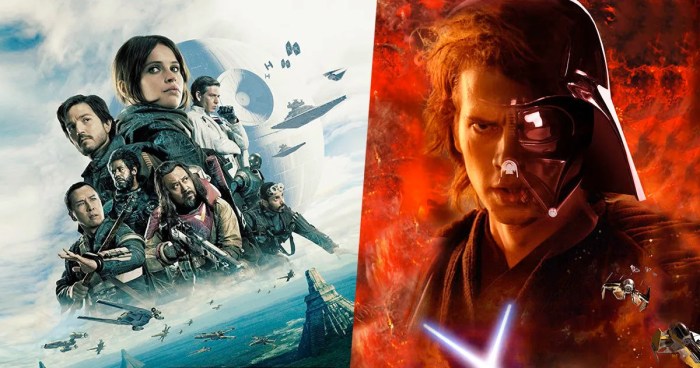
Star Wars Rogue One prequel problem: This analysis delves into the narrative, plot, visual, thematic, and historical aspects of the film, exploring potential weaknesses and missed opportunities. Rogue One, while a visually stunning film, faced challenges in character development and plot coherence. We’ll examine how these issues compare to other Star Wars installments, highlighting potential improvements in storytelling and thematic integration.
From the initial concept to the final product, Rogue One grapples with the legacy of the Star Wars universe. This exploration dissects the film’s strengths and weaknesses, offering a fresh perspective on its place within the wider franchise. By analyzing the film’s narrative choices, plot inconsistencies, and visual style, we aim to uncover the underlying reasons behind Rogue One’s reception and identify areas where it could have resonated more effectively with audiences and critics alike.
Narrative and Character Development
Rogue One, while a successful Star Wars film, faced challenges in its narrative and character arcs compared to the established character development of the original trilogy and subsequent installments. The film’s focus on a ragtag group of rebels, while intriguing, sometimes felt like a collection of individual stories rather than a cohesive whole. This resulted in less depth for some characters and a less satisfying overall journey.
Narrative Choices in Rogue One
The narrative of Rogue One prioritized the mission over individual character development. The film’s structure, focusing on the heist-like plot to steal the plans, often overshadowed the emotional journeys of the characters. This choice, while effective in driving the plot forward, could have been better balanced with more time dedicated to the internal struggles and motivations of the key figures.
For example, the film’s reliance on exposition through dialogue could have been lessened by showing, not telling, the characters’ motivations and conflicts.
Character Development in Star Wars
Contrasting examples of character development in Star Wars films highlight the strengths and weaknesses of Rogue One’s approach. Characters like Luke Skywalker, Leia Organa, and Han Solo experienced significant growth over multiple films, evolving from naive individuals to complex and well-rounded figures. Their journeys were intertwined with the larger narrative, showcasing their development within the wider galaxy. In contrast, Rogue One’s characters often felt less connected to the overarching Star Wars universe, despite their involvement in a pivotal event.
Potential Improvements for Prequel’s Narrative
The narrative could have benefited from a more nuanced exploration of the characters’ motivations. Instead of simply stating their allegiance to the rebellion, the prequel could have delved deeper into the specific experiences that shaped their decisions. For example, Jyn Erso’s backstory could have been more intimately connected to the larger conflict, showing how her past experiences fueled her desire for rebellion.
This would have created a more profound and engaging character arc.
Potential Character Backstories, Star wars rogue one prequel problem
Expanding on the backstories of characters like Cassian Andor and Chirrut Îmwe would have provided more depth. Exploring the events that led them to join the rebellion could have been compelling. This could have been done through flashbacks or through more developed scenes within the present narrative. Consider showing their individual journeys leading to the heist rather than simply stating their motivations.
These expanded backstories could have created stronger emotional connections between the characters and the audience.
Comparison of Character Development
| Character | Rogue One | Other Star Wars Films | Motivations | Growth |
|---|---|---|---|---|
| Jyn Erso | Driven by revenge and a desire to save her father. | Luke Skywalker – Driven by a desire for knowledge and self-discovery. | Revenge, familial obligation. | Limited growth, primarily focused on the mission. |
| Cassian Andor | A hardened rebel operative. | Han Solo – Evolving from a smuggler to a loyal ally. | Duty, possibly past experiences. | Growth is less pronounced, more focused on his actions. |
| Chirrut Îmwe | A warrior monk with unwavering faith. | Yoda – Wisdom and guidance. | Faith, unwavering purpose. | Little internal change, focused on external actions. |
Plot Holes and Inconsistencies
Rogue One, while a visually stunning and emotionally resonant film, grapples with certain narrative inconsistencies that impact its overall coherence within the Star Wars universe. These discrepancies, while not necessarily debilitating, do detract from the seamless integration of the film into the established canon and require careful consideration to understand the complexities of its place in the saga. The film’s ambition to tell a unique story while simultaneously respecting the larger Star Wars framework leads to some inevitable tensions.These inconsistencies often stem from the film’s focus on a specific, limited perspective.
While this approach allows for a concentrated emotional impact, it can sometimes obscure or simplify the larger implications of certain events within the broader Star Wars context. This, in turn, creates points of friction when compared to the established patterns and themes from other films in the franchise. Exploring these discrepancies is essential to a deeper understanding of the film’s strengths and weaknesses.
I’ve been thinking a lot about the Star Wars Rogue One prequel problem lately. It’s tricky to make a prequel that feels both necessary and satisfying, especially when it’s trying to fill in gaps that the original movie didn’t really leave open. Plus, the recent Best Buy promotion is tempting me to upgrade my phone. They’re offering up to $900 in savings when you upgrade to the new Galaxy S24 lineup, which is pretty sweet , but I need to stick to my budget and finish thinking about how a Rogue One prequel might work.
Maybe a spin-off series could work, focusing on a different character’s backstory?
Potential Conflicts in the Rebellion’s Capabilities
The Rebel Alliance, portrayed as a ragtag but effective group in Rogue One, exhibits capabilities that seem incongruent with their earlier depiction in the original trilogy. The film’s portrayal of their technological ingenuity and strategic prowess seems at odds with the portrayal of a less organized, less technologically advanced rebellion in the original trilogy. This disparity raises questions about the Rebel Alliance’s evolution between the eras.
- The sophistication of the plan to steal the Death Star plans is significant, implying a level of coordination and technological understanding that might not have been previously apparent in earlier films. This challenges the image of a nascent rebellion.
- The successful execution of the mission suggests a higher degree of efficiency and training than the Rebels might be given credit for in the original trilogy. This disparity in capabilities needs to be addressed in the broader Star Wars timeline.
Discrepancies Regarding Imperial Strength
The film often depicts the Imperial forces as somewhat less formidable than portrayed in other Star Wars films. This, in turn, raises questions about the balance of power between the Empire and the Rebel Alliance. The ease with which the rebels seem to infiltrate and achieve objectives is contrasted with the often formidable Imperial presence in other parts of the saga.
The Star Wars Rogue One prequel problem, I’m thinking, might be a bit like trying to upgrade your home Wi-Fi to Wi-Fi 6E. You’ve got all these cool ideas for expanding the story, but if your existing devices aren’t compatible with can you upgrade your devices wi fi 6e , you’re stuck with what you’ve got. Ultimately, the story’s still going to need a strong foundation, just like a good Wi-Fi setup, to avoid the prequel problem.
- The ease with which the characters traverse Imperial territory and engage in combat, particularly considering the sheer firepower and numbers of Imperial troops, might seem incongruous with the overall power dynamic presented in other films.
- The relative lack of resistance encountered by the characters, especially when considering the Empire’s established strength and the resources at their disposal, raises questions about the film’s internal consistency within the Star Wars universe.
Contrasting Portrayals of Characters and Themes
Certain character arcs and themes in Rogue One deviate from the established patterns seen in other Star Wars films. This deviation can cause some tension for viewers accustomed to the previous narratives. The characters’ motivations and their sacrifices are often compelling but sometimes differ from the established paradigms in other parts of the franchise.
- Jyn Erso’s initial motivations and later commitment to the Rebellion differ somewhat from the typical portrayals of heroes in the Star Wars saga, prompting a re-evaluation of her place within the broader narrative.
- The film’s emphasis on personal sacrifice and individual heroism, while powerful, contrasts with the broader themes of collective action and ideological struggles often emphasized in other Star Wars films. This variance adds complexity to the narrative.
Table of Plot Points and Connections
| Rogue One Plot Point | Connection to Other Star Wars Films | Potential Contradiction |
|---|---|---|
| Rebel Alliance’s sophistication | Original trilogy’s depiction of a nascent rebellion | Implies a significant evolution in Rebel capabilities |
| Imperial forces’ vulnerability | Other Star Wars films depicting Imperial strength | Suggests a less formidable Empire than previously established |
| Jyn Erso’s motivations | Other Star Wars heroes’ journeys | Might differ from established patterns of heroic character development |
Visual and Technical Aspects: Star Wars Rogue One Prequel Problem
Rogue One: A Star Wars Story, while a significant addition to the Star Wars universe, presents a unique visual style that distinguishes it from the established aesthetic. The film’s creators made deliberate choices in its visual storytelling, aiming for a distinct tone and feel, which is reflected in its technical execution. This section will delve into these choices, comparing them to other films and highlighting both strengths and weaknesses in the visual and technical aspects.
Differing Visual Style
Rogue One’s visual style deviates from the often-epic and fantastical tone of previous Star Wars films. It embraces a more grounded, gritty realism. This is evident in the portrayal of the characters and their environments, often emphasizing the harsh realities of war and the cost of conflict. The use of muted colors and more realistic lighting contributes to this shift in tone, setting Rogue One apart from the often vibrant and colorful palettes of other Star Wars installments.
Rogue One’s prequel problem is its inherent disconnect from the established Star Wars lore. It struggles to find its footing, unlike, say, the character studies explored in the MCU, like Doctor Doom’s infamous rivalry with Iron Man, as seen in doctor doom infamous iron man mcu rdj. Ultimately, the prequel’s narrative feels forced, a bit like a poorly crafted plot device, leaving the audience wanting more from the Star Wars universe.
Special Effects and Technical Aspects
The special effects in Rogue One are a mix of impressive CGI and practical effects. While the CGI is sometimes noticeable, particularly in the depiction of larger-scale battles, the film also makes use of well-executed practical effects, bringing a sense of authenticity to the on-screen action. This approach to special effects differs from the sometimes over-the-top CGI-heavy spectacles seen in some other films.
Visual Storytelling Challenges and Choices
The visual storytelling in Rogue One presented unique challenges. For example, depicting the destruction of a planet while adhering to the narrative’s themes of desperation and loss required careful consideration of visual language. The filmmakers also faced the challenge of portraying the conflict’s impact on the individual characters. These decisions highlight the narrative choices that were made in the visual aspects of the film.
Comparison with Other Films
Comparing Rogue One visually to other Star Wars films, we find that the film adopts a darker, more grounded palette. While the epic scale of space battles is still present, the focus shifts to the human cost of war. The use of practical effects and CGI balances to achieve a certain realism. However, the visual style can be seen as more restrained compared to the fantastical elements often prevalent in the other Star Wars films.
For example, the depiction of the rebel forces in Rogue One is more grounded, reflecting their struggle and resourcefulness, compared to the more idealized portrayals of rebellion in other films. This difference in visual approach has its own strengths and weaknesses, creating a unique viewing experience. The film effectively balances the need for spectacle with the desire to showcase the emotional weight of the narrative.
Technical Advancements and Limitations
| Technical Aspect | Advancements | Limitations |
|---|---|---|
| CGI | Improved realism and detail in the creation of digital environments and characters. | Sometimes noticeable CGI artifacts, particularly in large-scale scenes. |
| Practical Effects | Effective integration of practical effects to achieve realism and enhance immersion. | Practical effects are more time-consuming and expensive than purely CGI-based effects. |
| Visual Effects Integration | Sophisticated techniques for blending CGI and practical effects. | The seamless blending of CGI and practical elements can be challenging. |
| Camera Work | Dynamic camera movements and framing that enhance the narrative. | The camera work could have been more dynamic in certain scenes to highlight the action sequences. |
The table above highlights the advancements and limitations in the technical aspects of visual storytelling in Rogue One. The use of CGI and practical effects, combined with camera work, contributed to the overall visual experience. The challenges involved in integrating these elements highlight the complexities of visual filmmaking.
Themes and Symbolism

Rogue One: A Star Wars Story, while a standalone film, deeply resonates with the broader Star Wars universe. It explores themes of sacrifice, rebellion, and the complexities of war, offering a nuanced perspective that often contrasts with the more straightforward heroic narratives of other films in the saga. The film’s symbolism, from the characters’ motivations to the visual imagery, significantly enhances the narrative, creating a powerful impact on the audience.The film’s exploration of these themes and their symbolic representation, though unique to the Rogue One story, speaks to timeless human struggles.
The film highlights the ethical dilemmas and personal sacrifices made in the name of a greater good, exploring the cost of freedom and the burden of responsibility in a galaxy far, far away.
Exploration of Sacrifice and Rebellion
Rogue One masterfully portrays the human cost of rebellion. Characters like Jyn Erso, Cassian Andor, and the rest of the rebel cell embody the dedication and sacrifice necessary to challenge an oppressive regime. Their individual journeys and ultimate willingness to lay down their lives for a greater cause highlight the fundamental theme of selflessness. This concept resonates deeply with the Star Wars universe, echoing the sacrifices made by heroes and villains throughout the saga, though Rogue One focuses more on the human aspect of sacrifice rather than the grand scope of galactic conflicts.
Symbolism of Hope and Despair
The visual symbolism throughout Rogue One plays a crucial role in conveying the themes of hope and despair. The flickering lights of the rebel base, the destruction of the Death Star plans, and the eventual success of the mission represent the unwavering hope for a better future despite the overwhelming odds. Conversely, the images of destruction, loss, and suffering underscore the profound despair and inevitable casualties of war.
This duality, showcasing both the darkest and brightest aspects of human nature, strengthens the narrative impact of the film.
Comparison with Other Star Wars Films
Unlike the epic scope of the Skywalker saga, Rogue One emphasizes a more intimate perspective on war and rebellion. While the other films often feature larger-than-life heroes, Rogue One focuses on the ordinary individuals who make extraordinary sacrifices. This intimate approach highlights the human cost of conflict in a manner distinct from the more grandiose portrayals in other Star Wars films.
The films differ in their approach to symbolism, too. While some Star Wars films rely heavily on visual symbolism, Rogue One leverages character motivations and emotional responses as a primary form of symbolic expression.
Potential Enhancement of Symbolism
The symbolism in Rogue One, while impactful, could have been more effectively integrated into the plot. For example, the symbolism of the destroyed Death Star plans, while powerful, could have been linked more directly to the characters’ emotional journeys. More exploration of the symbolism behind the desert landscapes, the tattered clothing, and the ever-present threat of the Empire would have further solidified the film’s thematic depth.
Symbolic Elements Table
| Symbolic Element | Relevance to Themes |
|---|---|
| The Death Star plans | Represents the hope for freedom and the potential for rebellion against oppression. |
| Jyn Erso’s journey | Symbolizes the individual’s struggle against societal constraints and the personal cost of rebellion. |
| Cassian Andor’s sacrifice | Highlights the profound sacrifices made for the greater good in the face of immense adversity. |
| The desert landscapes | Emphasize the harsh realities of war and the difficult choices faced by the rebels. |
| The destruction of the Death Star plans | Symbolizes the devastating consequences of war and the loss incurred by those fighting for freedom. |
Historical and Cultural Context

Rogue One: A Star Wars Story, while set in a fictional galaxy far, far away, draws heavily on real-world historical and cultural themes. The film’s depiction of rebellion, sacrifice, and the struggle for freedom resonates with numerous historical conflicts and societal movements. Understanding these influences allows for a deeper appreciation of the film’s narrative and symbolism. However, the film’s potential to explore these themes more deeply and nuance the connections was somewhat limited.The film effectively uses historical parallels to explore themes of resistance and the motivations behind conflict.
The film draws inspiration from historical rebellions and struggles against oppression, giving a human element to the fight for freedom. This approach can be compelling but also requires careful consideration to avoid superficial comparisons or oversimplification.
Historical References in Rogue One
The film’s depiction of the Rebel Alliance’s struggle against the Empire echoes real-world conflicts. The concept of a unified resistance against a tyrannical power is a recurring theme in history, from the American Revolution to the anti-apartheid movement. This resonates with audiences who have experienced or studied such struggles, creating a sense of familiarity and shared experience.
- The concept of a unified front: The film portrays the coming together of diverse groups—humans, aliens, and even members of the Empire itself—to achieve a common goal. This parallels historical examples of alliances formed to oppose a common enemy.
- Sacrifice for a greater cause: The characters’ willingness to sacrifice their lives for the greater good, like many historical figures who fought for liberation, evokes feelings of admiration and respect.
- Propaganda and deception: The film hints at the use of propaganda and deception to manipulate public opinion, which is a common tactic in many historical conflicts. These aspects could have been explored further.
Cultural Nuances in Rogue One
The film touches upon various cultures and traditions, but these often serve as background elements rather than being fully explored. The diversity of species and their unique cultures could have been utilized more effectively to highlight the human element of the rebellion.
- Diversity of species and their cultures: The film features a range of alien species, each with their own cultural traits and traditions. The potential for exploring these differences and how they contribute to the resistance effort is significant.
- Social structures and hierarchies: The film hints at social structures and power dynamics within different cultures. These could have been more fully realized to create a richer and more nuanced understanding of the characters’ motivations.
- Rebellion and social unrest: The film’s themes of rebellion and social unrest can be seen as a reflection of cultural tensions and conflicts that exist in different societies throughout history.

Comparing Rogue One to Other Star Wars Films
Rogue One’s historical and cultural references often differ in approach from other Star Wars films. While other entries might focus on more fantastical or philosophical themes, Rogue One leans into the realities of war and the human cost of conflict.
- Historical themes: Other Star Wars films typically focus on broader themes of good versus evil, destiny, and the Force. Rogue One prioritizes the historical context of rebellion, sacrifice, and the complexities of war.
- Cultural diversity: While other Star Wars films acknowledge diverse cultures, Rogue One more explicitly features various species and their cultural characteristics, albeit with limitations.
- Themes of conflict: The themes of conflict and resistance are present in other Star Wars films but are often presented in a more fantastical or abstract way. Rogue One explores the realities of conflict, its human cost, and its effect on individuals and societies.
Alternative Historical Perspectives
Expanding on the historical and cultural aspects of Rogue One could have explored alternative perspectives on the events. This could have provided more depth and complexity to the characters and their motivations.
- Imperial perspective: The film could have delved into the perspective of the Empire, exploring the motivations behind their actions and the societal factors that led to the oppression. This would have offered a more complete picture of the conflict.
- Cultural differences within the rebellion: The film could have explored the internal conflicts and differences within the Rebel Alliance, highlighting the complexities of a diverse group working towards a common goal.
- Alternative outcomes: The film could have explored alternative outcomes of the events, showing how different choices could have led to different consequences, thus deepening the themes of sacrifice and conflict.
Table of Historical and Cultural Influences
| Influence | Description | Example in Rogue One |
|---|---|---|
| Resistance Movements | Historical struggles against oppression and tyranny | Rebellion against the Empire |
| Cultural Diversity | Varied cultures and societies | Different species and their unique traditions |
| Propaganda and Deception | Manipulation of public opinion | Imperial propaganda efforts |
End of Discussion
Ultimately, Star Wars Rogue One presents a fascinating case study in filmmaking. While visually impressive, the film’s narrative and character arcs sometimes fell short of expectations. The analysis reveals that a stronger focus on character development, a more cohesive plot, and a more integrated thematic approach could have significantly enhanced the film’s overall impact. The film’s legacy is complex, and this analysis hopefully offers a nuanced understanding of its strengths and weaknesses, ultimately prompting a deeper appreciation for the Star Wars universe as a whole.